


Validation of the Diet Quality Questionnaire in Chinese Children and Adolescents and Relationship with Pediatric Overweight and Obesity
- PMID: 36079809
- PMCID: PMC9460768
- DOI: 10.3390/nu14173551
Validation of the Diet Quality Questionnaire in Chinese Children and Adolescents and Relationship with Pediatric Overweight and Obesity
Abstract
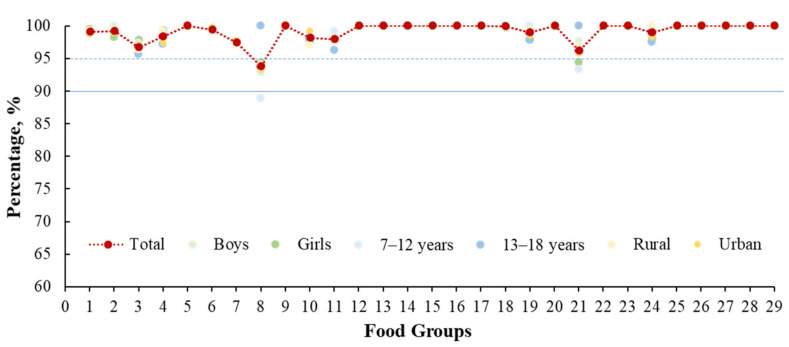
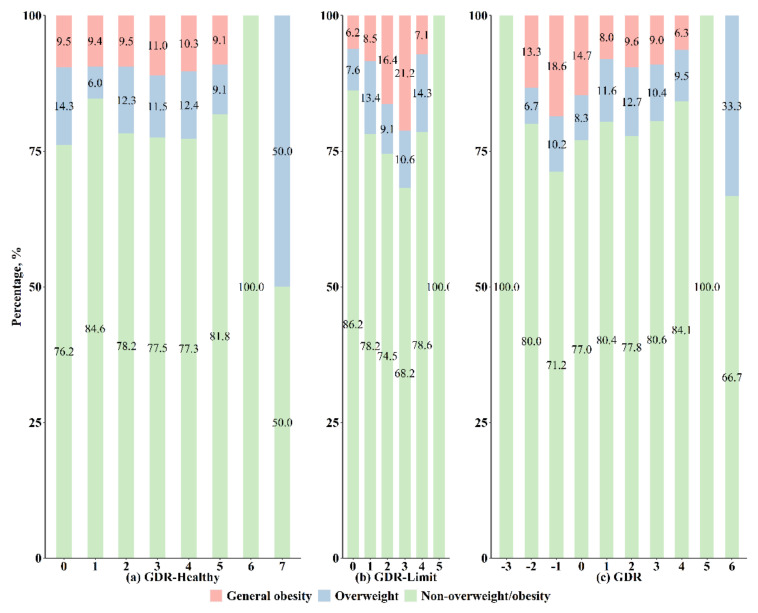
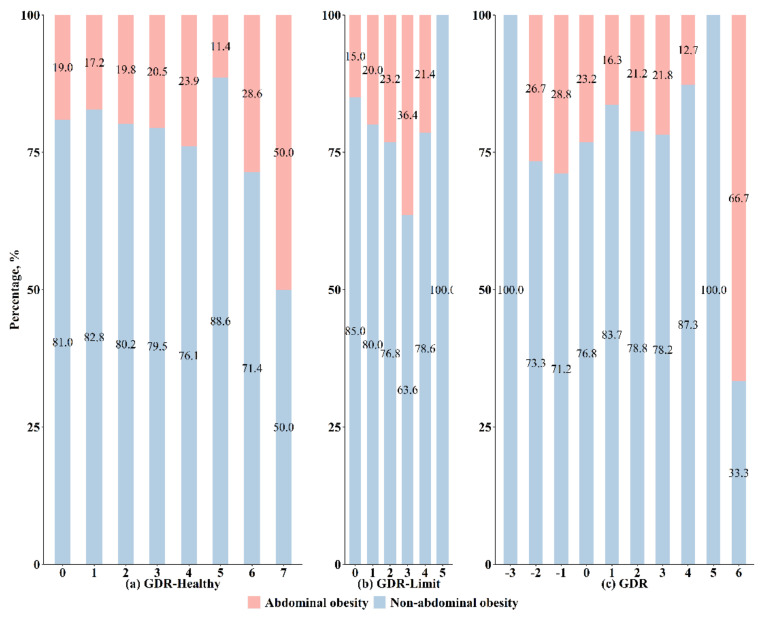
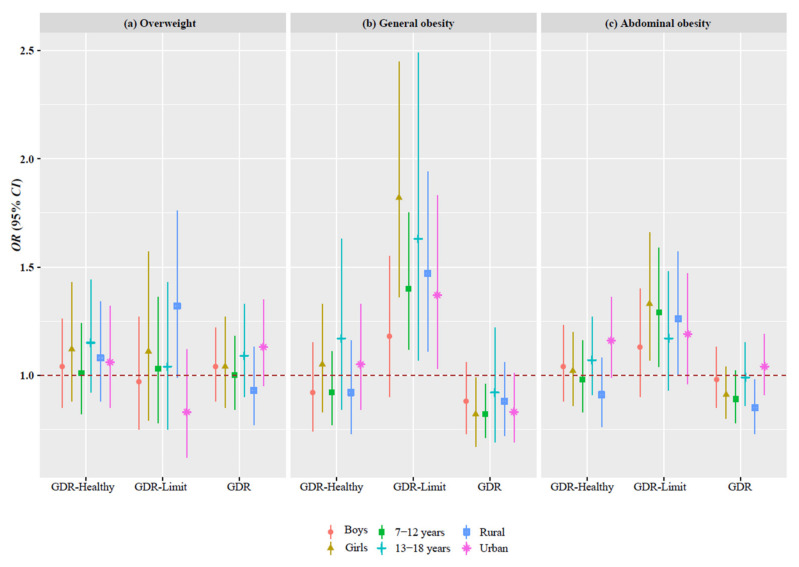
The low-burden Diet Quality Questionnaire (DQQ) has been developed to rapidly assess diet quality globally. Poor diet is often correlated with body size, and certain dietary risk factors can result in overweight and obesity. We aimed to examine the extent to which the DQQ captured food group consumption among children and adolescents in China, and to understand the association of several new indicators of diet quality scores derived from the DQQ with overweight and obesity, using the 2011 wave of the China Health and Nutrition Survey. The DQQ questions are constructed using sentinel foods-that is, food items that are intended to capture a large proportion of the population consuming the food groups. The overall Global Dietary Recommendations (GDR) score, GDR-Healthy score, and GDR-Limit score are novel indicators of diet quality that reflect dietary risk factors for non-communicable diseases derived from the DQQ questions. Multivariable logistic regression analysis was used to examine the associations of the GDR scores with overweight and obesity in the sample. The DQQ questions captured over 95% of children who consumed the food groups. Additionally, we found that the GDR-Limit score was positively associated with general obesity (odds ratio (OR) = 1.43, 95% confidence interval (CI): 1.17-1.74) and abdominal obesity (OR = 1.22, 95% CI: 1.05-1.43), whereas the overall GDR score was negatively related to general obesity (OR = 0.85, 95% CI: 0.74-0.97). The low-burden DQQ could be a valid tool to assess diet quality for the Chinese pediatric population aged 7-18 years. Poor diet quality, as determined by the GDR-Limit score, is associated with the increased risk of obesity in Chinese children and adolescents.
Keywords: Diet Quality Questionnaire; children and adolescents; global dietary recommendations; obesity; overweight.
Conflict of interest statement
The authors declare no conflict of interest. The funders had no role in the design of the study, data collection, analyses, or interpretation of data, in the writing of the manuscript, or in the decision to publish the results.
Figures
References
-
- Dong Y.H., Jan C., Ma Y.H., Dong B., Zou Z.Y., Yang Y.D., Xu R.B., Song Y., Ma J., Sawyer S.M., et al. Economic development and the nutritional status of Chinese school-aged children and adolescents from 1995 to 2014: An analysis of five successive national surveys. Lancet Diabetes Endocrinol. 2019;7:288–299. doi: 10.1016/S2213-8587(19)30075-0. - DOI - PubMed
MeSH terms
Grants and funding
LinkOut - more resources
Full Text Sources
Medical
