Review
. 2022 Aug 23:13:921306.
doi: 10.3389/fgene.2022.921306. eCollection 2022.

CircSMARCA5: A key circular RNA in various human diseases

Affiliations
Review

CircSMARCA5: A key circular RNA in various human diseases

Yi Zhu et al. Front Genet. .

Abstract

Circular RNAs (circRNAs) are recognized as a novel type of single-stranded endogenous noncoding RNA molecule with the characteristics of tissue specificity, sequence conservation and structural stability. Accumulating studies have shown that circRNAs play a unique biological role in different kinds of diseases. CircRNAs can affect tumor proliferation, migration, metastasis and other behaviors by modulating the expression of downstream genes. CircSMARCA5, an example of a circRNA, is dysregulated in various noninfectious diseases, such as tumors, osteoporosis, atherosclerosis and coronary heart disease. Furthermore, recent studies have demonstrated that circSMARCA5 is associated with the occurrence and development of a variety of tumors, including gastric cancer, glioblastoma, hepatocellular carcinoma, multiple myeloma, colorectal cancer, breast cancer and osteosarcoma. Mechanistically, circSMARCA5 primarily acts as a sponge of miRNAs to regulate the expression of downstream genes, and can serve as a potential biomarker for the diagnosis of malignant tumors. This review summarizes the biological roles of circSMARCA5 and its molecular mechanism of action in various diseases. Moreover, the meta-analysis of some publications showed that the expression of circSMARCA5 was significantly correlated with the prognosis of patients and tumor TNM stage, showing that circSMARCA5 has the potential to be a prognostic marker.

Keywords: biomarker; cancer; circSMARCA5; circular RNA; miRNA sponge.


Conflict of interest statement

The authors declare that the research was conducted in the absence of any commercial or financial relationships that could be construed as a potential conflict of interest.

Figures
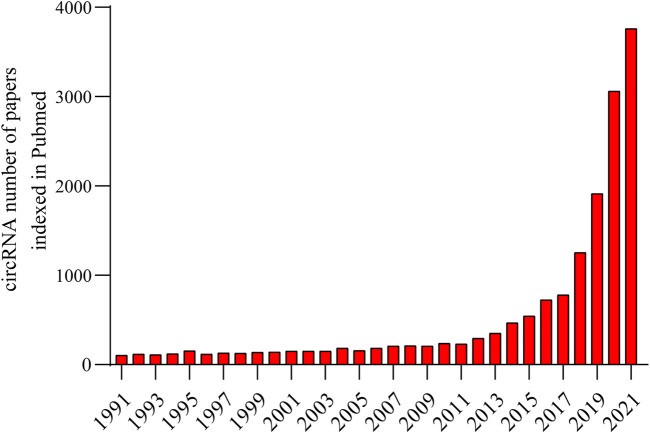
FIGURE 1
FIGURE 1
The number of circRNA publications published annually has grown dramatically exponentially in PubMed from 1991 to 2021, especially in the past 5 years.
FIGURE 2
FIGURE 2
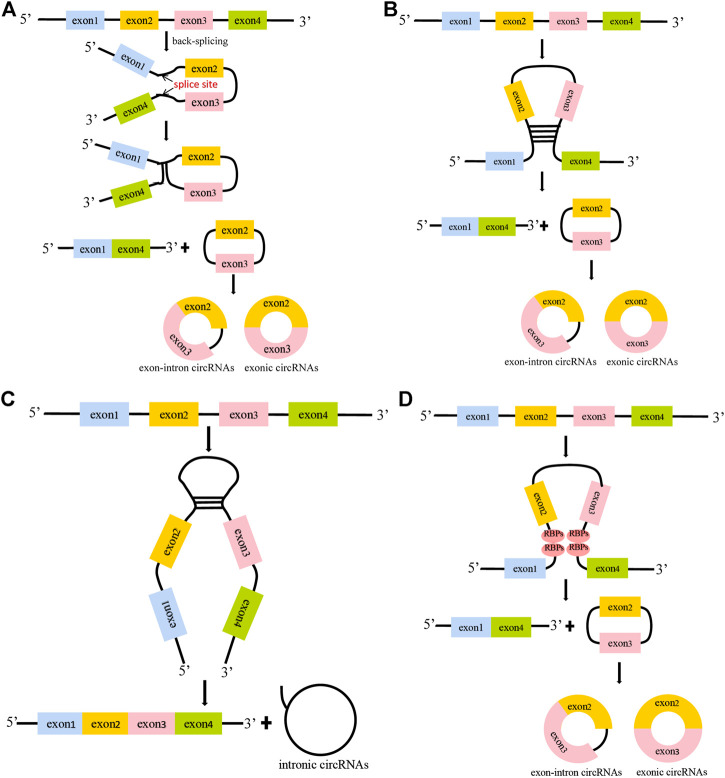
The formation mechanisms of circular RNAs. (A). Lariat-driven circularization. The splice donor of the downstream exon of the pre-mRNA binds to the splice acceptor of the upstream exon, thereby forming exon-intron circRNAs. When the introns are removed, the exons are linked by 3–5′ phosphodiester bonds to form exonic circRNAs. (B–C). Intron pair-driven circularization. The introns flanking the exons of the pre-mRNA are base -paired through ALU repeats to generate exon-intron circRNAs, exonic circRNAs and intronic circRNAs. (D). RBPs-mediated circularization. RBPs bind to RBP binding sites in intron sequences, and the interaction promotes the production of circRNAs.
FIGURE 3
FIGURE 3
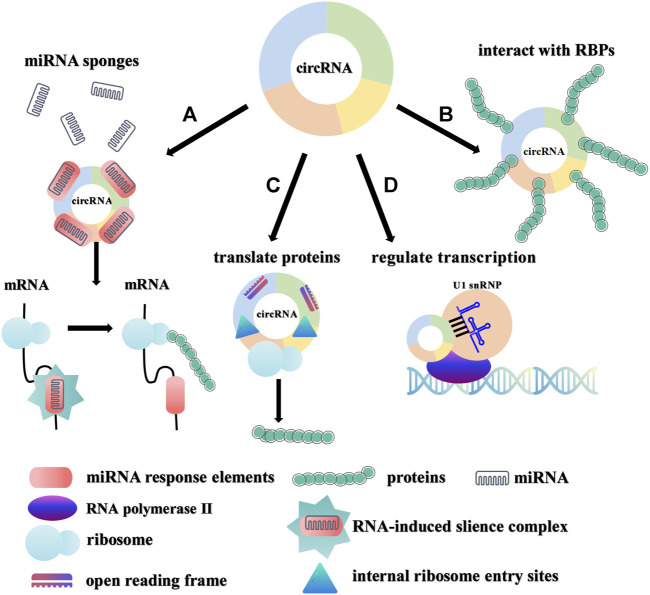
Biological functions of circRNAs. (A). miRNA sponges. circRNAs can function as miRNA sponges to regulate the expression of target genes. (B). Interaction with RBPs. circRNAs can interact with RBPs to affect downstream signals. (C). Protein coding. circRNAs with IRESs and ORFs can translate certain proteins/peptides to perform special functions. (D). Transcriptional regulation. EIciRNAs and U1 small nuclear ribonucleic proteins (U1 snRNPs) are co-localized to the promoter of the parental gene and promote transcription of the parental gene with the participation of RNA polymerase II.
FIGURE 4
FIGURE 4
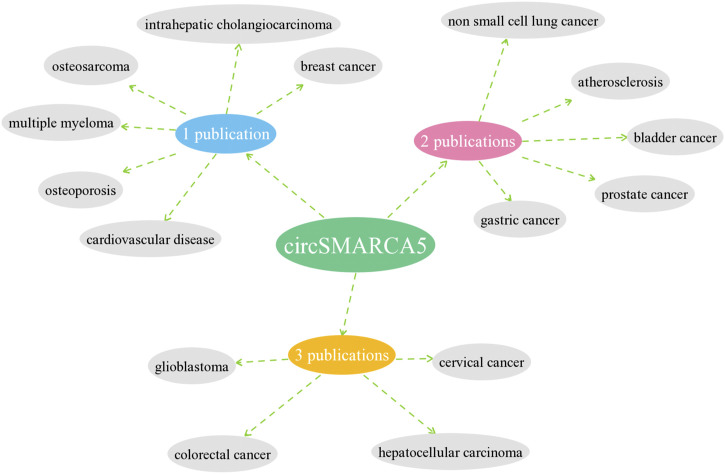
Descriptive statistics of the number of studies of circSMARCA5 in each disease.
FIGURE 5
FIGURE 5
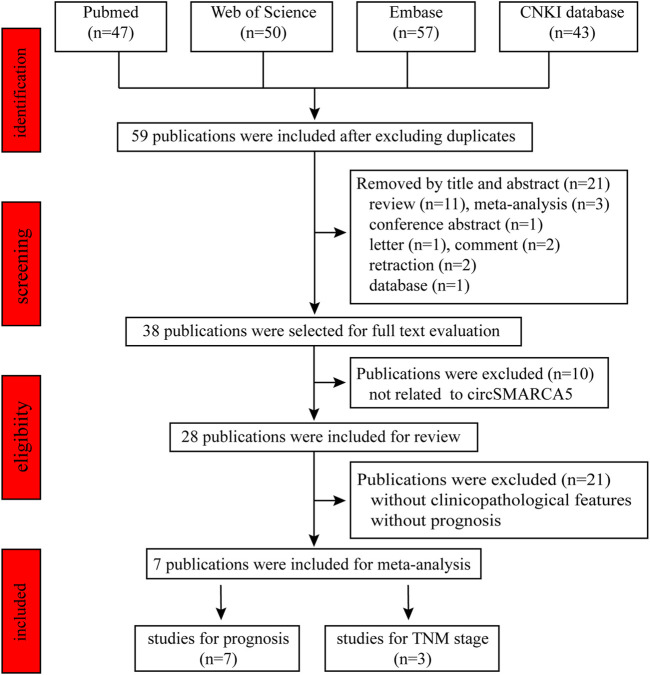
A flow chart of screening eligible articles for meta-analysis.
FIGURE 6
FIGURE 6
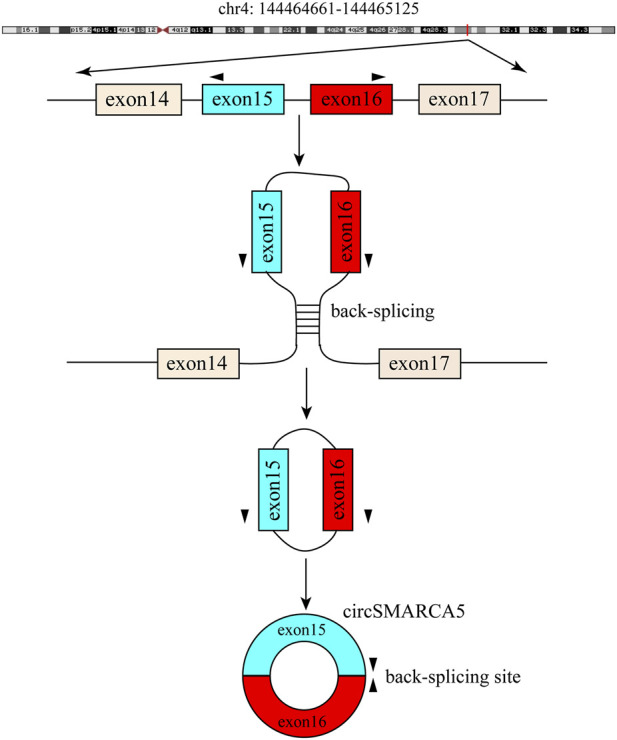
Generation of circSMARCA5. Exons 15 and 16 of SMARCA5 are back-spliced to form circSMARCA5.
FIGURE 7
FIGURE 7
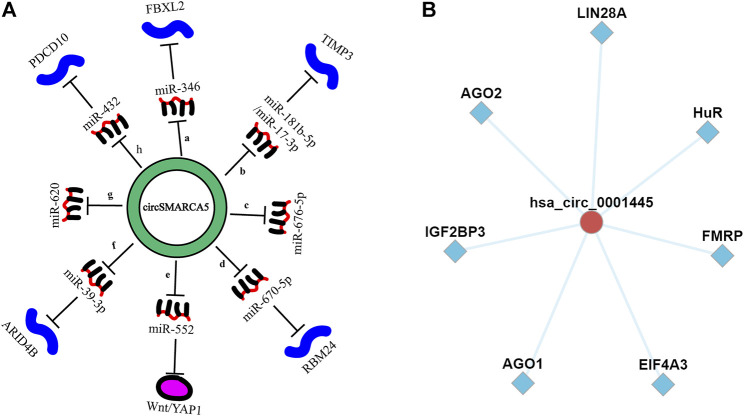
(A). CircSMARCA5 acts as miRNA sponges in various cancers. (a). gastric cancer; (b). hepatocellular carcinoma; (c). non-small -cell lung cancer; (d). multiple myeloma; (e,f). colorectal cancer; (g). cervical cancer; (h). prostate cancer. (B). CircFunBase database was used to predict potential RNA-binding proteins that can bind to circSMARCA5.
FIGURE 8
FIGURE 8
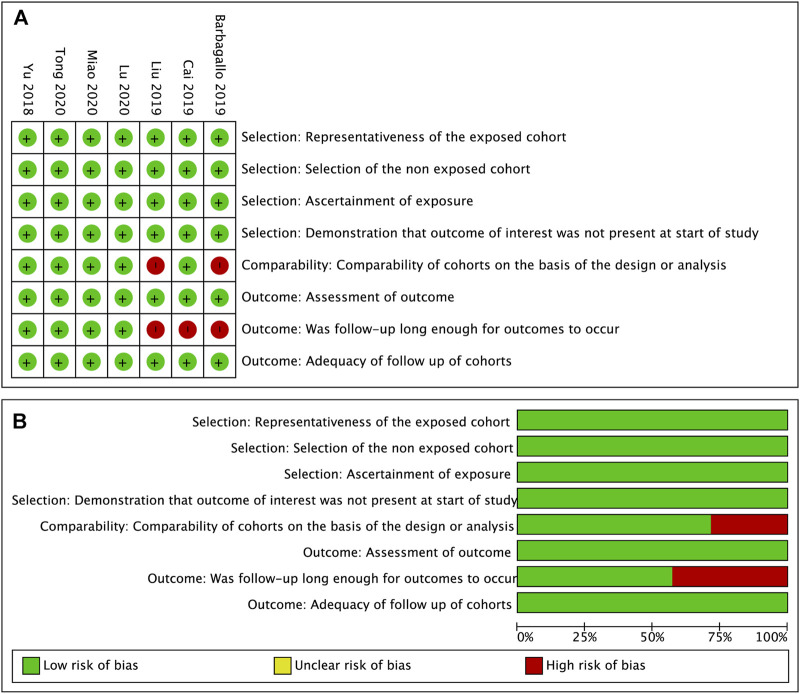
Quality assessment of the included studies. (A). Each risk of bias item for each included study. (B). Each risk of bias item presented as percentages across all included studies.
FIGURE 9
FIGURE 9
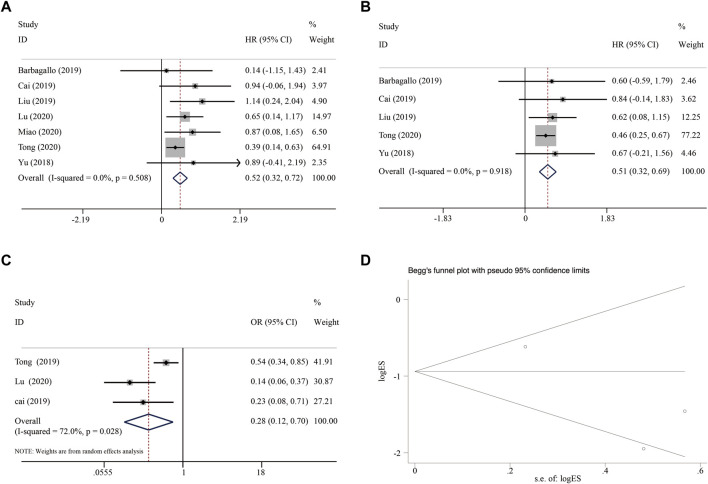
Forest plot of the association between circSMARCA5 expression and (A) OS, (B) DFS/RFS/PFS, (C) tumor TNM stage. (D) Begg’s funnel plot.

References

    1. Artemaki S., Kontos C. K. (2020). Circular RNAs: a new piece in the colorectal cancer puzzle. Cancers (Basel) 12, E2464. 10.3390/cancers12092464 - DOI - PMC - PubMed
    1. Barbagallo C., Barbagallo B., Mirabella B., Stella B., Altieri C., Caltabiano B., et al. (2021). The GAUGAA motif is responsible for the binding between circSMARCA5 and SRSF1 and related downstream effects on glioblastoma multiforme cell migration and angiogenic potential. Int. J. Mol. Sci. 22, 1678. 10.3390/ijms22041678 - DOI - PMC - PubMed
    1. Barbagallo C., Morrone C., Broggi C. (2019). CircSMARCA5 regulates VEGFA mRNA splicing and angiogenesis in glioblastoma multiforme through the binding of SRSF1. Cancers (Basel) 11, E194. 10.3390/cancers11020194 - DOI - PMC - PubMed
    1. Barbagallo C., Cirnigliaro B., Barbagallo D'., Morrone C., Barbagallo R., et al. (2018). CircSMARCA5 inhibits migration of glioblastoma multiforme cells by regulating a molecular axis involving splicing factors SRSF1/SRSF3/PTB. Int. J. Mol. Sci. 19, E480. 10.3390/ijms19020480 - DOI - PMC - PubMed
    1. Beermann P., Viereck T., Viereck J., Thum T. (2016). Non-coding RNAs in development and disease: background, mechanisms, and therapeutic approaches. Physiol. Rev. 96, 1297–1325. 10.1152/physrev.00041.2015 - DOI - PubMed

LinkOut - more resources