Review
. 2022 Oct;12(10):264.
doi: 10.1007/s13205-022-03326-9. Epub 2022 Sep 7.

Human arginase 1, a Jack of all trades?

Affiliations
Review

Human arginase 1, a Jack of all trades?

J Anakha et al. 3 Biotech. 2022 Oct.

Abstract

Arginine, a conditionally essential amino acid, plays a crucial role in several metabolic and signalling pathways. Arginine metabolism in the body can be significantly increased under stress or during certain pathological conditions. Depletion of circulating arginine by administering arginine-hydrolysing enzyme has been shown to mitigate varied pathophysiological conditions ranging from cancer, inflammatory conditions, and microbial infection. This review provides an overview of such intriguing expanse of potential applications of recombinant human arginase 1 for different pathological conditions and its status of development.

Keywords: Arginase; Arginine; Auxotrophy; Fusion protein; PEGylation.


Conflict of interest statement

Conflict of interestThe authors declare that they have no conflict of interest.

Figures
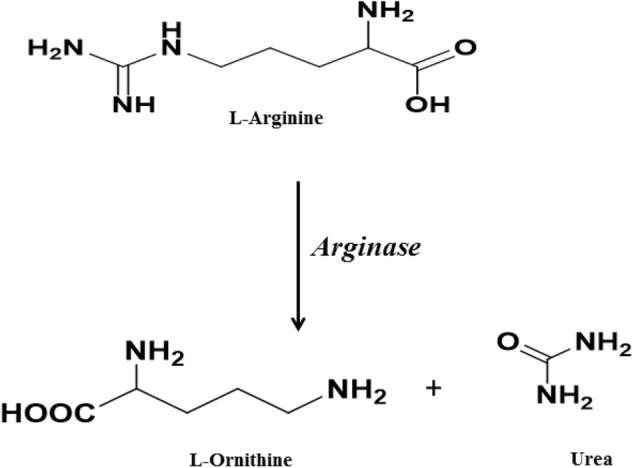
Fig. 1
Fig. 1
Arginase catalysed breakdown of arginine
Fig. 2
Fig. 2
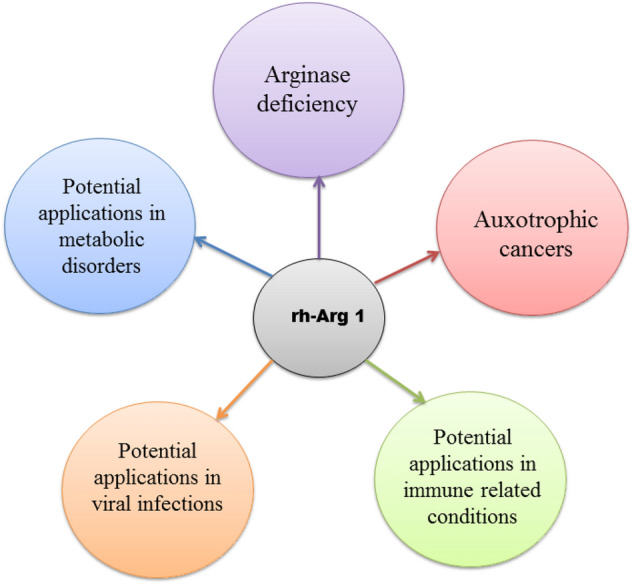
Pathophysiological implications of rhArg1 (recombinant human Arginase 1)
Fig. 3
Fig. 3
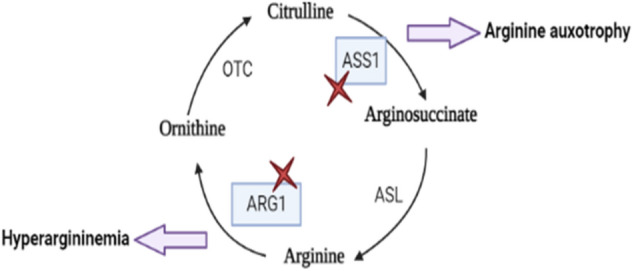
Hyperargininemia and arginine auxotrophy. Hyperargininemia or Arginase 1 deficiency is a progressive disorder resulting in excessive accumulation of arginine due to mutation in arginase 1 gene (ARG1); whereas, deficiency in synthesis of arginine from citrulline due to silencing of argininosuccinate synthetase 1 (ASS1) gene leads to arginine auxotrophy. ASL argininosuccinate lyase, OTC ornithine transcarbamylase (Böger ; Srivastava et al. 2013)
Fig. 4
Fig. 4
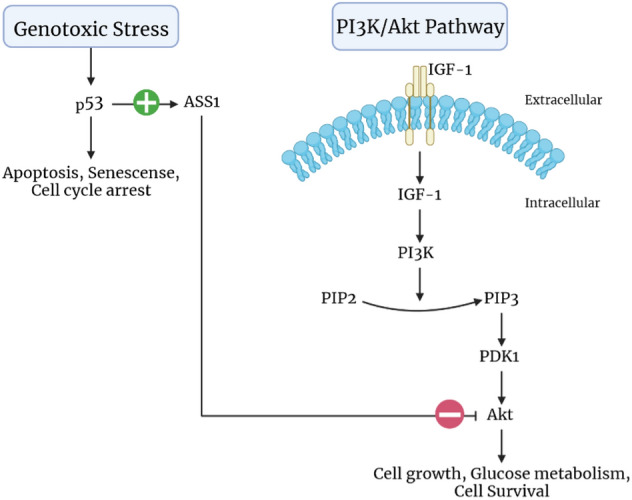
p53-ASS1 pathway. Insulin-like growth factor-1 (IGF-1) induced phosphoinositide 3-kinase (PI3K) coverts phosphatidylinositol 4,5-bisphosphate (PIP2) to phosphatidylinositol 3,4,5-triphosphate (PIP3). PIP3 is a lipid-derived second messenger that initiates PI3K signal relay by recruiting phosphatidylinositide-dependent protein kinase 1 (PDK1) and Akt (protein kinase B). Akt is a key regulator of several downstream signalling pathways involved in cell survival, proliferation, metabolism and so on. In response to genotoxic stress, p53 directly transactivates argininosuccinate synthetase 1 (ASS1), which act as an intrinsic repressor of Akt (Miyamoto et al. 2017)
Fig. 5
Fig. 5
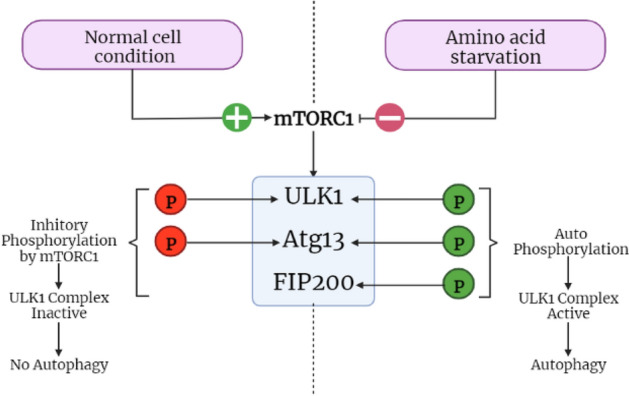
Amino acid starvation-induced autophagy. Mammalian target of rapamycin complex 1 (mTORC1) phosphorylates unc-51-like autophagy activating kinase 1 (ULK1) and autophagy-related protein 13 (Atg13) and renders them inactive under normal cellular conditions with enough amino acids and nutrients. When mTORC1 is inhibited during amino acid deprivation, the inhibitory phosphorylation is alleviated by phosphatases, and the ULK1 complex becomes active through autophosphorylation of ULK1, a serine/threonine protein kinase, and other components including Atg13 and FIP200 (focal adhesion kinase family interacting protein of 200 kDa). This initiates the downstream signalling pathways for the autophagy process (Zachari et al. 2017)

References

    1. Andersen JT, Dalhus B, et al. Extending serum half-life of albumin by engineering neonatal Fc receptor (FcRn) binding. J Biol Chem. 2014;289(19):13492–13502. doi: 10.1074/jbc.M114.549832. - DOI - PMC - PubMed
    1. Ash DE. Structure and function of arginases. J Nutr. 2004;134:2760–2764. doi: 10.1093/jn/134.10.2760S. - DOI - PubMed
    1. Asrani KH, Cheng L, et al. Arginase I mRNA therapy—a novel approach to rescue arginase 1 enzyme deficiency. RNA Biol. 2018;15:914–922. doi: 10.1080/15476286.2018.1475178. - DOI - PMC - PubMed
    1. Becker Y, Olshevsky U, et al. The role of arginine in the replication of herpes simplex virus. J Gen Virol. 1967;1:471–478. doi: 10.1099/0022-1317-1-4-471. - DOI - PubMed
    1. Böger RH. The pharmacodynamics of l-arginine. J Nutr. 2007;137:1650–1655. doi: 10.1093/jn/137.6.1650S. - DOI - PubMed