. 2022 Sep 21;144(37):17307-17316.
doi: 10.1021/jacs.2c08119. Epub 2022 Sep 9.

H-Bond Templated Oligomer Synthesis Using a Covalent Primer

Affiliations

H-Bond Templated Oligomer Synthesis Using a Covalent Primer

Diego Núñez-Villanueva et al. J Am Chem Soc. .

Abstract

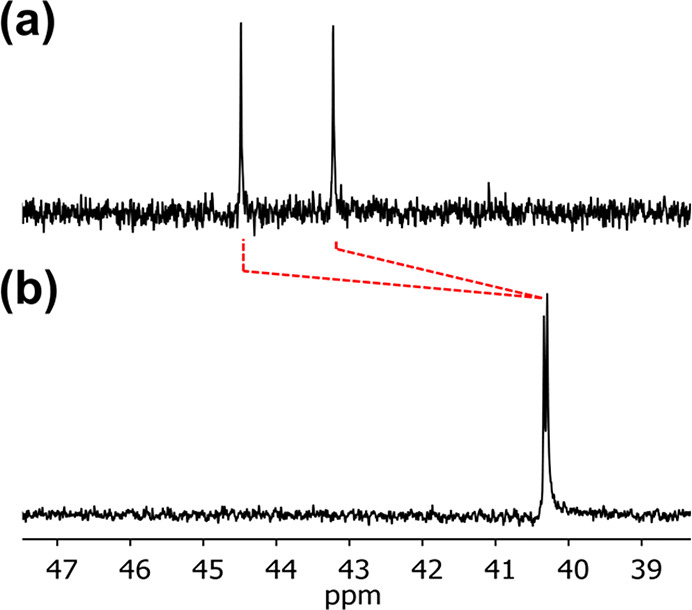
Template-directed synthesis of nucleic acids in the polymerase chain reaction is based on the use of a primer, which is elongated in the replication process. The attachment of a high affinity primer to the end of a template chain has been implemented for templating the synthesis of triazole oligomers. A covalent ester base-pair was used to attach a primer to a mixed sequence template. The resulting primed template has phenol recognition units on the template, which can form noncovalent base-pairs with phosphine oxide monomers via H-bonding, and an alkyne group on the primer, which can react with the azide group on a phosphine oxide monomer. Competition reactions between azides bearing phosphine oxide and phenol recognition groups were used to demonstrate a substantial template effect, due to H-bonding interactions between the phenols on the template and phosphine oxides on the azide. The largest rate acceleration was observed when a phosphine oxide 2-mer was used, because this compound binds to the template with a higher affinity than compounds that can only make one H-bond. The 31P NMR spectrum of the product duplex shows that the H-bonds responsible for the template effect are present in the product, and this result indicates that the covalent ester base-pairs and noncovalent H-bonded base-pairs developed here are geometrically compatible. Following the templated reaction, it is possible to regenerate the template and liberate the copy strand by hydrolysis of the ester base-pair used to attach the primer, thus completing a formal replication cycle.


Conflict of interest statement

The authors declare no competing financial interest.

Figures
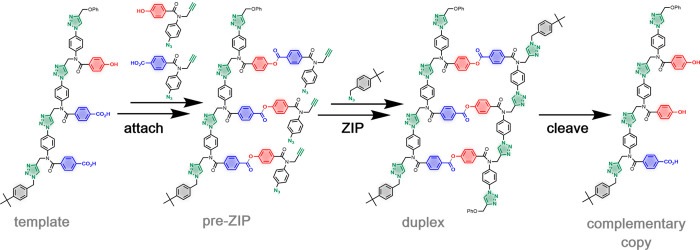
Figure 1
Figure 1
Sequence information transfer using covalent template-directed synthesis. In the attach step, phenol and benzoic acid monomers are coupled with complementary groups on the template using ester base-pairs. In the ZIP step, intramolecular CuAAC reactions lead to oligomerization of monomers on the template, in the presence of an azide chain capping agent. In the cleave step, the ester bonds connecting the daughter strand to the template are broken to regenerate the template and release the complementary copy.
Figure 2
Figure 2
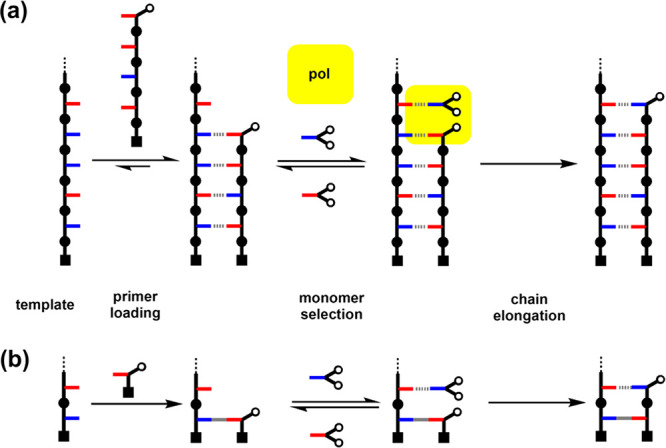
Primer-templated oligomer synthesis. (a) In PCR, a primer anneals with the template to provide a reactive chain end for attachment of the complementary monomer by a polymerase enzyme (pol). (b) In a synthetic system, a covalent base-pair can be used to load the primer, providing a reactive chain end bound to the template. Noncovalent base-pairing can then then be used to select the complementary monomer for chain elongation.
Figure 3
Figure 3
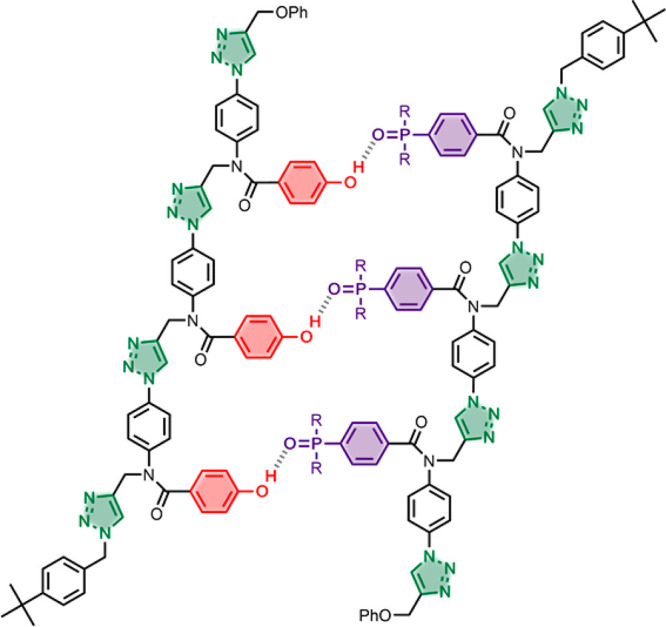
Duplex of two triazole oligomers assembled using noncovalent phenol·phosphine oxide base-pairing interactions.
Scheme 1
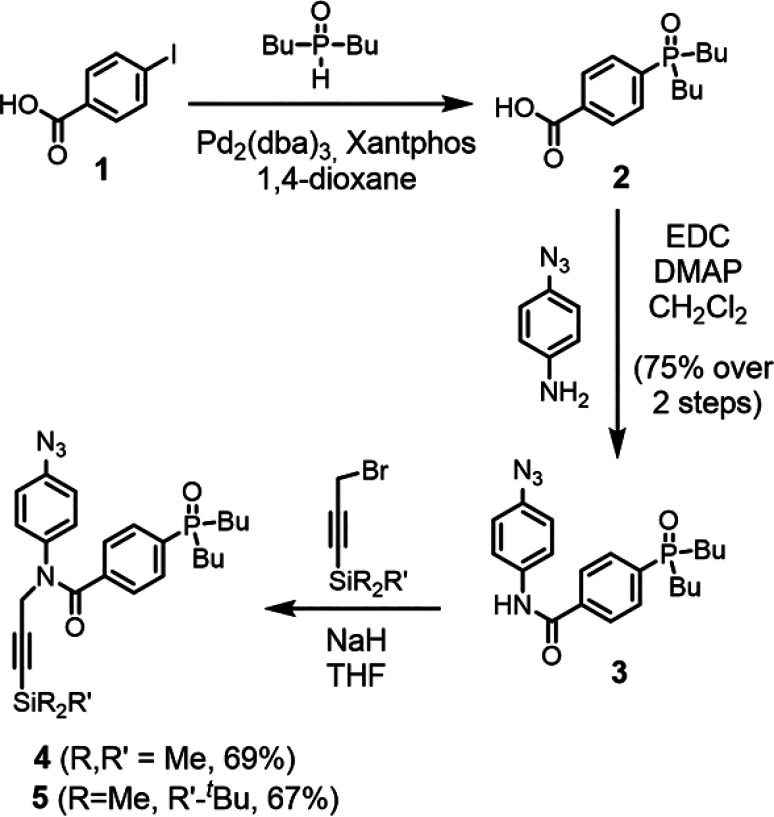
Scheme 1. Synthesis of Protected Phosphine Oxide Monomers 4 and 5
Scheme 2
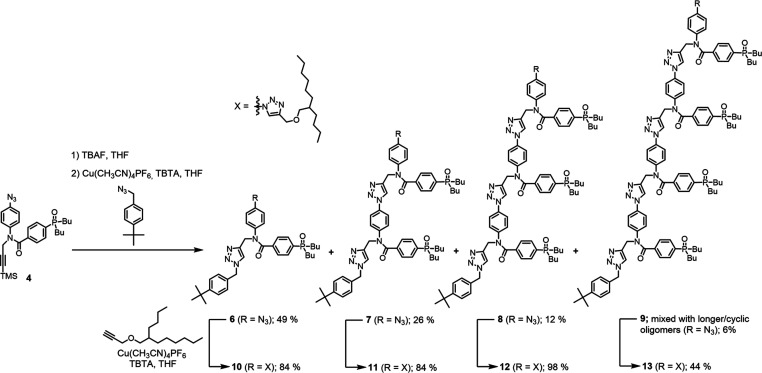
Scheme 2. Synthesis of Phosphine Oxide Oligomers 1013
Scheme 3
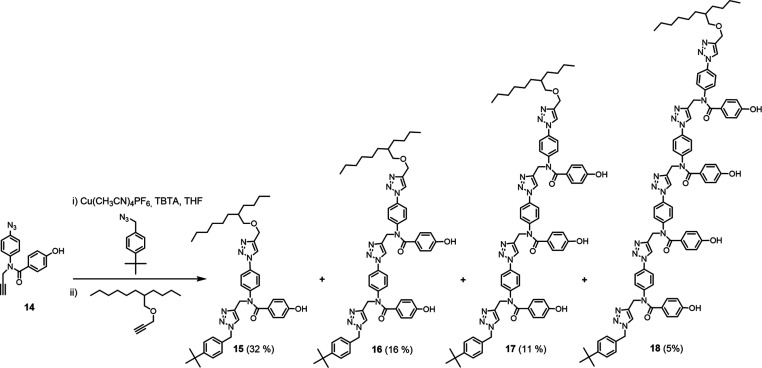
Scheme 3. Synthesis of Phenol Oligomers 1518
Scheme 4
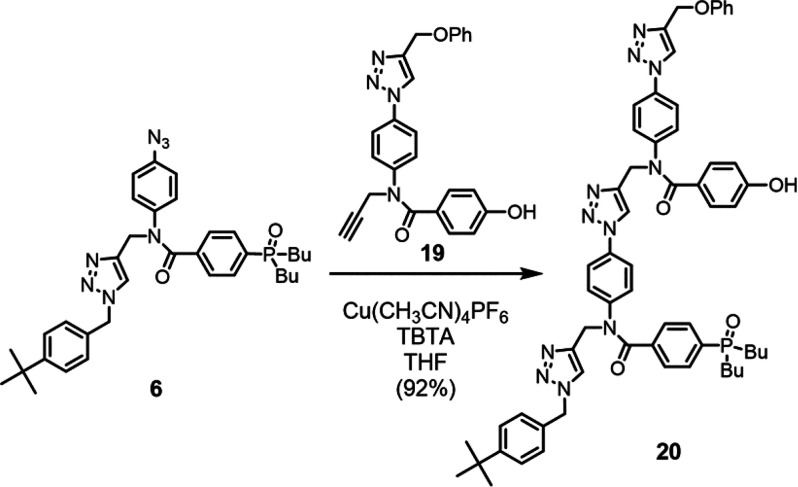
Scheme 4. Synthesis of Self-Complementary 2-Mer 20
Figure 4
Figure 4
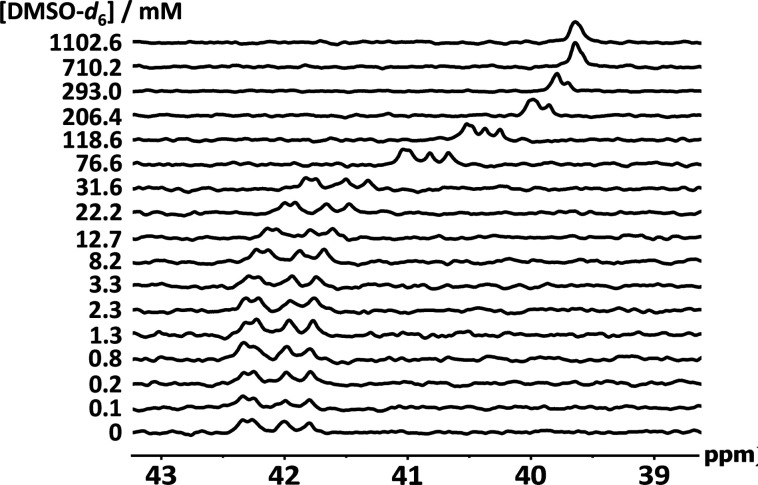
31P NMR spectra (202 MHz) for DMSO-d6 denaturation of an equimolar solution of DDDD and AAAA (1 mM) in CD2Cl2 at 298 K.
Figure 5
Figure 5
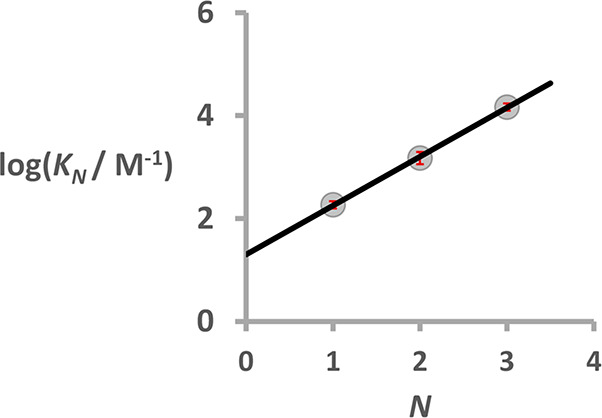
Association constants (KN) for duplex formation in CD2Cl2 at 298 K plotted as a function of the number of recognition modules in the oligomer, N. The best fit straight line is shown (logKN = 0.95 N + 1.30; R2 = 0.999).
Figure 6
Figure 6
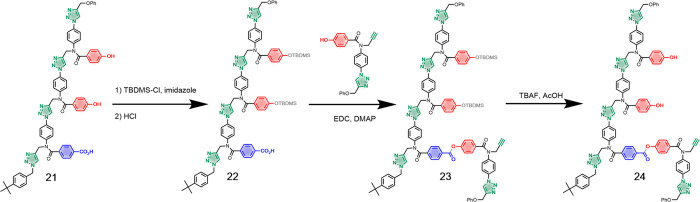
Protection-coupling-deprotection sequence of reactions used to load covalent primer 19 onto template 21.
Figure 7
Figure 7
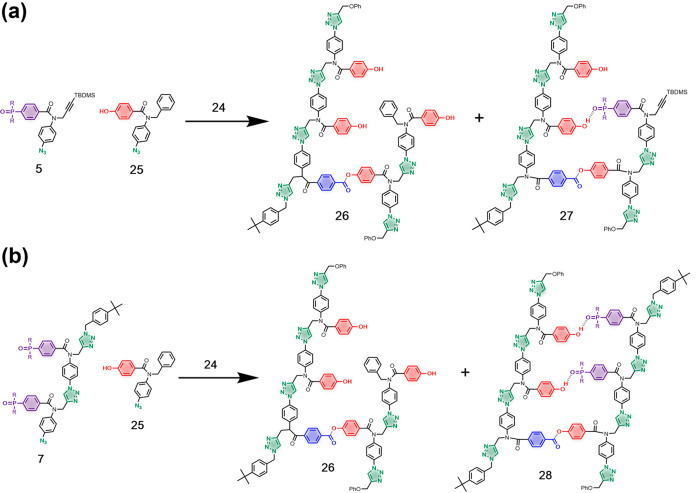
Competition CuAAC reactions used to quantify template effects. Reaction of primer-loaded template 24 with (a) a mixture of phenol and phosphine oxide monomers and (b) a mixture of phenol monomer and phosphine oxide 2-mer (R = Bu).
Figure 8
Figure 8
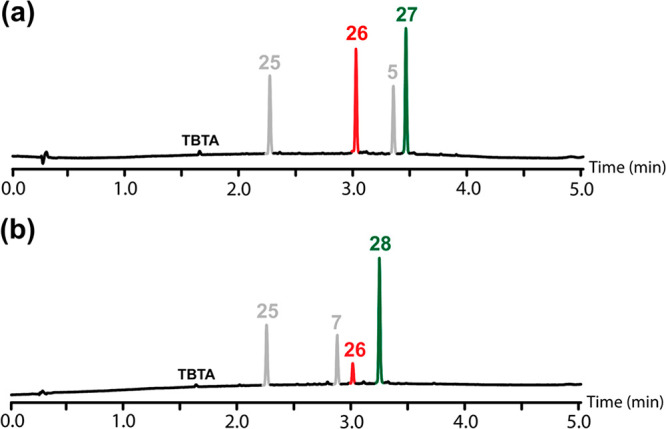
UPLC traces of crude reaction mixtures from the competition experiments shown in Figure 7 using 1:1 mixtures of azides: (a) phenol monomer 25 and phosphine oxide monomer 5 and (b) phenol monomer 25 and phosphine oxide 2-mer 7. Reaction conditions: [24] = 0.1 mM, [25] = 0.15 mM, [5] or [7] = 0.15 mM, [Cu(CH3CN)4PF6·TBTA] = 0.2 mM in CH2Cl2, stirring at room temperature for 48 h. See Figure 7 for the chemical structures. UPLC conditions: C18 column at 40 °C (254 nm) using water + 0.1% formic acid (A) and CH3CN + 0.1% formic acid (B); Gradient of 0–4 min 5% −100% B + 1 min 100% B.
Figure 9
Figure 9
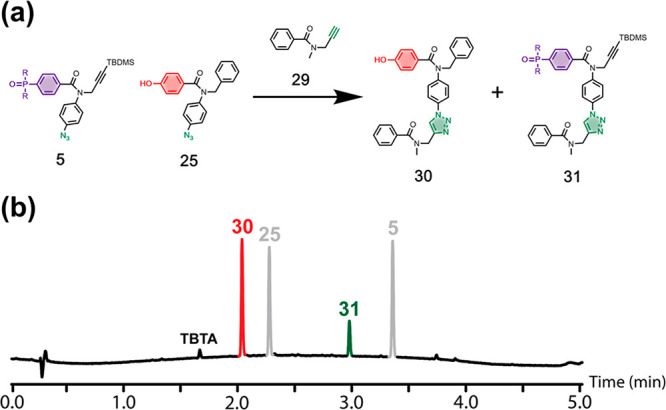
(a) Competition experiment used to quantify the relative reactivity of azides 25 and 5 in CuAAC reactions (R = Bu). (b) UPLC trace of the crude reaction mixture. Reaction conditions: [29] = 0.1 mM, [25] = 0.15 mM, [5] = 0.15 mM, [Cu(CH3CN)4PF6·TBTA] = 0.2 mM in CH2Cl2, stirring at room temperature for 48 h. UPLC conditions: C18 column at 40 °C (254 nm) using water + 0.1% formic acid (A) and CH3CN + 0.1% formic acid (B); Gradient of 0–4 min 5% −100% B + 1 min 100% B.
Figure 10
Figure 10
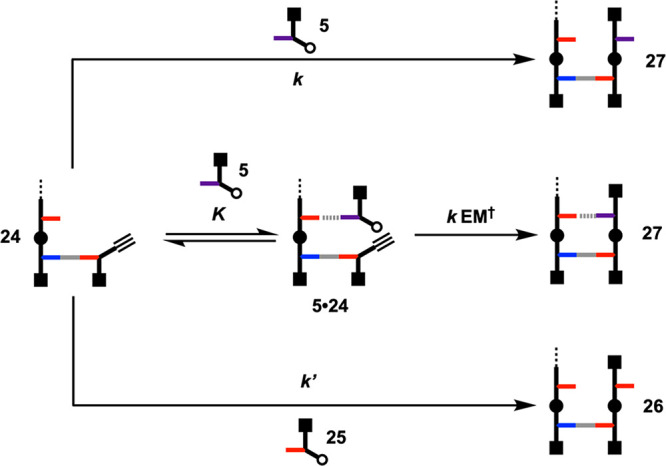
Different reaction pathways in a competition reaction between 5 and 25 for primed template 24. k and k′ are the rate constants for the nontemplated pathways, K is the association constant for formation of the 5·24 complex, and EM is the kinetic effective molarity for the templated reaction.
Figure 11
Figure 11
31P NMR spectra (500 MHz) recorded in CDCl3 at 298 K of (a) product duplex 28 (0.6 mM) and (b) the phosphine oxide 2-mer 7 (3.1 mM).
Figure 12
Figure 12
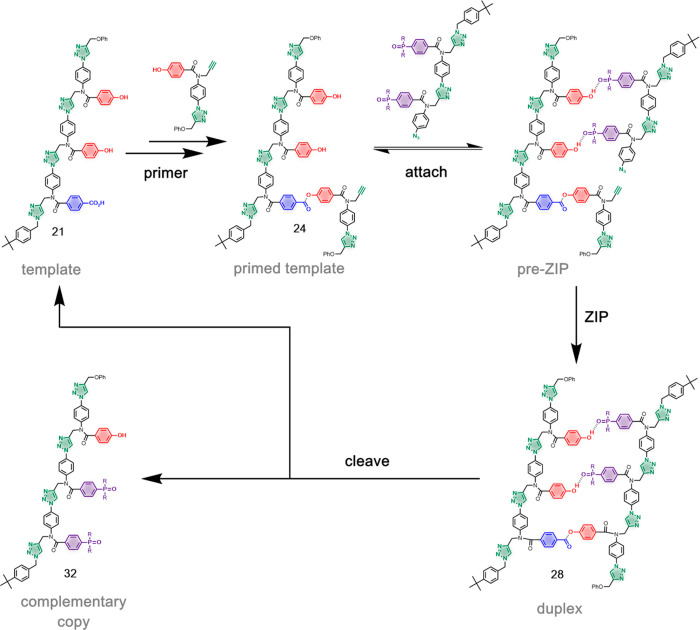
H-bond template-directed oligomer synthesis using a covalent primer. Covalent primer 19 was first loaded onto template 21 using the reaction sequence in Figure 6. H-bonding interactions between 24 and 7 lead to selective formation of duplex 28 in a CuAAC reaction. Hydrolysis of the ester base-pair gave the copy 32 and regenerated template 21.
Figure 13
Figure 13
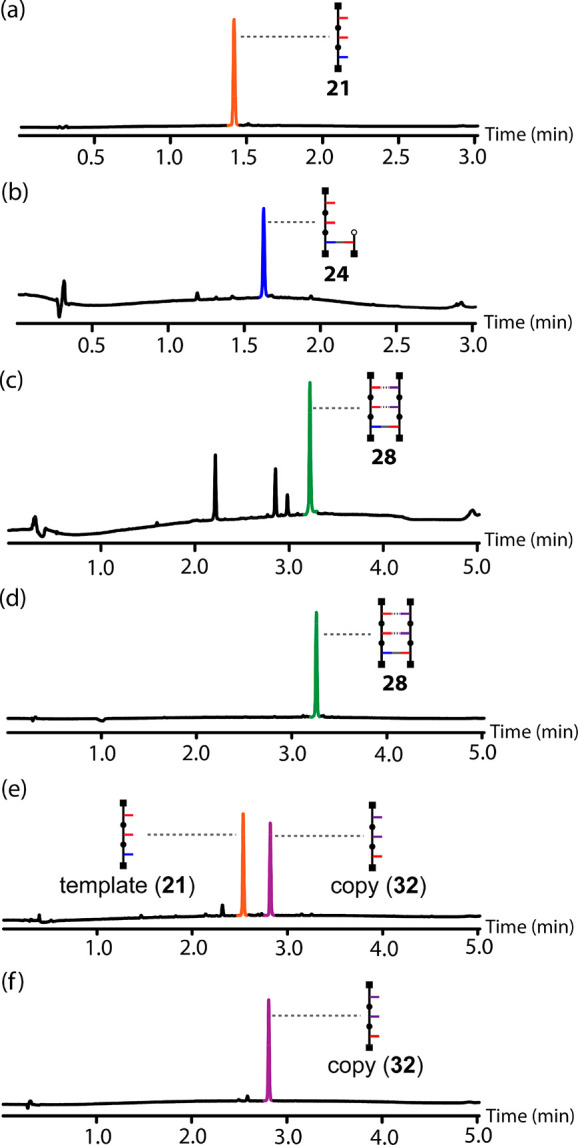
UPLC traces for H-bond template-directed oligomer synthesis using a covalent primer: (a) starting template 21; (b) crude reaction mixture after primer loading (24); (c) crude reaction mixture obtained after the CuAAC reaction of 24 in the presence of equimolar amounts of 7 and 25 (the additional peaks correspond to unreacted 7 and 25 and the competition product 26); (d) isolated duplex 28; (e) crude reaction mixture obtained after hydrolysis of the ester base-pair; (f) isolated copy 32. UPLC conditions: C18 column at 40 °C (254 nm) using water + 0.1% formic acid (A) and CH3CN + 0.1% formic acid (B); Gradient of 0–2 min 5% −100% B + 1 min 100% B for a and b and gradient of 0–4 min 5% −100% B + 1 min 100% B for c–f.

References

    1. Tuerk C.; Gold L. Systematic Evolution of Ligands by Exponential Enrichment: RNA Ligands to Bacteriophage T4 DNA Polymerase. Science 1990, 249, 505–510. 10.1126/science.2200121. - DOI - PubMed
    1. Ellington A. D.; Szostak J. W. In Vitro Selection of RNA Molecules That Bind Specific Ligands. Nature 1990, 346, 818–822. 10.1038/346818a0. - DOI - PubMed
    1. Chen K.; Arnold F. H. Tuning the Activity of an Enzyme for Unusual Environments: Sequential Random Mutagenesis of Subtilisin E for Catalysis in Dimethylformamide. Proc. Natl. Acad. Sci. U. S. A. 1993, 90, 5618–5622. 10.1073/pnas.90.12.5618. - DOI - PMC - PubMed
    1. Famulok M.; Mayer G.; Blind M. Nucleic Acid Aptamers - From Selection in Vitro to Applications in Vivo. Acc. Chem. Res. 2000, 33, 591–599. 10.1021/ar960167q. - DOI - PubMed
    1. Turner N. J. Directed evolution drives the next generation of biocatalysts. Nat. Chem. Biol. 2009, 5, 567–573. 10.1038/nchembio.203. - DOI - PubMed

Publication types