


Machine learning integration of multimodal data identifies key features of blood pressure regulation
- PMID: 36084617
- PMCID: PMC9463529
- DOI: 10.1016/j.ebiom.2022.104243
Machine learning integration of multimodal data identifies key features of blood pressure regulation
Abstract
Background: Association studies have identified several biomarkers for blood pressure and hypertension, but a thorough understanding of their mutual dependencies is lacking. By integrating two different high-throughput datasets, biochemical and dietary data, we aim to understand the multifactorial contributors of blood pressure (BP).
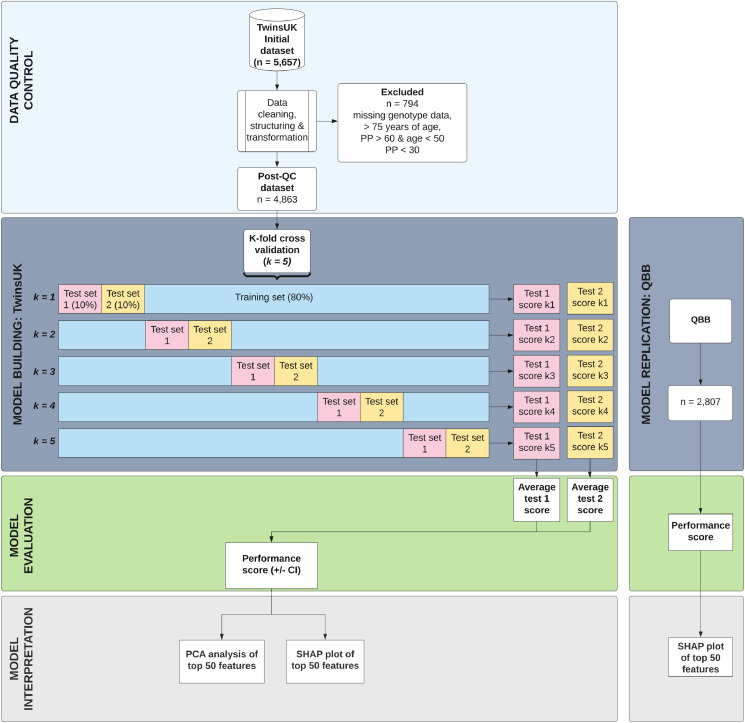
Methods: We included 4,863 participants from TwinsUK with concurrent BP, metabolomics, genomics, biochemical measures, and dietary data. We used 5-fold cross-validation with the machine learning XGBoost algorithm to identify features of importance in context of one another in TwinsUK (80% training, 20% test). The features tested in TwinsUK were then probed using the same algorithm in an independent dataset of 2,807 individuals from the Qatari Biobank (QBB).
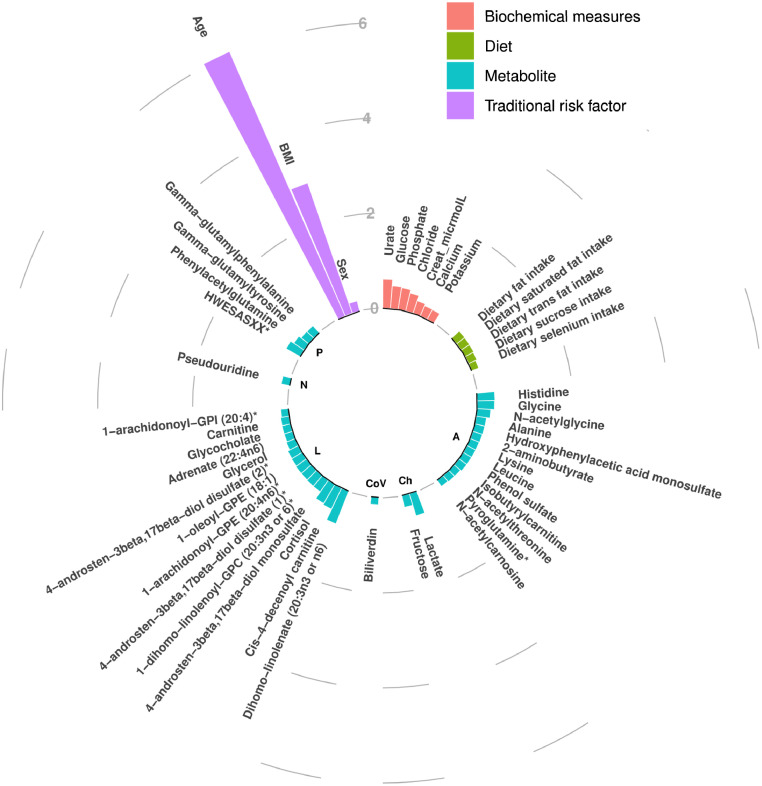
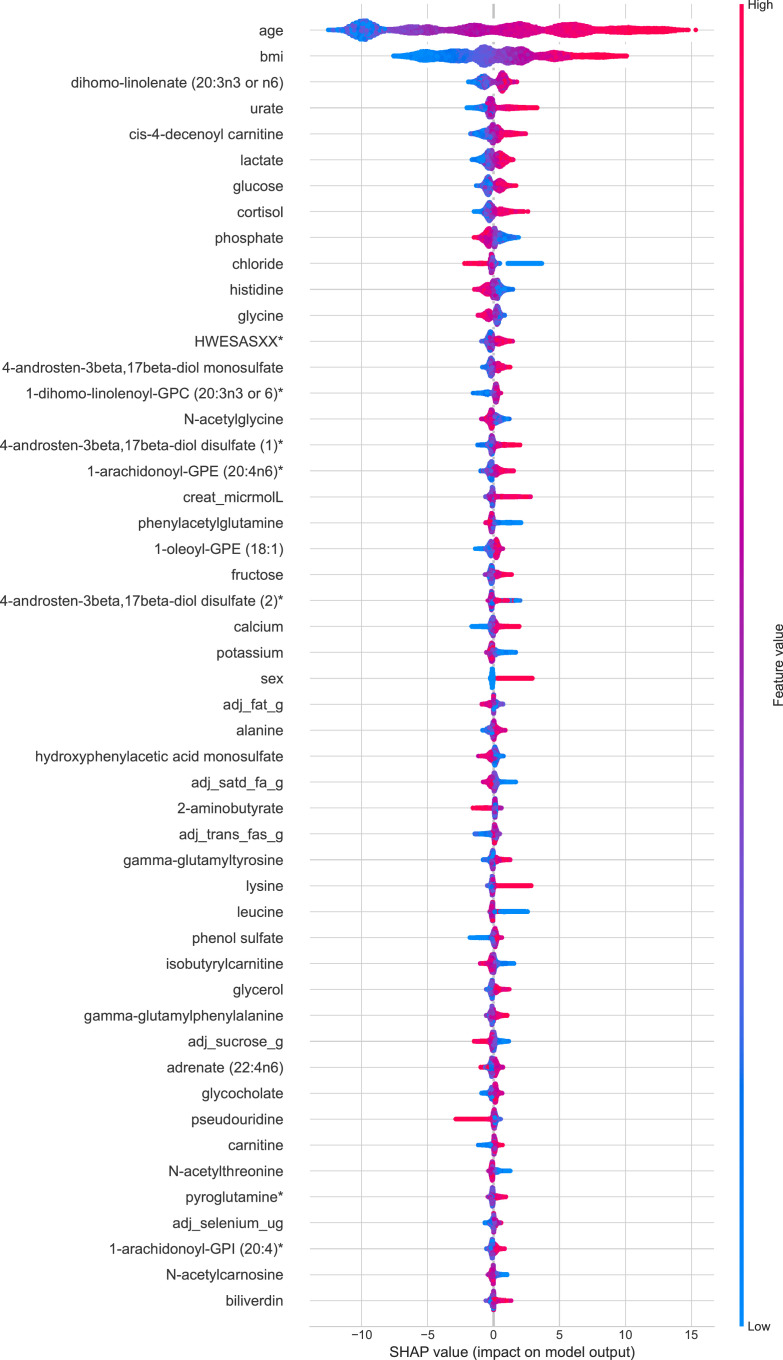
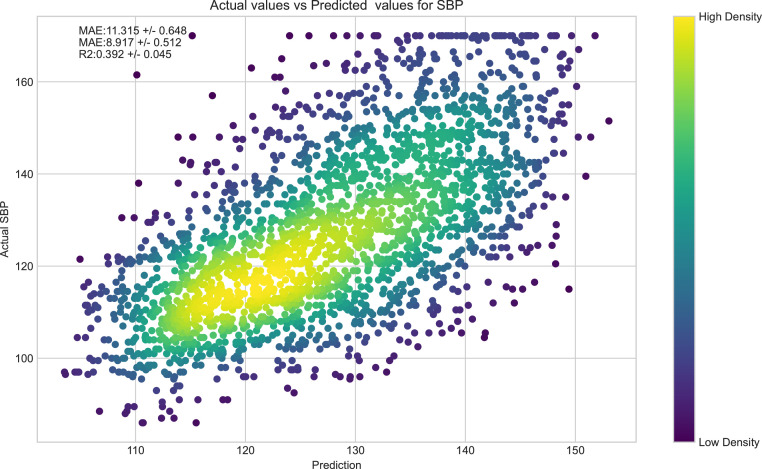
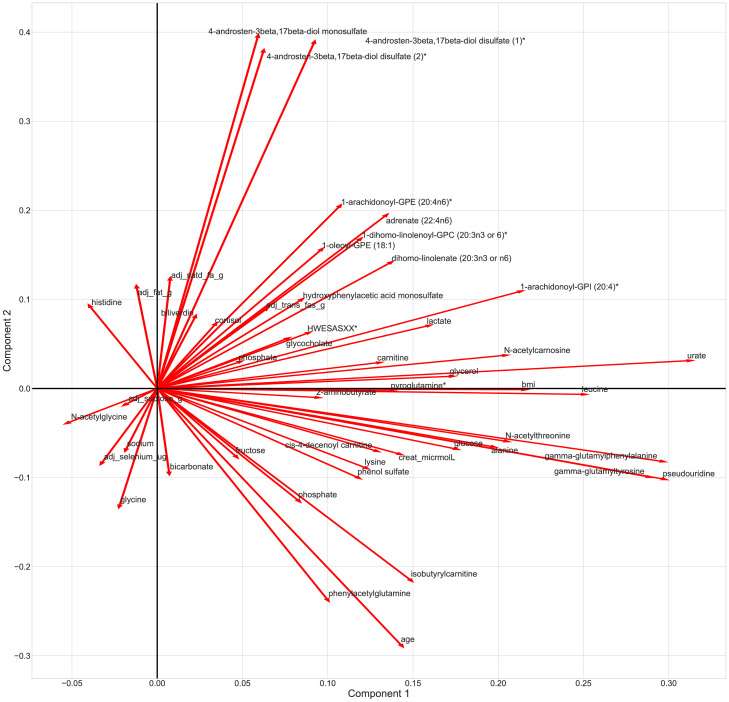
Findings: Our model explained 39·2% [4·5%, MAE:11·32 mmHg (95%CI, +/- 0·65)] of the variance in systolic BP (SBP) in TwinsUK. Of the top 50 features, the most influential non-demographic variables were dihomo-linolenate, cis-4-decenoyl carnitine, lactate, chloride, urate, and creatinine along with dietary intakes of total, trans and saturated fat. We also highlight the incremental value of each included dimension. Furthermore, we replicated our model in the QBB [SBP variance explained = 45·2% (13·39%)] cohort and 30 of the top 50 features overlapped between cohorts.
Interpretation: We show that an integrated analysis of omics, biochemical and dietary data improves our understanding of their in-between relationships and expands the range of potential biomarkers for blood pressure. Our results point to potentially key biological pathways to be prioritised for mechanistic studies.
Funding: Chronic Disease Research Foundation, Medical Research Council, Wellcome Trust, Qatar Foundation.
Keywords: Blood pressure; Diet; Genomics; Machine learning; Metabolomics.
Copyright © 2022 The Authors. Published by Elsevier B.V. All rights reserved.
Conflict of interest statement
Declaration of interests T. D. S is a co-founder and shareholder of Zoe Global. All other authors declare no competing financial interests.
Figures
References
-
- Arnett DK, Claas SA. Omics of blood pressure and hypertension. Circ Res. 2018;122(10):1409–1419. - PubMed
-
- Padmanabhan S, Dominiczak AF. Genomics of hypertension: the road to precision medicine. Nat Rev Cardiol. 2021;18(4):235–250. - PubMed
-
- Pfeffer MA, McMurray JJV. Lessons in uncertainty and humility — clinical trials involving hypertension. N Engl J Med. 2016;375(18):1756–1766. - PubMed
