Randomized Controlled Trial
. 2022 Sep 9;12(1):375.
doi: 10.1038/s41398-022-02104-8.

Children and adolescents with ASD treated with CBD-rich cannabis exhibit significant improvements particularly in social symptoms: an open label study

Affiliations
Randomized Controlled Trial

Children and adolescents with ASD treated with CBD-rich cannabis exhibit significant improvements particularly in social symptoms: an open label study

Micha Hacohen et al. Transl Psychiatry. .

Abstract

In recent years there has been growing interest in the potential benefits of CBD-rich cannabis treatment for children with ASD. Several open label studies and one double-blind placebo-controlled study have reported that CBD-rich cannabis is safe and potentially effective in reducing disruptive behaviors and improving social communication. However, previous studies have mostly based their conclusions on parental reports without the use of standardized clinical assessments. Here, we conducted an open label study to examine the efficacy of 6 months of CBD-rich cannabis treatment in children and adolescents with ASD. Longitudinal changes in social communication abilities and restricted and repetitive behaviors (RRB) were quantified using parent report with the Social Responsiveness Scale and clinical assessment with the Autism Diagnostic Observation Schedule (ADOS). We also quantified changes in adaptive behaviors using the Vineland, and cognitive abilities using an age-appropriate Wechsler test. Eighty-two of the 110 recruited participants completed the 6-month treatment protocol. While some participants did not exhibit any improvement in symptoms, there were overall significant improvements in social communication abilities as quantified by the ADOS, SRS, and Vineland with larger improvements in participants who had more severe initial symptoms. Significant improvements in RRB were noted only with parent-reported SRS scores and there were no significant changes in cognitive scores. These findings suggest that treatment with CBD-rich cannabis can yield improvements, particularly in social communication abilities, which were visible even when using standardized clinical assessments. Additional double-blind placebo-controlled studies utilizing standardized assessments are highly warranted for substantiating these findings.


Conflict of interest statement

The authors declare no competing interests.

Figures
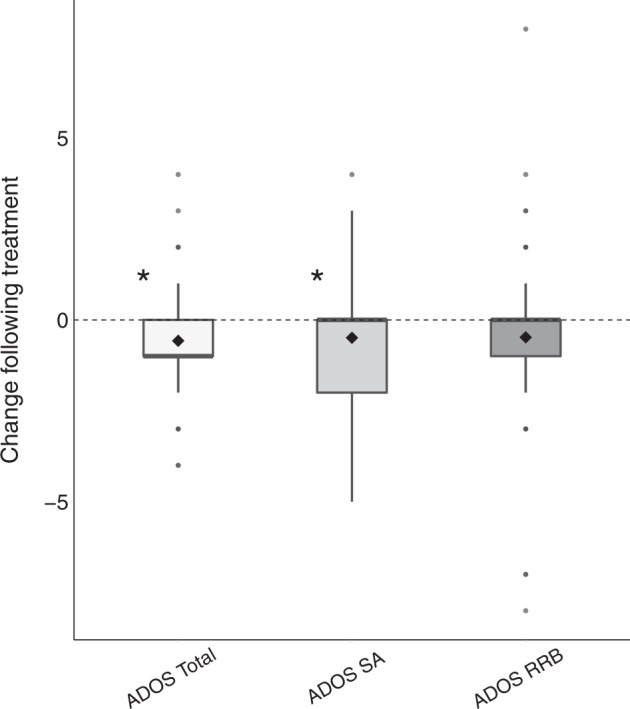
Fig. 1
Fig. 1. Change in ADOS CSS following 6-month cannabis treatment.
Box plot diagrams presenting distribution of changes in the total ADOS CSS (left) ADOS CSS SA (middle) and ADOS CSS RRB (right). Asterisk: significant change (p < 0.05, randomization test). Black diamond: mean. Bold line: median.
Fig. 2
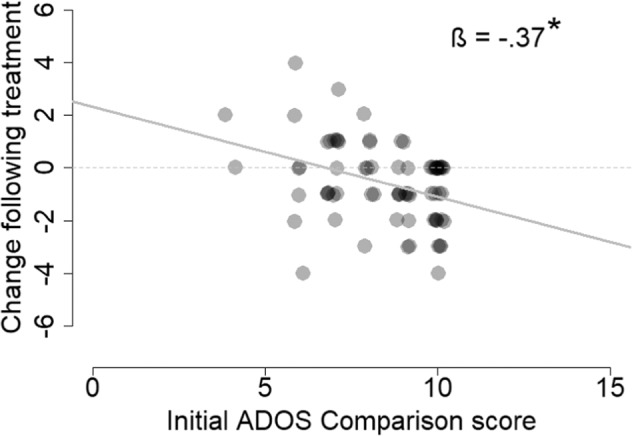
Fig. 2. Relationship between initial ADOS scores and change pre/post treatment.
Scatter plot demonstrating the relationship between initial ADOS CSS and change in ADOS CSS pre/post treatment. Asterisk: significant relationship (p < 0.05, linear regression). Gray line: regression line.
Fig. 3
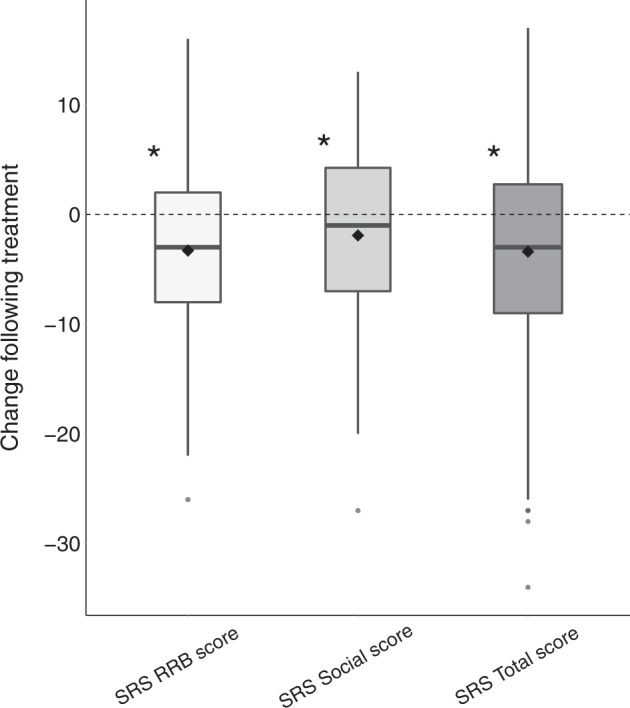
Fig. 3. Change in SRS scores, before and after treatment.
SRS restricted and repetitive behaviors (RRB) scale, SRS social scale, SRS total score. Asterisk: Significant change (p < 0.05, randomization test). Black diamond: mean. Bold line: median.
Fig. 4
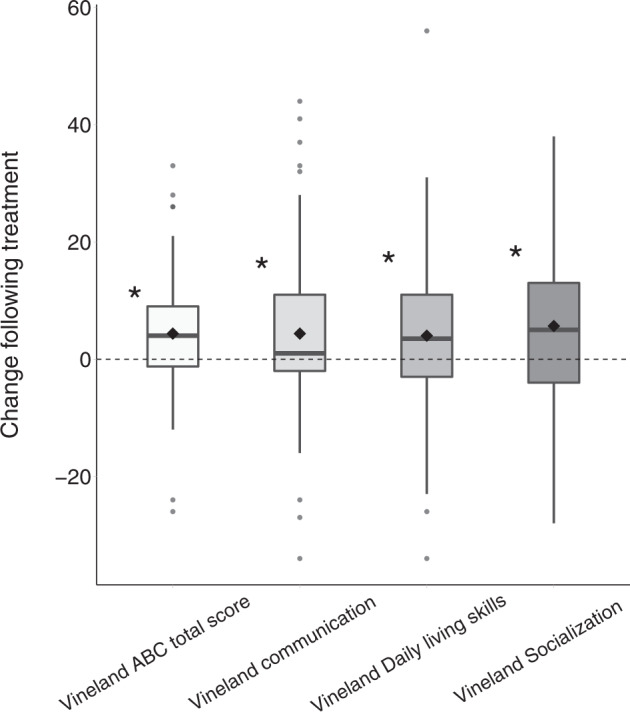
Fig. 4. Change in Vineland scores pre/post treatment.
Vineland total score, communication sub-scale, socialization sub-scale, daily living skills sub-scale. Asterisk: significant change (p < 0.05, randomization test). Black diamond: mean. Bold line: median.
Fig. 5
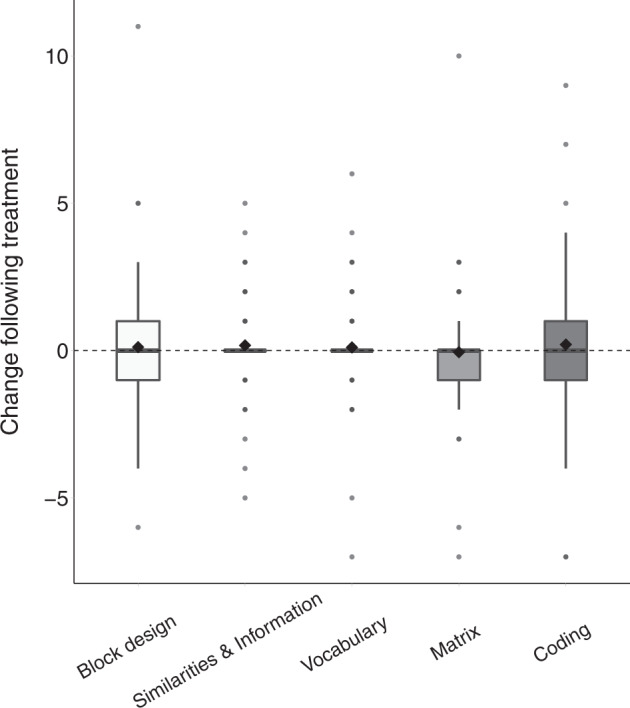
Fig. 5. Change in cognitive sub-test scores pre/post treatment.
Block design perceptual test, matrix perceptual test, vocabulary verbal test, similarities & information verbal test, coding processing speed test. Asterisk: significant change (p < 0.05, randomization test). Black diamond: mean. Bold line: median.
Fig. 6
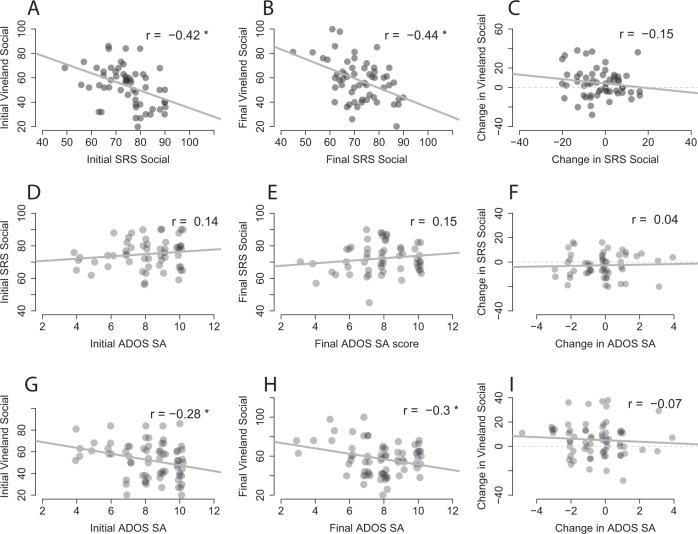
Fig. 6. Relationship across different measures of social communication skills.
Scatter plots demonstrate the relationship between: A Initial Vineland socialization and SRS social scores; B Final Vineland socialization and SRS social scores; C Pre/post change in Vineland socialization and SRS social scores. D Initial SRS social and ADOS-SA CSS scores; E Final SRS social and ADOS-SA CSS scores; F Pre/post change in SRS social and ADOS-SA CSS scores. G Initial ADOS-SA CSS and Vineland socialization scores; H Final ADOS-SA CSS and Vineland socialization scores; I Pre/post change in ADOS-SA CSS and Vineland socialization scores. Asterisk: significant correlation (p < 0.05). Gray line: linear least-squares fit.

References

    1. American Psychiatric Association, DSM-5 Task Force. (5th ed.). American Psychiatric Publishing, Inc. 2013. 10.1176/appi.books.9780890425596.
    1. Dizitzer Y, Meiri G, Flusser H, Michaelovski A, Dinstein I, Menashe I. Comorbidity and health services’ usage in children with autism spectrum disorder: a nested case–control study. Epidemiol Psychiatric Sci. 2020;29. 10.1017/S2045796020000050. - PMC - PubMed
    1. Houghton R, Liu C, Bolognani F. Psychiatric comorbidities and psychotropic medication use in autism: a matched cohort study with ADHD and general population comparator groups in the United Kingdom. Autism Res. 2018;11:1690–700. doi: 10.1002/aur.2040. - DOI - PubMed
    1. Popow C, Ohmann S, Plener P. Practitioner’s review: medication for children and adolescents with autism spectrum disorder (ASD) and comorbid conditions Practitioner Review: Medikamentöse Behandlung von Kindern und Jugendlichen mit Autismus-Spektrum-Störung (ASS) und Komorbiditäten. Neuropsychiatrie. 2021;35:113–34. doi: 10.1007/s40211-021-00395-9. - DOI - PMC - PubMed

    1. Mechoulam R, Parker LA. The endocannabinoid system and the brain. Annu Rev Psychol. 2013;64:21–47. doi: 10.1146/ANNUREV-PSYCH-113011-143739. - DOI - PubMed

Publication types