


Does noninvasive cerebellar stimulation improve the balance and walking function of patients with stroke: A meta-analysis of randomized controlled trials
- PMID: 36086722
- PMCID: PMC10980459
- DOI: 10.1097/MD.0000000000030302
Does noninvasive cerebellar stimulation improve the balance and walking function of patients with stroke: A meta-analysis of randomized controlled trials
Abstract
Objectives: Investigating the efficacy and safety of noninvasive cerebellar stimulation in improving the balance and walking function of patients with stroke.
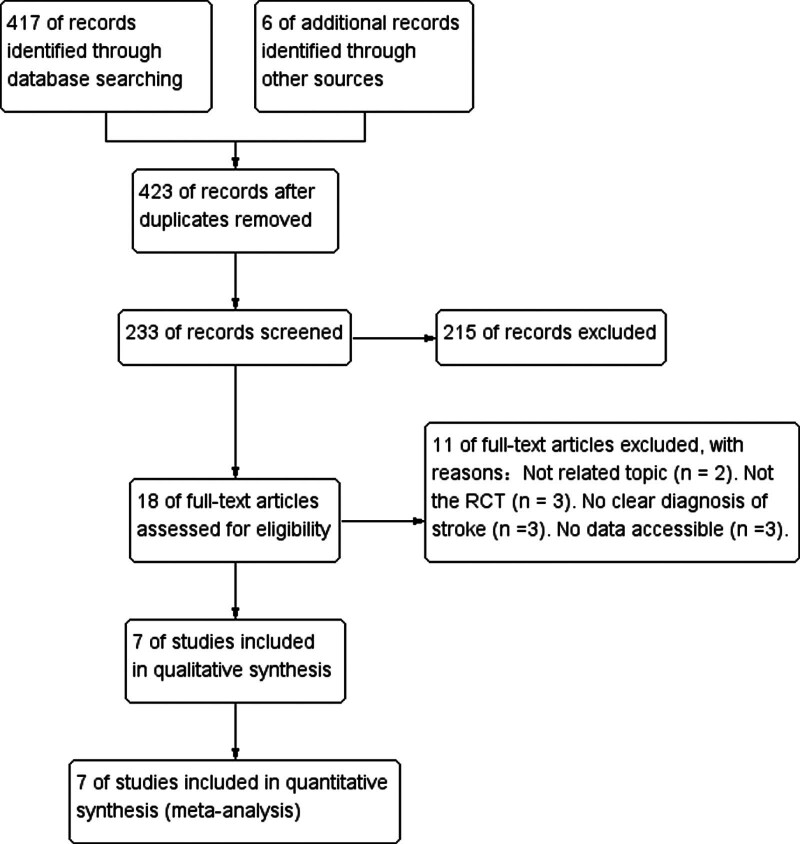
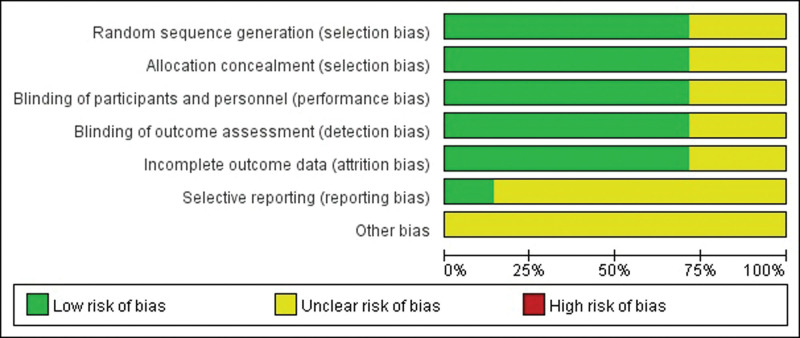
Methods: We searched 7 databases for randomized controlled trials (RCTs) related to noninvasive cerebellar stimulation in the treatment of stroke. The Berg Balance Scale (BBS), 6-minute walk test (6MWT), and Barthel Index (BI) were used as the outcome indexes to evaluate balance, walking and activities of daily living (ADL). The quality of the research was evaluated using the Cochrane Risk of Bias Tool. A meta-analysis was performed to evaluate the difference between the noninvasive cerebellar stimulation and control groups. Heterogeneity tests were performed to assess differences in treatment effects across noninvasive cerebellar stimulation modalities. A sensitivity analysis was performed to evaluate the robustness of the results.
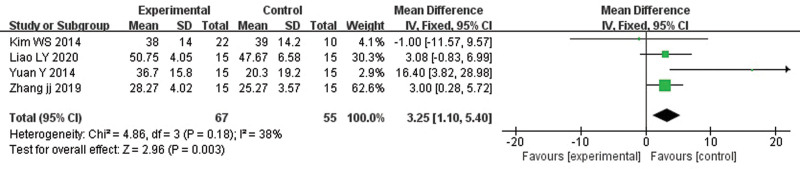
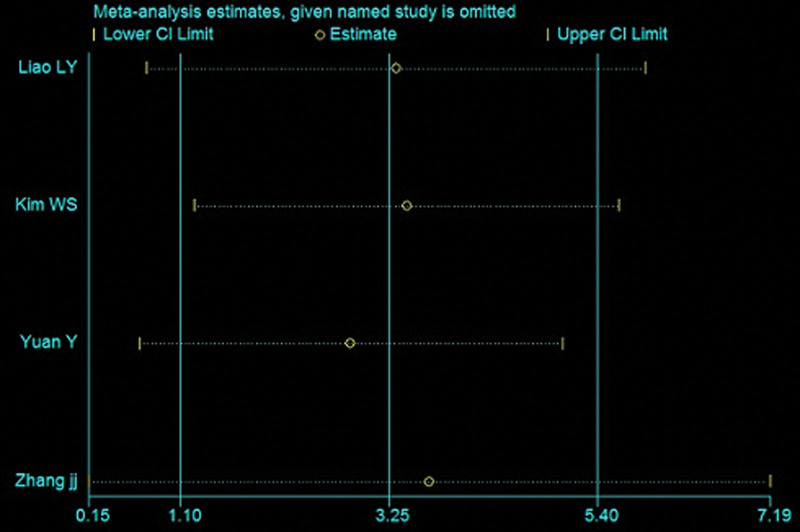
Results: Seven studies were included, and 5 articles (71.43%) were rated as having a low risk of bias. Among the primary outcome indicators, 4 of the 7 articles were combined into the fixed effect model (I2 = 38%, P = .18). Compared with the control group, noninvasive cerebellar stimulation improved the BBS score, and the difference was statistically significant (mean difference [MD]: 3.00, 95% confidence interval [CI]: 1.10-5.40, P = .03); the sensitivity analysis showed that the statistical model was still stable after sequentially eliminating each article. Compared with the control group, noninvasive cerebellar stimulation improved the 6MWT results of patients with stroke (MD: 25.29, 95% CI: 4.86-45.73, P = .02). However, noninvasive cerebellar stimulation did not improve the BI (MD: 15.61, 95% CI: -7.91 to 39.13, P = .19). No safety problems or adverse reactions to noninvasive cerebellar stimulation were observed.
Conclusions: Noninvasive cerebellar stimulation improves balance and walking function of patients with stroke, but its effect on ADL is uncertain. Due to the methodological weaknesses in the included trials, more RCTs are needed to confirm our conclusions.
Copyright © 2022 the Author(s). Published by Wolters Kluwer Health, Inc.
Conflict of interest statement
The authors declare no conflicts of interest for this study.
Figures


References
-
- Horak FB, Diener HC. Cerebellar control of postural scaling and central set in stance. J Neurophysiol. 1994;72:479–93. - PubMed
-
- Ilg W, Synofzik M, Brötz D, et al. Intensive coordinative training improves motor performance in degenerative cerebellar disease. Neurology. 2009;73:1823–30. - PubMed
-
- Lefaucheur JP, Aleman A, Baeken C, et al. Evidence-based guidelines on the therapeutic use of repetitive transcranial magnetic stimulation (rTMS): an update (2014-2018). Clin Neurophysiol. 2020;131:474–528. - PubMed
-
- Chung SW, Hill AT, Rogasch NC, et al. Use of theta-burst stimulation in changing excitability of motor cortex: a systematic review and meta-analysis. Neurosci Biobehav Rev. 2016;63:43–64. - PubMed
Publication types
MeSH terms
LinkOut - more resources
Full Text Sources
Medical
