


Factors associated with quality of life in patients with benign prostatic hyperplasia, 2009-2016
- PMID: 36086750
- PMCID: PMC9512327
- DOI: 10.1097/MD.0000000000030091
Factors associated with quality of life in patients with benign prostatic hyperplasia, 2009-2016
Abstract
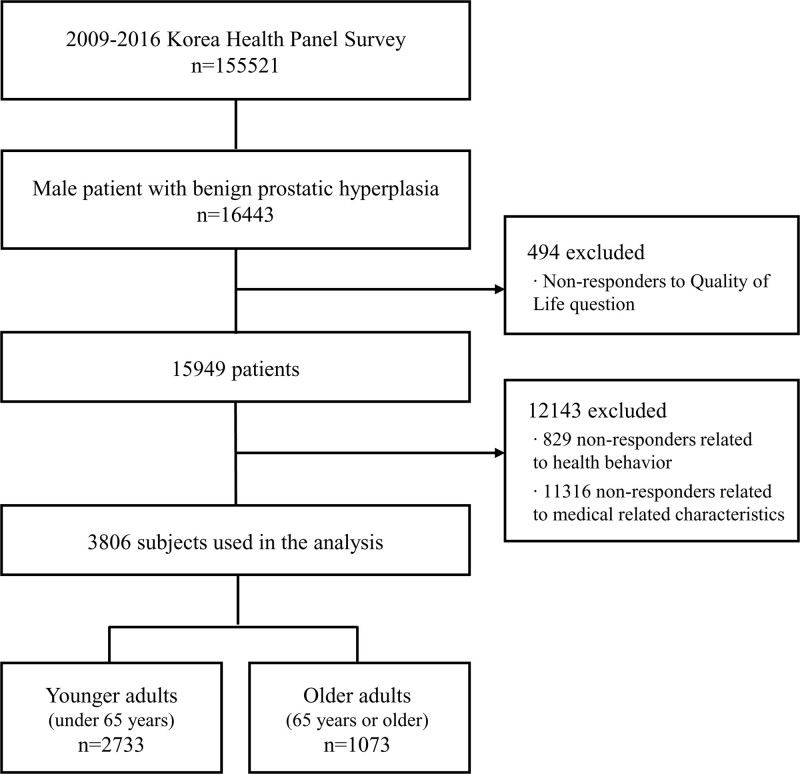
This study analyzed the factors affecting the health-related quality of life of patients with benign prostatic hyperplasia (BPH) according to age. We also aimed to determine appropriate strategies to improve their quality of life. Data from the Korea Health Panel Survey (2009-2016) were used in this study. A total of 3806 patients with BPH were divided into 2 groups: younger adults (aged under 65 years) and older adults (aged over 65 years). In addition, a logistic regression analysis was conducted to identify factors affecting the quality of life of young and older patients with BPH. In younger adult patients with BPH, the higher the level of education, the higher the quality of life by a factor of 1.379, and the more intense the physical activity, the lower the quality of life by a factor of 0.791. Also, the longer the sitting time, the lower the quality of life by a factor of 0.765. In contrast, for older adult patients with BPH, the quality of life improved by factors of 1.601 and 2.921, respectively, for health insurance and higher income level. In addition, it was found that the quality of life decreased by a factor of 0.754 in patients who drink alcohol. In order to improve the quality of life of the middle-aged adult population with BPH, it is necessary to reduce sitting time through constant physical activity. Moreover, the cost of medical care should be reduced and the quality of life increased through reductions in surgical treatment, as the burden of medical expenses will degrade the quality of life for older adults.
Copyright © 2022 the Author(s). Published by Wolters Kluwer Health, Inc.
Conflict of interest statement
The authors have no conflict of interest to declare.
References
-
- Speakman M, Kirby R, Doyle S, et al. Burden of male lower urinary tract symptoms (LUTS) suggestive of benign prostatic hyperplasia (BPH)–focus on the UK. BJU Int. 2015;115:508–19. - PubMed
-
- Sterling J, Farber N, Gupta NK. Comparing outcomes of medical management and minimally invasive surgical techniques for lower urinary tract symptoms due to BPH. Curr Urol Rep. 2019;20:29. - PubMed
MeSH terms
LinkOut - more resources
Full Text Sources
Medical
