


Profile of chimeric RNAs and TMPRSS2-ERG e2e4 isoform in neuroendocrine prostate cancer
- PMID: 36088396
- PMCID: PMC9463804
- DOI: 10.1186/s13578-022-00893-5
Profile of chimeric RNAs and TMPRSS2-ERG e2e4 isoform in neuroendocrine prostate cancer
Abstract
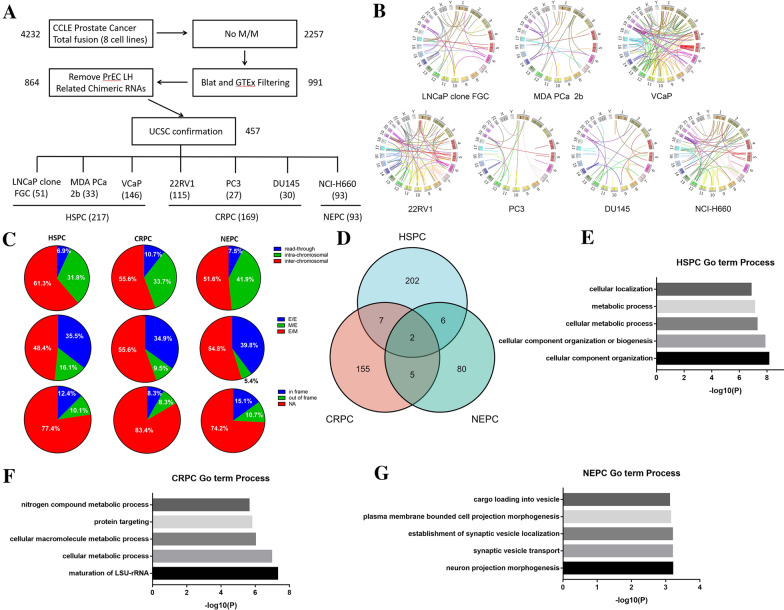
Purpose: Specific gene fusions and their fusion products (chimeric RNA and protein) have served as ideal diagnostic markers and therapeutic targets for cancer. However, few systematic studies for chimeric RNAs have been conducted in neuroendocrine prostate cancer (NEPC). In this study, we explored the landscape of chimeric RNAs in different types of prostate cancer (PCa) cell lines and aimed to identify chimeric RNAs specifically expressed in NEPC.
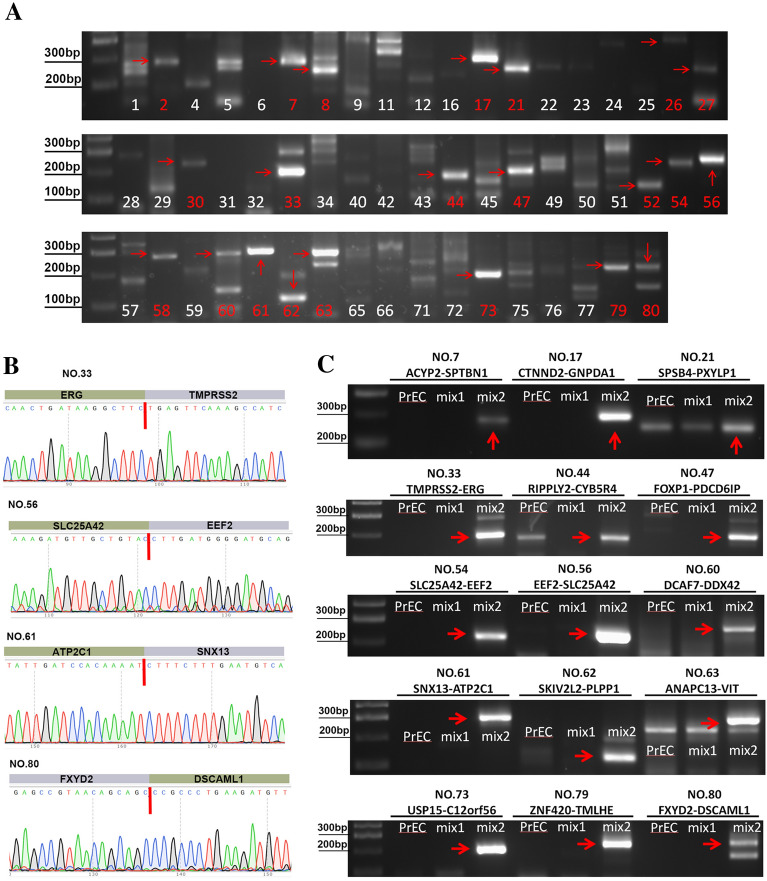
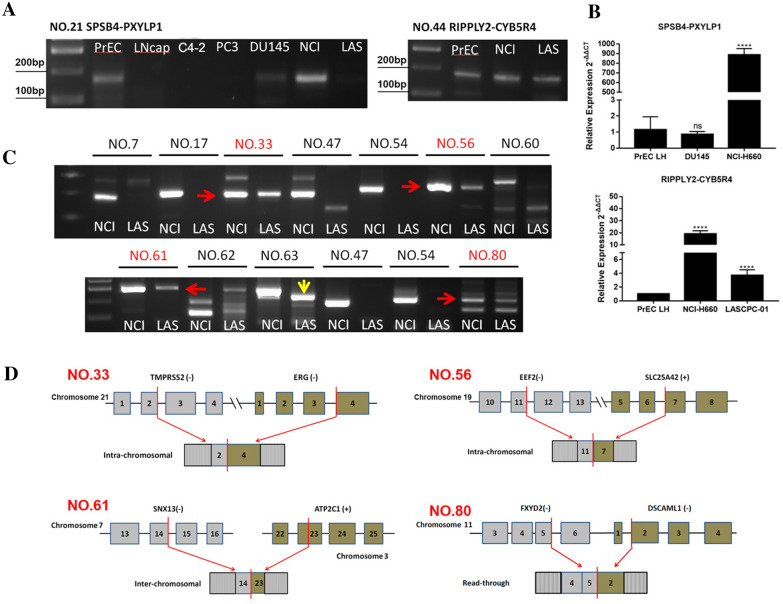
Methods: To do so, we employed the RNA-seq data of eight prostate related cell lines from Cancer Cell Line Encyclopedia (CCLE) for chimeric RNA identification. Multiple filtering criteria were used and the candidate chimeric RNAs were characterized at multiple levels and from various angles. We then performed experimental validation on all 80 candidates, and focused on the ones that are specific to NEPC. Lastly, we studied the clinical relevance and effect of one chimera in neuroendocrine process.
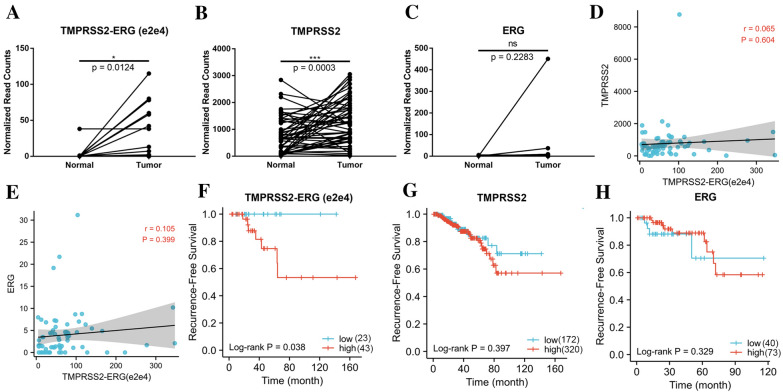
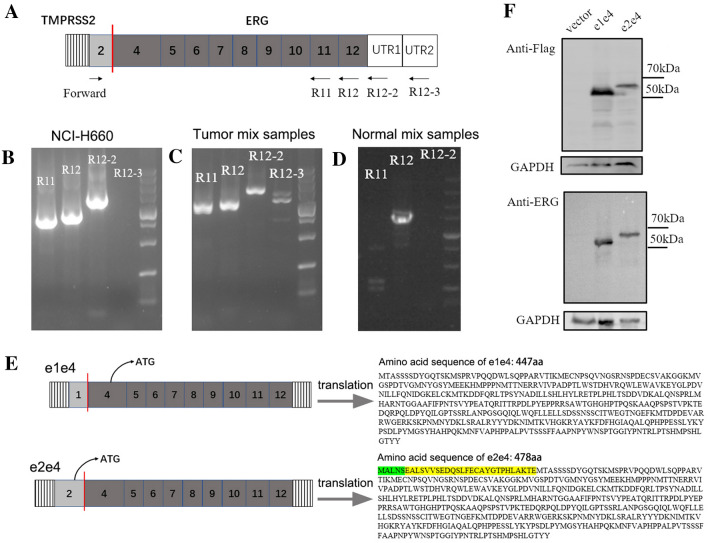
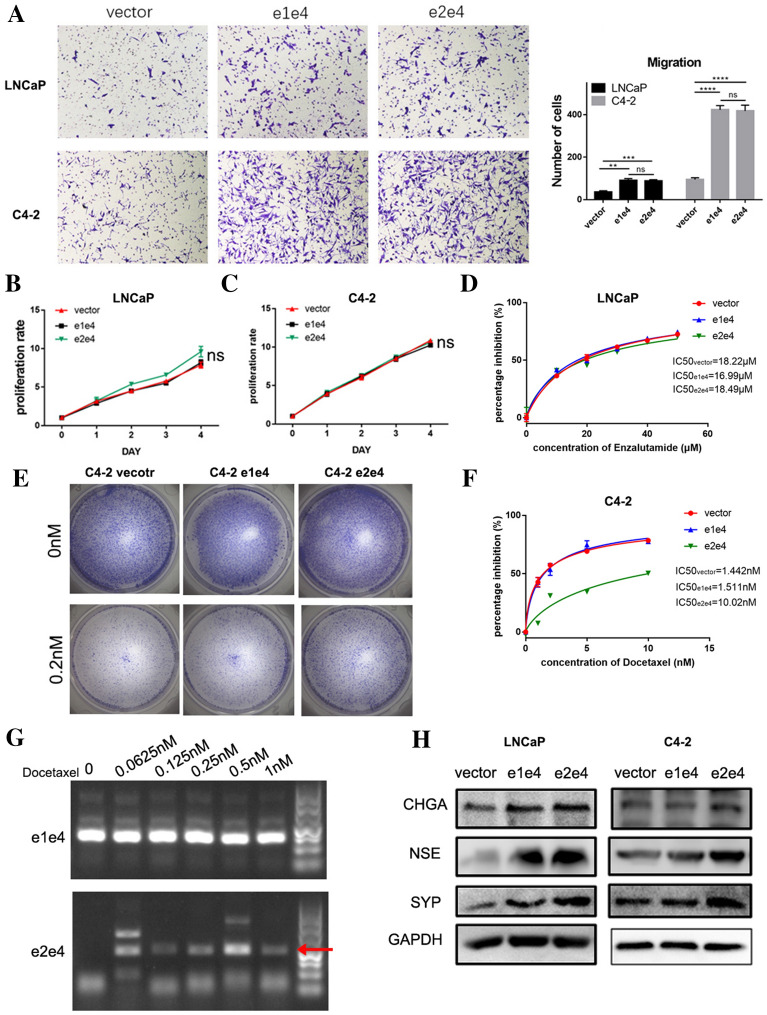
Results: Out of 80 candidates, 15 were confirmed to be expressed preferentially in NEPC lines. Among them, 13 of the 15 were found to be specifically expressed in NEPC, and four were further validated in another NEPC cell line. Importantly, in silico analysis showed that tumor malignancy may be correlated to the level of these chimeric RNAs. Clinically, the expression of TMPRSS2-ERG (e2e4) was elevated in tumor tissues and indicated poor clinical prognosis, whereas the parental wild type transcripts had no such association. Furthermore, compared to the most frequently detected TMPRSS2-ERG form (e1e4), e2e4 encodes 31 more amino acids and accelerated neuroendocrine process of prostate cancer.
Conclusions: In summary, these findings painted the landscape of chimeric RNA in NEPC and supported the idea that some chimeric RNAs may represent additional biomarkers and/or treatment targets independent of parental gene transcripts.
Keywords: Chimeric RNA; Neuroendocrine prostate cancer; TMPRSS2-ERG.
© 2022. The Author(s).
Conflict of interest statement
The authors declare that they have no competing interests.
Figures
References
-
- Beltran H, Rickman DS, Park K, Chae SS, Sboner A, MacDonald TY, Wang Y, Sheikh KL, Terry S, Tagawa ST, Dhir R, Nelson JB, de la Taille A, Allory Y, Gerstein MB, Perner S, Pienta KJ, Chinnaiyan AM, Wang Y, Collins CC, Gleave ME, Demichelis F, Nanus DM, Rubin MA. Molecular characterization of neuroendocrine prostate cancer and identification of new drug targets. Cancer Discov. 2011;1:487–495. doi: 10.1158/2159-8290.CD-11-0130. - DOI - PMC - PubMed
-
- Li Y, He Y, Butler W, Xu L, Chang Y, Lei K, Zhang H, Zhou Y, Gao AC, Zhang Q, Taylor DG, Cheng D, Farber-Katz S, Karam R, Landrith T, Li B, Wu S, Hsuan V, Yang Q, Hu H, Chen X, Flowers M, McCall SJ, Lee JK, Smith BA, Park JW, Goldstein AS, Witte ON, Wang Q, Rettig MB, Armstrong AJ, Cheng Q, Huang J. Targeting cellular heterogeneity with CXCR2 blockade for the treatment of therapy-resistant prostate cancer. Sci Transl Med. 2019 doi: 10.1126/scitranslmed.aax0428. - DOI - PMC - PubMed
Grants and funding
LinkOut - more resources
Full Text Sources
