


Regulation and physiological functions of phoenixin
- PMID: 36090042
- PMCID: PMC9456248
- DOI: 10.3389/fmolb.2022.956500
Regulation and physiological functions of phoenixin
Abstract
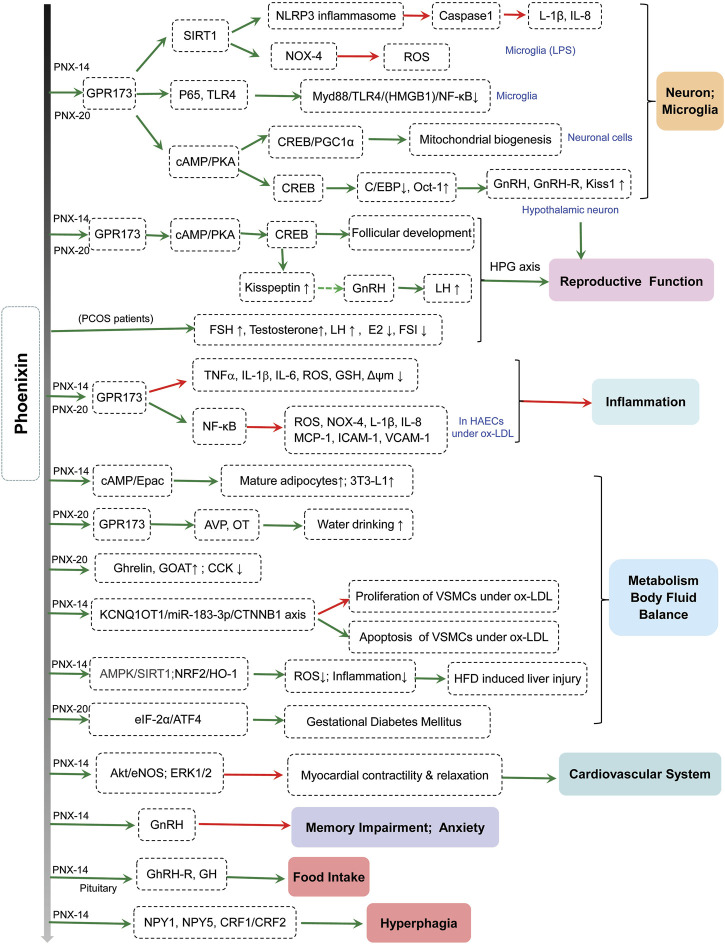
Phoenixin is a newly discovered neuropeptide generated from small integral membrane protein 20. Phoenixin is a ligand for the G protein-coupled receptor 173 (GPR173) and has been detected in central and peripheral tissues of human, rats, mice, bovine, and zebrafish. It was initially involved in regulating reproductive function by stimulating the luteinizing hormone release from pituitary cells by increasing the level of gonadotropin-releasing hormone. Recently, many functions of phoenixin have been generalized, including regulation of food intake, memory, Alzheimer's disease, anxiety, inflammation, neuronal and microglial activity, energy metabolism and body fluid balance, cardiovascular function, and endocrine activity. In addition, the interaction between phoenixin and nesfatin-1 have been revealed. The present article summarized the latest research progress on physiological function of phoenixin, suggesting that it is a potential target for novel drug development and clinical application.
Keywords: GPR173; inflammation; nesfatin-1; phoenixin; reproduction.
Copyright © 2022 Liang, Zhao, Lv and Ji.
Conflict of interest statement
The authors declare that the research was conducted in the absence of any commercial or financial relationships that could be construed as a potential conflict of interest.
Figures
References
-
- Billert M., Wojciechowicz T., Jasaszwili M., Szczepankiewicz D., Wasko J., Kazmierczak S., et al. (2018). Phoenixin-14 stimulates differentiation of 3T3-L1 preadipocytes via cAMP/Epac-dependent mechanism. Biochim. Biophys. Acta. Mol. Cell. Biol. Lipids 1863, 1449–1457. 10.1016/j.bbalip.2018.09.006 - DOI - PubMed
Publication types
LinkOut - more resources
Full Text Sources
