


Peripheral vitamin D levels in ankylosing spondylitis: A systematic review and meta-analysis
- PMID: 36091702
- PMCID: PMC9458854
- DOI: 10.3389/fmed.2022.972586
Peripheral vitamin D levels in ankylosing spondylitis: A systematic review and meta-analysis
Abstract
Objectives: Previous studies showed conflicting results regarding peripheral vitamin D levels in ankylosing spondylitis (AS). We performed this systemic review and meta-analysis to explore whether vitamin D may influence AS process.
Methods: Articles published until March 2022 were searched in databases as follows: PubMed, Web of Science, and Google Scholar. The present study included cross-sectional and case-control studies regarding vitamin D levels in patients with AS. Studies were excluded according to the following exclusion criteria: (1) we excluded studies which did not provide sufficient information regarding the comparison of vitamin D levels in AS patients and healthy controls (HC). Vitamin D levels in the two group studies should be reported or could be calculated in included studies; (2) meta-analysis, reviews and case reports. STATA 12.0 software was used to make a meta-analysis. Standard mean differences (SMDs) and 95% confidence intervals (CIs) were computed as effect size.
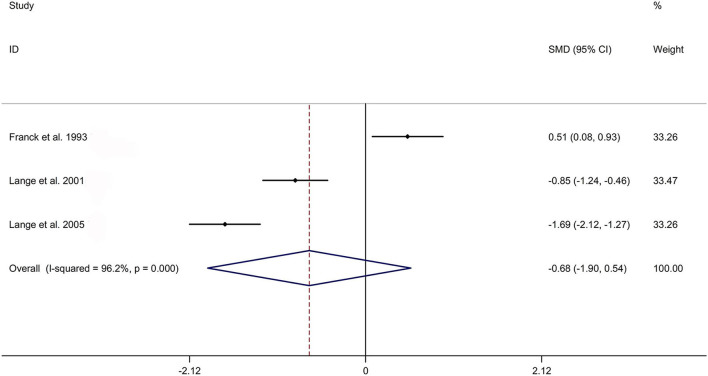
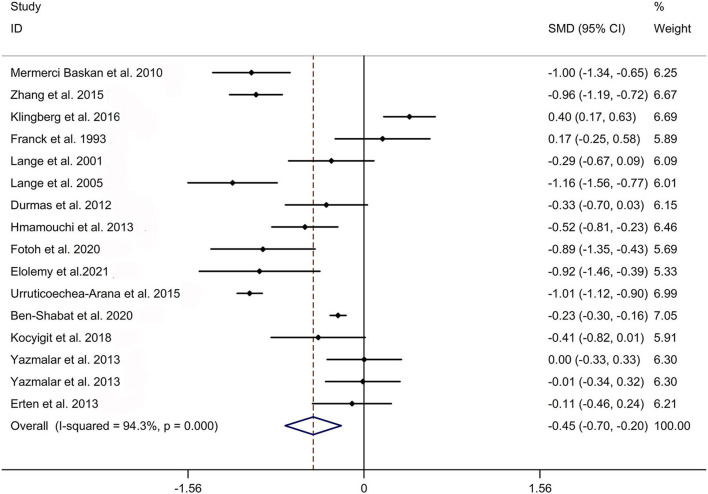
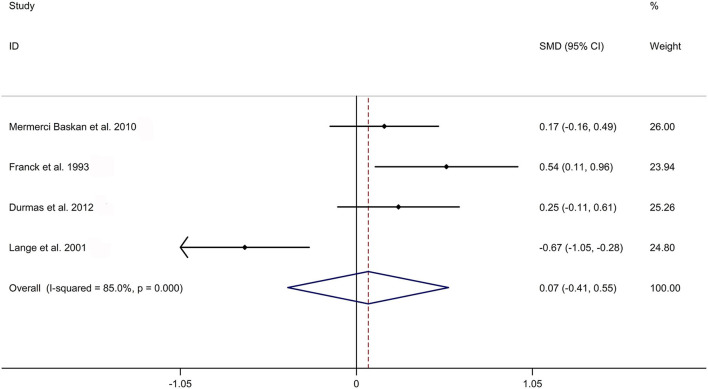
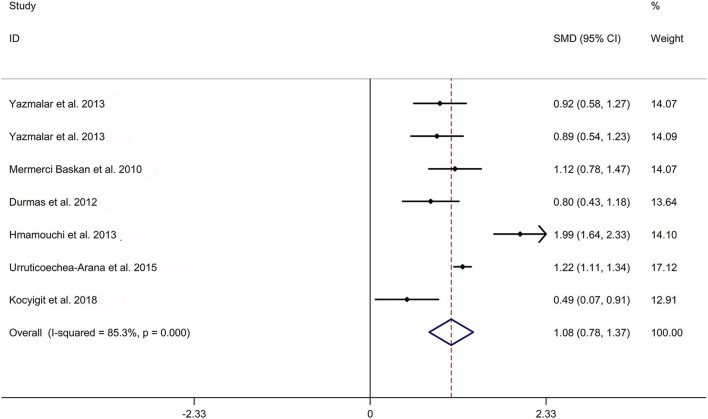
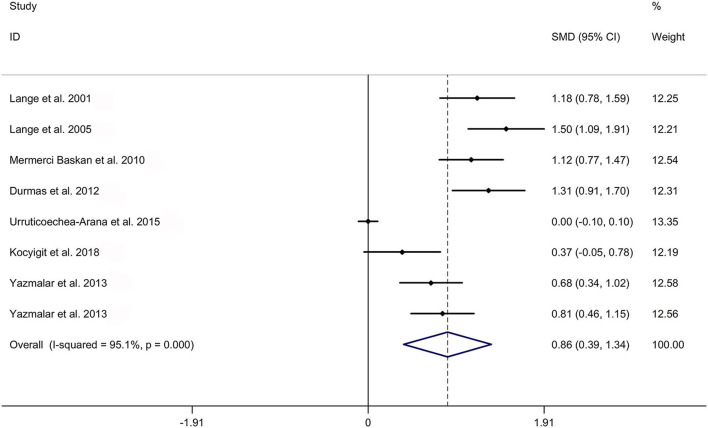
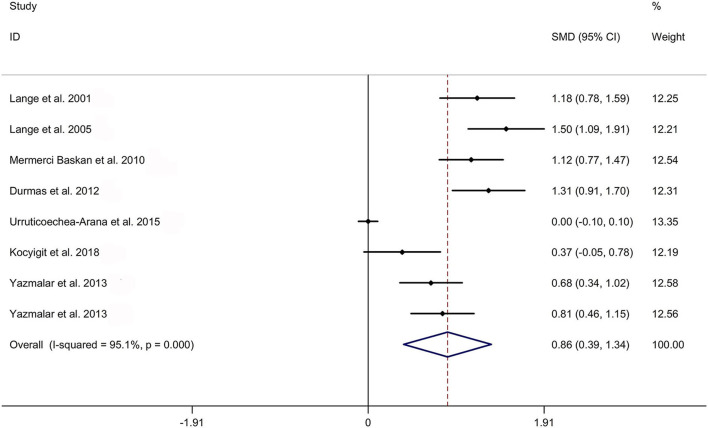
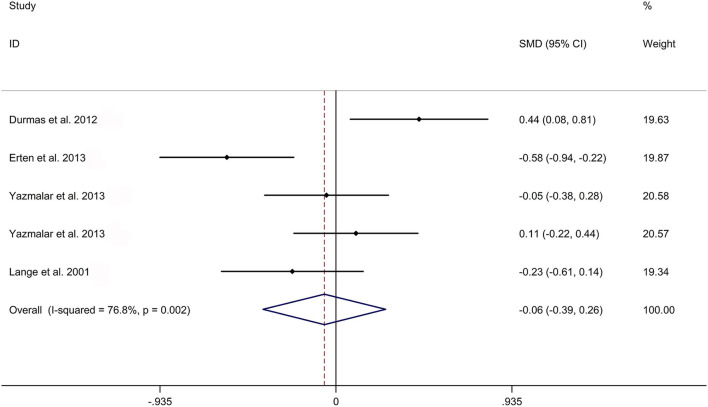
Results: The present meta-analysis showed no significant difference in peripheral 1,25-dihydroxyvitamin D3 (1,25OHD) levels between AS and healthy controls (HCs) in Caucasians with a random effects model [SMD: -0.68, 95% CI (-1.90, 0.54)]. Patients with AS had lower peripheral 25-hydroxyvitamin D (25OHD) levels compared with HC with a random effects model [SMD: -0.45, 95% CI: (-0.70, -0.20)]. Patients with AS had higher peripheral C-reactive protein (CRP) and erythrocyte sedimentation rate (ESR) levels compared with HC in Caucasian population with random effects models [CRP: SMD: 1.08, 95% CI: (0.78, 1.37); ESR: SMD: 0.86, 95% CI: (0.39, 1.34)]. However, no significant difference in alkaline phosphatase (ALP), parathyroid hormone (PTH) or calcium levels were indicated between AS and HC in Caucasian with random effects models [ALP: SMD: 0.07, 95% CI: (-0.41, 0.55); PTH: SMD: -0.15, 95% CI: (-0.56, 0.26); calcium: SMD: -0.06, 95% CI: (-0.39, 0.26)].
Conclusion: In conclusion, the study showed an inverse association between 25OHD and AS, which suggests that vitamin D may have a protective effect on AS. ESR and C-reactive protein (CRP) are important biomarkers for AS.
Keywords: 1; 25-dihydroxyvitamin D3; ankylosing spondylitis; meta-analysis; systematic review; vitamin D.
Copyright © 2022 Diao, Peng, Wang and Wang.
Conflict of interest statement
The authors declare that the research was conducted in the absence of any commercial or financial relationships that could be construed as a potential conflict of interest.
Figures
References
-
- Wenker KJ, Quint JM. Ankylosing Spondylitis. Treasure Island, FL: StatPearls Publishing LLC. (2021). - PubMed
Publication types
LinkOut - more resources
Full Text Sources
Research Materials
Miscellaneous
