


Perceptions and Experiences of Returning Self-collected Specimens for HIV, Bacterial STI and Potential PrEP Adherence Testing among Sexual Minority Men in the United States
- PMID: 36094639
- PMCID: PMC9466335
- DOI: 10.1007/s10461-022-03846-8
Perceptions and Experiences of Returning Self-collected Specimens for HIV, Bacterial STI and Potential PrEP Adherence Testing among Sexual Minority Men in the United States
Abstract
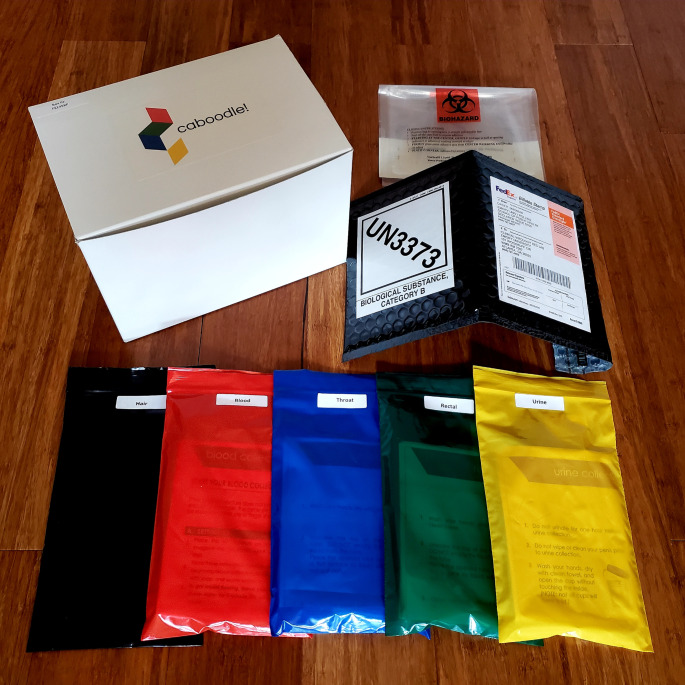
Few studies among gay, bisexual and other men who have sex with men (GBMSM) have examined facilitators and barriers to self-collecting specimens for extragenital STI screening, and none have evaluated attitudes towards self-collecting hair samples that can be utilized for PrEP drug level testing to assess adherence. To address this gap, we interviewed 25 sexually active GBMSM who were offered a choice to self-collect and return finger-stick blood samples (for actual HIV testing), pharyngeal swabs, rectal swabs and urine specimens (for actual gonorrhea and chlamydia testing), and hair samples (to visually determine their adequacy for PrEP drug level testing): 11 who returned all, 4 who returned some, and 10 who did not return any. Participants found self-collecting finger-stick blood samples and rectal swabs more challenging than other specimens. Frequently discussed facilitators of return included an opportunity to confirm one's HIV or STI status, limited access to a healthcare provider and a desire to advance research focusing on home-based testing. Commonly cited barriers to return included low self-efficacy pertaining to self-collection and apprehension around the possibility of delay or loss of specimens during transit. Offering additional support such as real-time video conferencing may prove helpful in future field-based research with GBMSM.
Keywords: HIV; Pre-exposure Prophylaxis; Self-testing; Sexual and Gender Minorities; Sexually Transmitted Diseases.
© 2022. The Author(s), under exclusive licence to Springer Science+Business Media, LLC, part of Springer Nature.
Conflict of interest statement
The authors have no relevant financial or non-financial interests to disclose.
Figures
Similar articles
-
Feasibility and Acceptability of a Motivational Interviewing-Based Telehealth Intervention for Bacterial Sexually Transmitted Infection Screening: Protocol for a Sequential Explanatory Mixed Methods Study.JMIR Res Protoc. 2024 Aug 29;13:e64433. doi: 10.2196/64433. JMIR Res Protoc. 2024. PMID: 39208425 Free PMC article.
-
Study Evaluating Self-Collected Specimen Return for HIV, Bacterial STI, and Potential Pre-Exposure Prophylaxis Adherence Testing Among Sexual Minority Men in the United States.Am J Mens Health. 2022 Jul-Aug;16(4):15579883221115591. doi: 10.1177/15579883221115591. Am J Mens Health. 2022. PMID: 35950608 Free PMC article.
-
Sexually Transmitted Infection Screening Among Gay, Bisexual, and Other Men Who Have Sex With Men Prescribed Pre-exposure Prophylaxis in Baltimore City, Maryland.Clin Infect Dis. 2020 Dec 17;71(10):2637-2644. doi: 10.1093/cid/ciz1145. Clin Infect Dis. 2020. PMID: 31761944
-
Acceptability and Feasibility of Self-Collecting Biological Specimens for HIV, Sexually Transmitted Infection, and Adherence Testing Among High-Risk Populations (Project Caboodle!): Protocol for an Exploratory Mixed-Methods Study.JMIR Res Protoc. 2019 May 2;8(5):e13647. doi: 10.2196/13647. JMIR Res Protoc. 2019. PMID: 31045502 Free PMC article.
-
Population and Individual-Level Effects of Human Immunodeficiency Virus Preexposure Prophylaxis on Sexually Transmitted Infection Epidemics Among Men Who Have Sex With Men.Sex Transm Dis. 2019 Dec;46(12):759-761. doi: 10.1097/OLQ.0000000000001080. Sex Transm Dis. 2019. PMID: 31764765 Free PMC article. Review. No abstract available.
Cited by
-
Missed opportunities to provide sexually transmitted and blood-borne infections testing in British Columbia: An interpretive description of users' experiences of Get Checked Online's design and implementation.Digit Health. 2024 Sep 2;10:20552076241277653. doi: 10.1177/20552076241277653. eCollection 2024 Jan-Dec. Digit Health. 2024. PMID: 39233893 Free PMC article.
-
Point-of-care urine tenofovir monitoring of adherence to drive interventions for HIV treatment and prevention.Expert Rev Mol Diagn. 2024 Mar;24(3):169-175. doi: 10.1080/14737159.2024.2312122. Epub 2024 Feb 14. Expert Rev Mol Diagn. 2024. PMID: 38353417 Free PMC article. Review.
-
Sexual behavior stigma and HIV/STI biospecimen self-collection among cisgender gay, bisexual, and other sexually minoritized men in the United States.BMC Infect Dis. 2024 Sep 27;24(1):1035. doi: 10.1186/s12879-024-09801-3. BMC Infect Dis. 2024. PMID: 39333935 Free PMC article.
-
Feasibility and Acceptability of a Motivational Interviewing-Based Telehealth Intervention for Bacterial Sexually Transmitted Infection Screening: Protocol for a Sequential Explanatory Mixed Methods Study.JMIR Res Protoc. 2024 Aug 29;13:e64433. doi: 10.2196/64433. JMIR Res Protoc. 2024. PMID: 39208425 Free PMC article.
-
Understanding Practical, Robust Implementation and Sustainability of Home-based Comprehensive Sexual Health Care: A Realist Review.AIDS Behav. 2024 Oct;28(10):3338-3349. doi: 10.1007/s10461-024-04415-x. Epub 2024 Jul 4. AIDS Behav. 2024. PMID: 38963569 Free PMC article. Review.
References
-
- CDC. HIV and gay and bisexual men: HIV diagnoses. 2021 Available from: https://www.cdc.gov/hiv/group/msm/msm-content/diagnoses.html. Accessed July 10, 2022.
-
- CDC. HIV and gay and bisexual men: Knowledge of status. 2021 Available from: https://www.cdc.gov/hiv/group/msm/msm-content/status-knowledge.html. Accessed July 10, 2022.
MeSH terms
Grants and funding
LinkOut - more resources
Full Text Sources
Medical
Miscellaneous
