


Effect of mirror therapy in the treatment of phantom limb pain in amputees: A systematic review of randomized placebo-controlled trials does not find any evidence of efficacy
- PMID: 36094758
- PMCID: PMC10086832
- DOI: 10.1002/ejp.2035
Effect of mirror therapy in the treatment of phantom limb pain in amputees: A systematic review of randomized placebo-controlled trials does not find any evidence of efficacy
Abstract
Background and objective: Phantom limb pain (PLP) concerns >50% of amputees and has a negative impact on their rehabilitation, mental health and quality of life. Mirror therapy (MT) is a promising strategy, but its effectiveness remains controversial. We performed a systematic review to: (i) evaluate the effectiveness of MT versus placebo in reducing PLP, and (ii) determine MT effect on disability and quality of life.
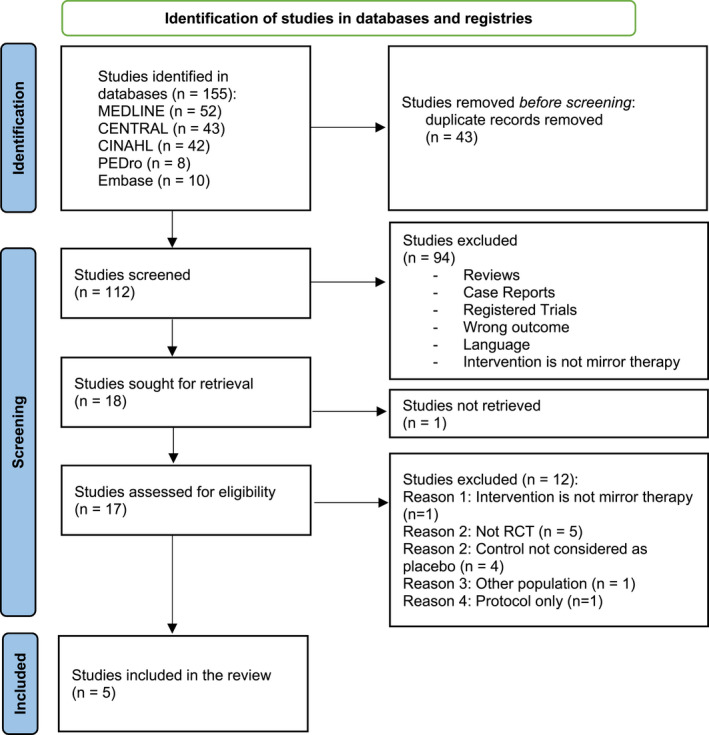
Databases and data treatment: We selected randomized-controlled trials in five databases (Medline, Cochrane Library, CINAHL, PEDro and Embase) that included patients with unilateral lower or upper limb amputation and PLP and that compared the effects on PLP of MT versus a placebo technique. The primary outcome was PLP intensity changes and the secondary outcomes were PLP duration, frequency, patients' disability and quality of life.
Results: Among the five studies included, only one reported a significant difference between the MT group and control group, with a positive MT effect at week 4. Only one study assessed MT effect on disability and found a significant improvement in the MT group at week 10 and month 6.
Conclusions: Our systematic review did not allow concluding that MT reduces PLP and disability in amputees. This lack of strong evidence is probably due to (i) the low methodological quality of the included studies, and (ii) the lack of statistical power. Future trials should include a higher number of patients, increase the number and frequency of MT sessions, have a long-term follow-up and improve the methodological quality.
Significance: Recent meta-analyses concluded that MT is effective for reducing phantom limb pain. Conversely, the present systematic review that included only studies with the best level of evidence did not find any evidence about its effectiveness for this condition. We identified many ways to improve future randomized-controlled trials on this topic: increasing the number of participants, reducing the intra-group heterogeneity, using a suitable placebo and intensifying the MT sessions and frequency.
© 2022 The Authors. European Journal of Pain published by John Wiley & Sons Ltd on behalf of European Pain Federation - EFIC ®.
Conflict of interest statement
The authors declare no conflict of interests related to this manuscript.
Figures
References
-
- Barbin, J. , Seetha, V. , Casillas, J. M. , Paysant, J. , & Pérennou, D. (2016). The effects of mirror therapy on pain and motor control of phantom limb in amputees: A systematic review. Annals of Physical and Rehabilitation Medicine, 59, 270–275. - PubMed
-
- Batsford, S. , Ryan, C. G. , & Martin, D. J. (2017). Non‐pharmacological conservative therapy for phantom limb pain: A systematic review of randomized controlled trials. Physiotherapy Theory and Practice, 33, 173–183. - PubMed
Publication types
MeSH terms
LinkOut - more resources
Full Text Sources
Medical
Research Materials
