


Paper 2: a systematic review of narrative therapy treatment outcomes for eating disorders-bridging the divide between practice-based evidence and evidence-based practice
- PMID: 36096908
- PMCID: PMC9469550
- DOI: 10.1186/s40337-022-00636-4
Paper 2: a systematic review of narrative therapy treatment outcomes for eating disorders-bridging the divide between practice-based evidence and evidence-based practice
Abstract
Background: Narrative therapy has been proposed to have practice-based evidence however little is known about its research evidence-base in the treatment of eating disorders. The aim of this study was to conduct a systematic review of the outcome literature of narrative therapy for eating disorders.
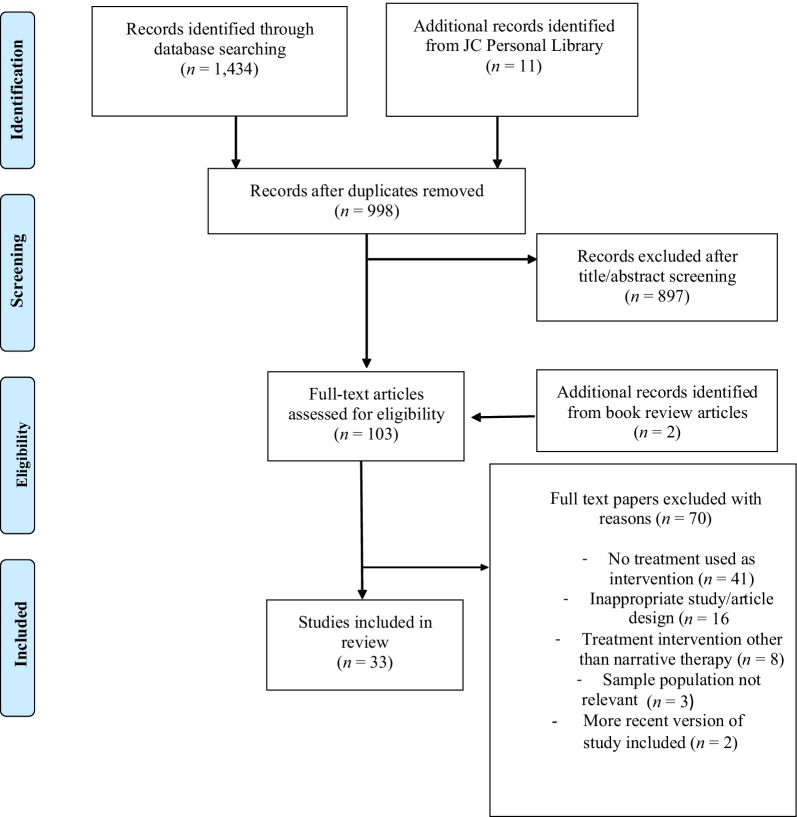
Method: Treatment outcome data were extracted from 33 eligible included studies following systematic search of five data bases. The study is reported according to Preferred Reporting items for Systematic Reviews and Meta-Analyses guidelines.
Results: Of the identified 33 studies, 3 reported positive outcomes using psychometric instruments, albeit some were outdated. Otherwise, reported outcomes were based on therapy transcript material and therapist reports. The most commonly reported treatment outcome was in relation to shifts in identity narratives and improved personal agency with a trend towards under-reporting shifts in ED symptoms. Some improvements were reported in interpersonal and occupational engagement, reduced ED symptoms, and improved quality of life, however, there was an absence of standardized measures to support these reports.
Conclusions: This systematic review found limited support for narrative therapy in the treatment of eating disorders through practice-based evidence in clinician reports and transcripts of therapy sessions. Less is known about systematic treatment outcomes of narrative therapy. There is a need to fill this gap to understand the effectiveness of narrative therapy in the treatment of EDs through systematic (1) Deliveries of this intervention; and (2) Reporting of outcomes. In doing so, the research arm of narrative therapy evidence base will become more comprehensively known.
Keywords: Eating disorders; Narrative therapy; Systematic review; Treatment outcomes.
Plain language summary
Narrative therapy has been proposed as a promising intervention for the treatment of eating disorders. However, the treatment outcomes of narrative therapy for eating disorders are under-researched. This systematic review of the literature has demonstrated limited support for narrative therapy through practice-based evidence in clinician reports and transcripts of therapy sessions. These reports demonstrated how narrative therapy was associated with identity shifts, some symptom reduction, reduced hospitalisations, improved agency over the problem and improvements in quality of life. There is a need for future research to systematically report treatment outcomes. This will fill a gap in research evidence-base for narrative therapy in the treatment of eating disorders.
© 2022. The Author(s).
Conflict of interest statement
The author(s) declare(s) that they have no competing interests.
References
-
- American Psychiatric Association . Diagnostic and statistical manual of mental disorders. 5. Washington, D.C.: American Psychiatric Association; 2013.
Publication types
LinkOut - more resources
Full Text Sources
Miscellaneous
