


Association between chemosensory dysfunctions and inflammatory biomarkers in patients with SARS-CoV-2 infection: a systematic review and meta-analysis
- PMID: 36097300
- PMCID: PMC9467422
- DOI: 10.1007/s10787-022-01066-z
Association between chemosensory dysfunctions and inflammatory biomarkers in patients with SARS-CoV-2 infection: a systematic review and meta-analysis
Abstract
Background: There is evidence that chemosensory dysfunctions, including smell and taste disorders, are common findings in patients with SARS-CoV-2 infection. However, the underlying biological mechanisms and the role of inflammatory markers are still poorly understood.
Aim: To investigate the inflammatory biomarkers levels in patients with COVID-19 presenting chemosensory dysfunctions.
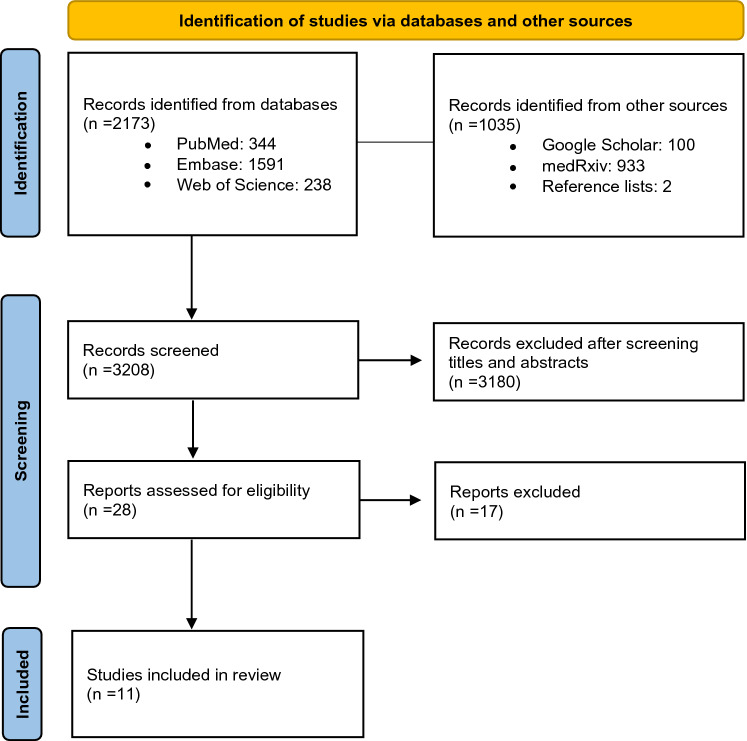
Methods: This review was conducted according to the Preferred Reporting Items for Systematic Reviews and Meta-Analyses (PRISMA) guideline. A systematic literature search was performed from January 1, 2020, to May 12, 2022. Observational studies that provided data on hematological, biochemical, infection-related indices and cellular immunity, and coagulation function in patients with COVID-19 experiencing smell and/or taste disorders were considered eligible. Effect sizes were reported as standardized mean difference (SMD) with 95% confidence intervals (CI). A negative effect size indicated that the inflammatory biomarker levels were lower among patients with chemosensory dysfunctions.
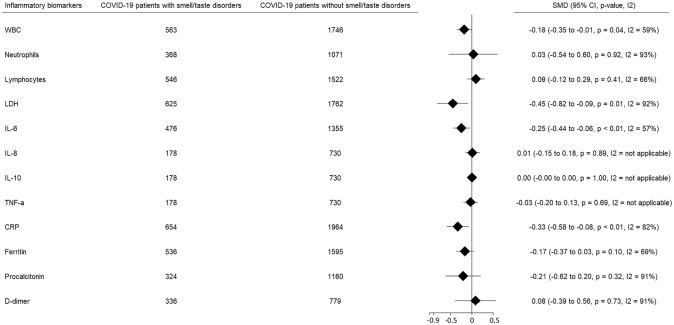
Results: Eleven studies were included. Patients with chemosensory disturbances had lower levels of leukocytes (SMD - 0.18, 95% CI - 0.35 to - 0.01, p = 0.04), lactate dehydrogenase (SMD - 0.45, 95% CI - 0.82 to - 0.09, p = 0.01), IL-6 (SMD - 0.25, 95% CI - 0.44 to - 0.06, p < 0.01), and C-reactive protein (SMD - 0.33, 95% CI - 0.58 to - 0.08, p < 0.01) than patients without chemosensory disturbances.
Conclusion: Patients with SARS-CoV-2 infection who have olfactory and gustatory disorders have a lower inflammatory response than patients who do not have chemosensory alterations. The presence of these symptoms may indicate a more favorable clinical course for COVID-19.
Keywords: Ageusia; Anosmia; COVID-19; Cytokines; Inflammation mediators; Olfaction disorders; SARS-CoV-2 infection; Taste disorders.
© 2022. The Author(s), under exclusive licence to Springer Nature Switzerland AG.
Conflict of interest statement
The authors declare that there is no competing interest. All authors have approved the manuscript for submission.
Figures
References
Publication types
MeSH terms
Substances
Grants and funding
LinkOut - more resources
Full Text Sources
Medical
Research Materials
Miscellaneous