


Updates on Histoplasmosis in Solid Organ Transplantation
- PMID: 36097519
- PMCID: PMC9453730
- DOI: 10.1007/s12281-022-00441-1
Updates on Histoplasmosis in Solid Organ Transplantation
Abstract
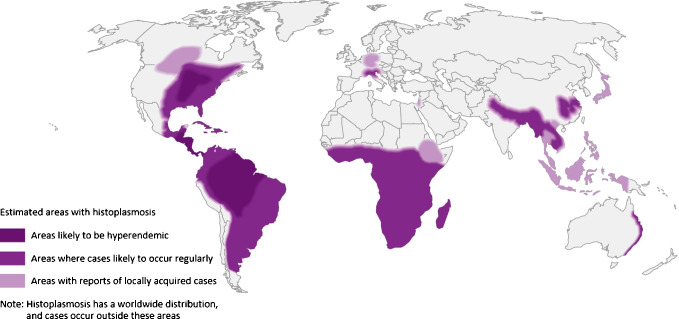
Purpose of review: Histoplasmosis remains a challenging infection in solid organ transplantation. This review provides a topic update with emphasis on the changing Histoplasma epidemiology, along with new diagnostic and treatment innovations.
Recent findings: Recent years have observed expanding Histoplasma geographic distribution due to climate change, environmental disruption, and host factors. Early clinical experience also suggests a relationship between COVID-19 infection and histoplasmosis, particularly among immunocompromised individuals. Advances in diagnostic methods, such as newer enzyme immunoassays and molecular techniques, have broadened the capability for expedient and highly specific pathogen identification. Novel drug innovations, including the development of new formulations of existing antifungal agents, extended-spectrum azoles and new antifungal drug classes have expanded therapeutic options.
Summary: Advances in organ transplantation have largely outpaced those for histoplasmosis. However, these emerging insights enhance our understanding of this pathogen and management of clinical infection, particularly for transplant recipients with a higher incidence and severity of disease.
Keywords: Antifungal therapy; COVID-19; Endemic mycoses; Histoplasmosis; Immunocompromised; Infection; Solid organ transplantation.
© The Author(s), under exclusive licence to Springer Science+Business Media, LLC, part of Springer Nature 2022, Springer Nature or its licensor holds exclusive rights to this article under a publishing agreement with the author(s) or other rightsholder(s); author self-archiving of the accepted manuscript version of this article is solely governed by the terms of such publishing agreement and applicable law.
Conflict of interest statement
Conflict of InterestJennifer L. Saullo declares that she has no conflicts of interest. Rachel A. Miller receives research support from Scynexis (institutional principal investigator in the FURI clinical trial, NCT03059992) and has no other conflicts of interest to disclose.
Figures
References
-
- Kauffman CA, Freifeld AG, Andes DR, Baddley JW, Herwaldt L, Walker RC, et al. Endemic fungal infections in solid organ and hematopoietic cell transplant recipients enrolled in the Transplant-Associated Infection Surveillance Network (TRANSNET) Transpl Infect Dis. 2014;16(2):213–224. doi: 10.1111/tid.12186. - DOI - PMC - PubMed
-
- Benedict K, Toda M, Jackson BR. Revising conventional wisdom about histoplasmosis in the United States. Open Forum Infect Dis. 2021;8(7):ofab306. 10.1093/ofid/ofab306. Excellent review of the evolving epidemiology of histoplasmosis including expanding geographic distribution and recent insights into changes in clinical spectrum and underlying conditions associated with the severe forms of histoplasmosis. - PMC - PubMed
Publication types
LinkOut - more resources
Full Text Sources
Research Materials