


Efficacy and safety of non-pharmacological interventions for endotracheal suctioning pain in preterm infants: A systematic review
- PMID: 36100551
- PMCID: PMC9834158
- DOI: 10.1002/nop2.1364
Efficacy and safety of non-pharmacological interventions for endotracheal suctioning pain in preterm infants: A systematic review
Abstract
Aim: To review and analyse the evidence on the efficacy and safety of non-pharmacological interventions for preterm infants to relieve endotracheal suctioning (ES) pain.
Design: A systematic review per the Preferred Reporting Items for Systematic Reviews and Meta-Analyses guidelines.
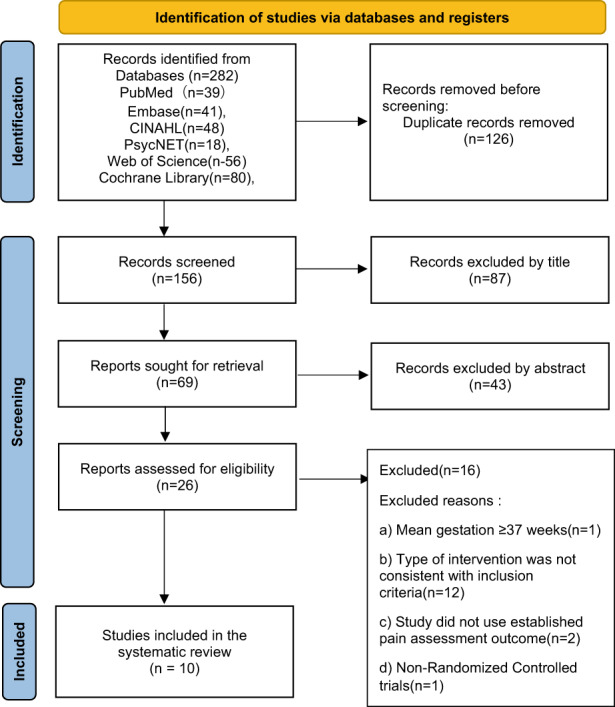
Methods: Six databases were searched with a retrieval strategy. Parallel and crossover randomized controlled trials reporting non-pharmacological interventions for relieving ES pain in preterm infants were identified from inception to 1 September 2021. The protocol was published in PROSPERO (CRD42021276058).
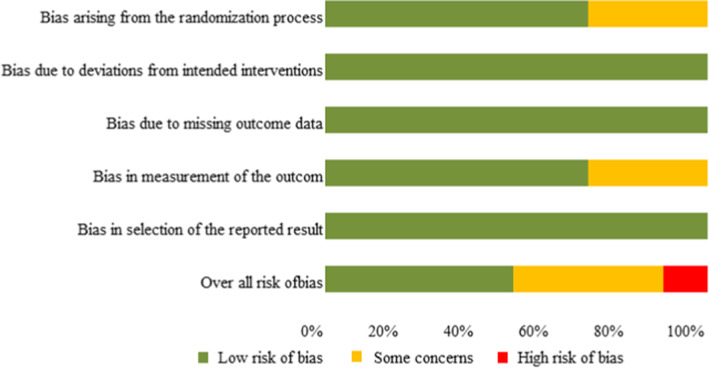
Results: Ten studies were retrieved, including nine different non-pharmacological interventions. Seven studies reported that non-pharmacological interventions in relieving pain were more effective than conventional care during ES, and three trials reported its safety. Due to the heterogeneity of pain assessment tools, time of assessment and population, only Facilitated tucking had sufficient evidence that it is a safe and effective non-pharmacological intervention.
Keywords: analgesia; endotracheal suctioning; non-pharmacological interventions; pain; preterm infants.
© 2022 The Authors. Nursing Open published by John Wiley & Sons Ltd.
Conflict of interest statement
The authors have no conflict of interest to disclose.
Figures
References
-
- Agakidou, E. , Tsoni, K. , Stathopoulou, T. , Thomaidou, A. , Farini, M. , Kontou, A. , & Sarafidis, K. (2021). Changes in physicians' perceptions and practices on neonatal pain management over the past 20 years. A survey conducted at two time‐points. Frontiers in Pediatrics, 9, 667806. 10.3389/fped.2021.667806 - DOI - PMC - PubMed
-
- Alinejad‐Naeini, M. , Mohagheghi, P. , Peyrovi, H. , & Mehran, A. (2014). The effect of facilitated tucking during endotracheal suctioning on procedural pain in preterm neonates: A randomized controlled crossover study. Global Journal of Health Science, 6(4), 278–284. 10.5539/gjhs.v6n4p278 - DOI - PMC - PubMed
Publication types
MeSH terms
LinkOut - more resources
Full Text Sources
Medical
