


PET imaging of kappa opioid receptors and receptor expression quantified in neuron-derived extracellular vesicles in socially housed female and male cynomolgus macaques
- PMID: 36100655
- PMCID: PMC9751296
- DOI: 10.1038/s41386-022-01444-9
PET imaging of kappa opioid receptors and receptor expression quantified in neuron-derived extracellular vesicles in socially housed female and male cynomolgus macaques
Abstract
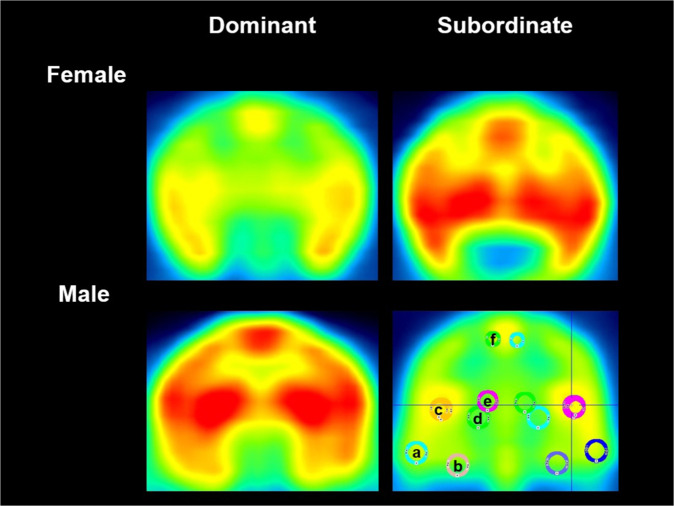
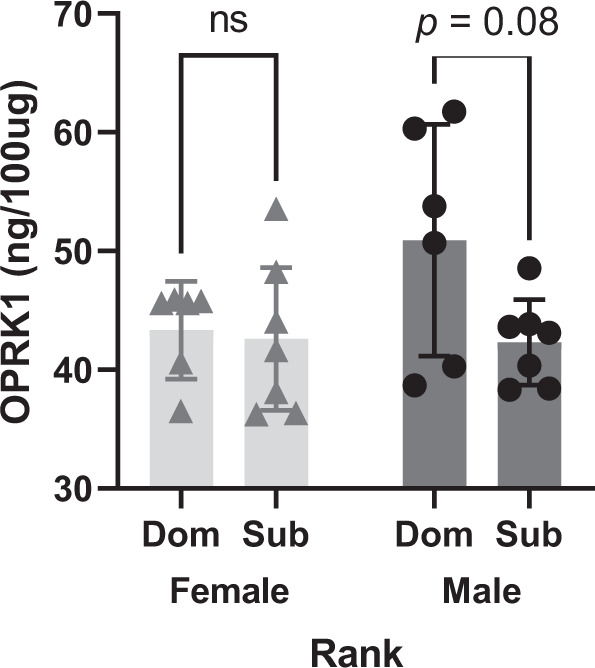
Recent positron emission tomography (PET) studies of kappa opioid receptors (KOR) in humans reported significant relationships between KOR availability and social status, as well as cocaine choice. In monkey models, social status influences physiology, receptor pharmacology and behavior; these variables have been associated vulnerability to cocaine abuse. The present study utilized PET imaging to examine KOR availability in socially housed, cocaine-naïve female and male monkeys, and peripheral measures of KORs with neuron-derived extracellular vesicles (NDE). KOR availability was assessed in dominant and subordinate female and male cynomolgus macaques (N = 4/rank/sex), using PET imaging with the KOR selective agonist [11C]EKAP. In addition, NDE from the plasma of socially housed monkeys (N = 13/sex; N = 6-7/rank) were isolated by immunocapture method and analyzed for OPRK1 protein expression by ELISA. We found significant interactions between sex and social rank in KOR availability across 12 of 15 brain regions. This was driven by female data, in which KOR availability was significantly higher in subordinate monkeys compared with dominant monkeys; the opposite relationship was observed among males, but not statistically significant. No sex or rank differences were observed for NDE OPRK1 concentrations. In summary, the relationship between brain KOR availability and social rank was different in female and male monkeys. This was particularly true in female monkeys. We hypothesize that lower [11C]EKAP binding potentials were due to higher concentrations of circulating dynorphin, which is consistent with greater vulnerability in dominant compared with subordinate females. These findings suggest that the KOR is an important target for understanding the neurobiology associated with vulnerability to abused drugs and sex differences, and detectable in peripheral circulation.
© 2022. The Author(s), under exclusive licence to American College of Neuropsychopharmacology.
Conflict of interest statement
The authors declare no competing interests.
Figures
References
-
- UNODC, Treatment of Stimulant Use Disorders: Current Practicies and Promising Perspectives, U.N.O.o.D.a. Crime, Editor. 2019.
-
- SAMHSA, Key substance use and mental health indicators in the United States: Results from the 2018 National Survey on Drug Use and Health. (HHS Publication No. PEP19-5068, NSDUH Series H-54). Rockville, MD: Center for Behavioral Health Statistics and Quality, Substance Abuse and Mental Health Services Administration, 2019.
-
- Buddy T. How Drug Use Affects Our Society. 2019.
Publication types
MeSH terms
Substances
Grants and funding
LinkOut - more resources
Full Text Sources
