Penetrance and Pleiotropy of Polygenic Risk Scores for Schizophrenia, Bipolar Disorder, and Depression Among Adults in the US Veterans Affairs Health Care System
- PMID: 36103194
- PMCID: PMC9475441
- DOI: 10.1001/jamapsychiatry.2022.2742
Penetrance and Pleiotropy of Polygenic Risk Scores for Schizophrenia, Bipolar Disorder, and Depression Among Adults in the US Veterans Affairs Health Care System
Abstract
Importance: Serious mental illnesses, including schizophrenia, bipolar disorder, and depression, are heritable, highly multifactorial disorders and major causes of disability worldwide.
Objective: To benchmark the penetrance of current neuropsychiatric polygenic risk scores (PRSs) in the Veterans Health Administration health care system and to explore associations between PRS and broad categories of human disease via phenome-wide association studies.
Design, setting, and participants: Extensive Veterans Health Administration's electronic health records were assessed from October 1999 to January 2021, and an embedded cohort of 9378 individuals with confirmed diagnoses of schizophrenia or bipolar 1 disorder were found. The performance of schizophrenia, bipolar disorder, and major depression PRSs were compared in participants of African or European ancestry in the Million Veteran Program (approximately 400 000 individuals), and associations between PRSs and 1650 disease categories based on ICD-9/10 billing codes were explored. Last, genomic structural equation modeling was applied to derive novel PRSs indexing common and disorder-specific genetic factors. Analysis took place from January 2021 to January 2022.
Main outcomes and measures: Diagnoses based on in-person structured clinical interviews were compared with ICD-9/10 billing codes. PRSs were constructed using summary statistics from genome-wide association studies of schizophrenia, bipolar disorder, and major depression.
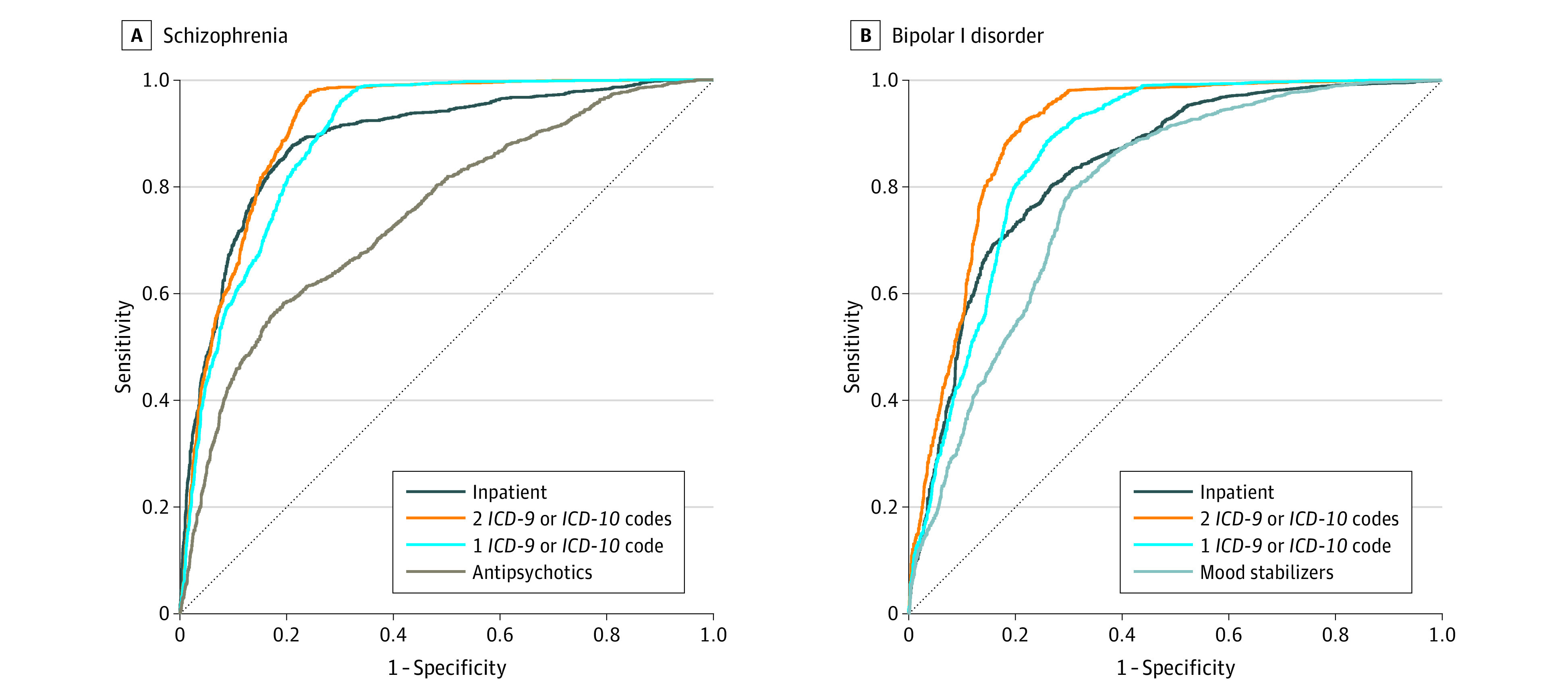
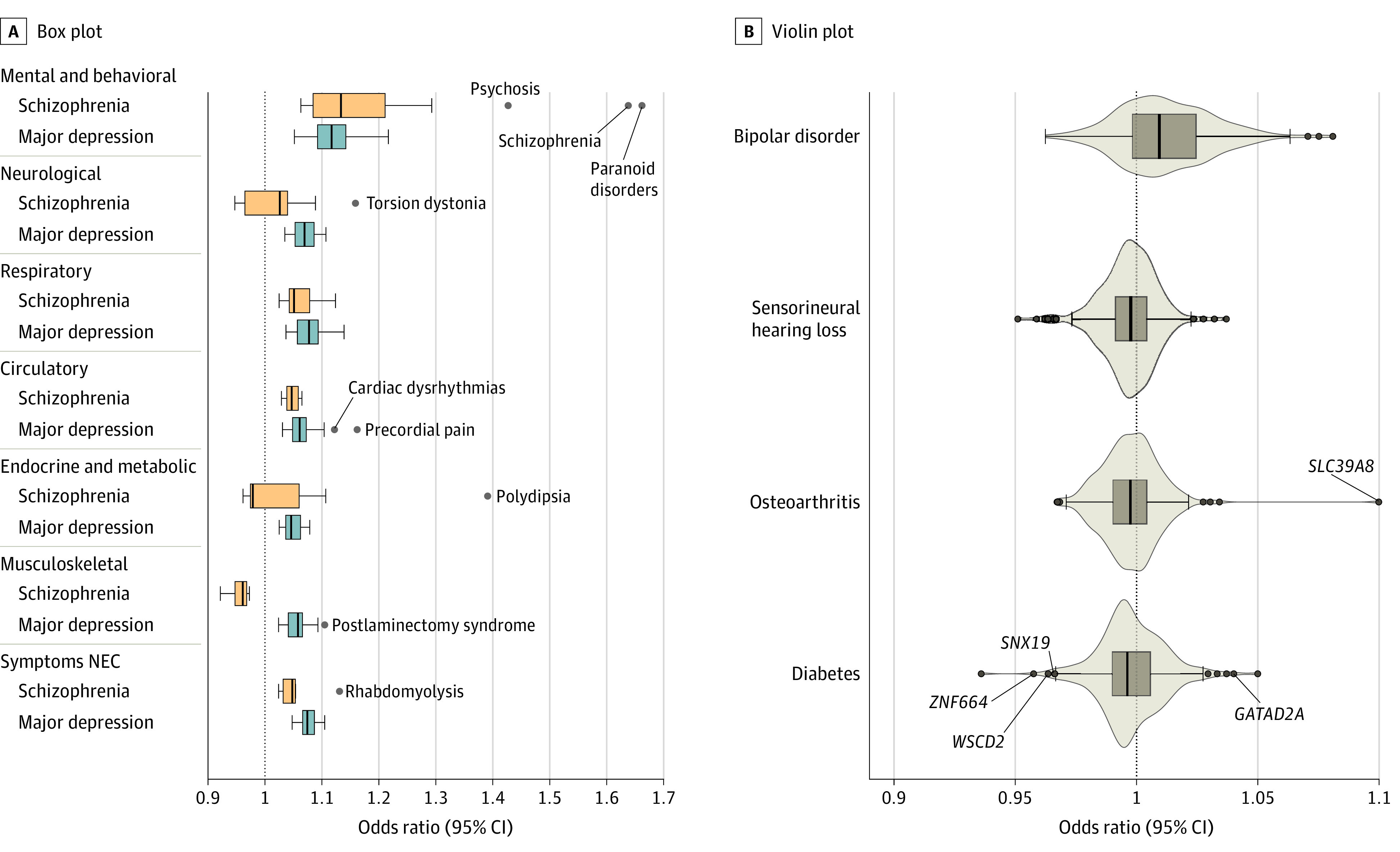
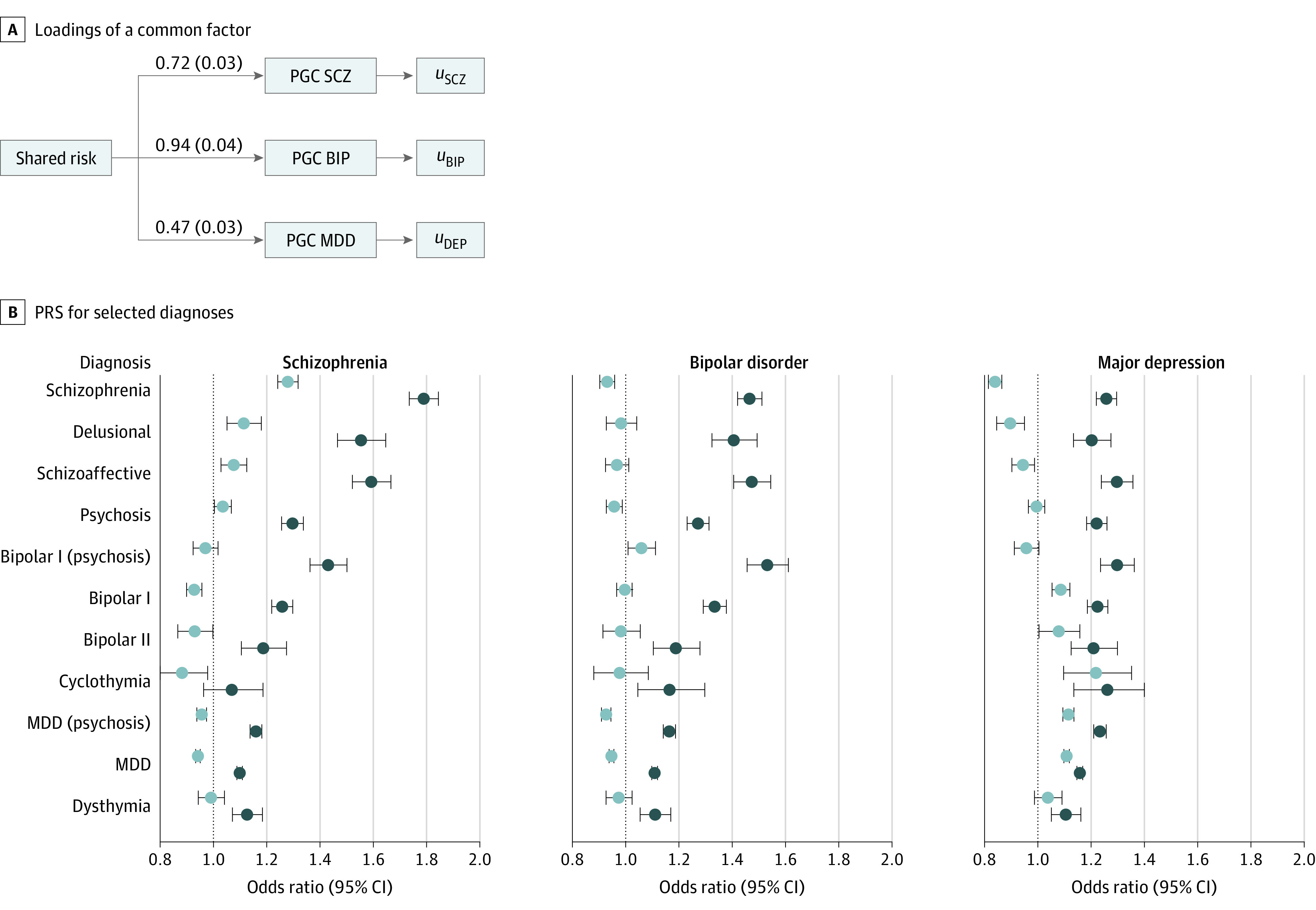
Results: Of 707 299 enrolled study participants, 459 667 were genotyped at the time of writing; 84 806 were of broadly African ancestry (mean [SD] age, 58 [12.1] years) and 314 909 were of broadly European ancestry (mean [SD] age, 66.4 [13.5] years). Among 9378 individuals with confirmed diagnoses of schizophrenia or bipolar 1 disorder, 8962 (95.6%) were correctly identified using ICD-9/10 codes (2 or more). Among those of European ancestry, PRSs were robustly associated with having received a diagnosis of schizophrenia (odds ratio [OR], 1.81 [95% CI, 1.76-1.87]; P < 10-257) or bipolar disorder (OR, 1.42 [95% CI, 1.39-1.44]; P < 10-295). Corresponding effect sizes in participants of African ancestry were considerably smaller for schizophrenia (OR, 1.35 [95% CI, 1.29-1.42]; P < 10-38) and bipolar disorder (OR, 1.16 [95% CI, 1.11-1.12]; P < 10-10). Neuropsychiatric PRSs were associated with increased risk for a range of psychiatric and physical health problems.
Conclusions and relevance: Using diagnoses confirmed by in-person structured clinical interviews and current neuropsychiatric PRSs, the validity of an electronic health records-based phenotyping approach in US veterans was demonstrated, highlighting the potential of PRSs for disentangling biological and mediated pleiotropy.
Conflict of interest statement
Figures

References
-
- Trubetskoy V, Pardiñas AF, Qi T, et al. ; Indonesia Schizophrenia Consortium; PsychENCODE; Psychosis Endophenotypes International Consortium; SynGO Consortium; Schizophrenia Working Group of the Psychiatric Genomics Consortium . Mapping genomic loci implicates genes and synaptic biology in schizophrenia. Nature. 2022;604(7906):502-508. doi: 10.1038/s41586-022-04434-5 - DOI - PMC - PubMed
-
- Mullins N, Forstner AJ, O’Connell KS, et al. Genome-wide association study of over 40,000 bipolar disorder cases provides novel biological insights. medRxiv. Preprint posted September 18, 2020. doi: 10.1101/2020.09.17.20187054https://www.medrxiv.org/content/10.1101/2020.09.17.20187054v1.full.pdf+html - DOI
-
- Wray NR, Ripke S, Mattheisen M, et al. ; eQTLGen; 23andMe; Major Depressive Disorder Working Group of the Psychiatric Genomics Consortium . Genome-wide association analyses identify 44 risk variants and refine the genetic architecture of major depression. Nat Genet. 2018;50(5):668-681. doi: 10.1038/s41588-018-0090-3 - DOI - PMC - PubMed
-
- Rees E, O’Donovan MC, Owen MJ. Genetics of schizophrenia. Curr Opin Behav Sci. 2015;2:8-14. doi: 10.1016/j.cobeha.2014.07.001 - DOI