


Thymoquinone improves folliculogenesis, sexual hormones, gene expression of apoptotic markers and antioxidant enzymes in polycystic ovary syndrome rat model
- PMID: 36104839
- PMCID: PMC9857009
- DOI: 10.1002/vms3.958
Thymoquinone improves folliculogenesis, sexual hormones, gene expression of apoptotic markers and antioxidant enzymes in polycystic ovary syndrome rat model
Abstract
Background: Nowadays, polycystic ovary syndrome (PCOS) is a prevalent cause of infertility affecting women of reproductive age around the world. Thymoquinone is a natural antioxidant, derived from Nigella sativa.
Objectives: The current study aimed to evaluate the protective effects of thymoquinone on the detrimental effects of PCOS rats induced with letrozole.
Methods: Thirty-two female rats were randomly divided into four groups: (1) Control, (2) PCOS, (3) PCOS+5 mg/kg thymoquinone and (4) PCOS+10 mg/kg thymoquinone. Thymoquinone was administered every 3 days for 30 days. Ovaries were histopathologically and stereologically examined, and antioxidant and apoptotic enzymes gene expression in ovaries and sex hormones in serum were measured.
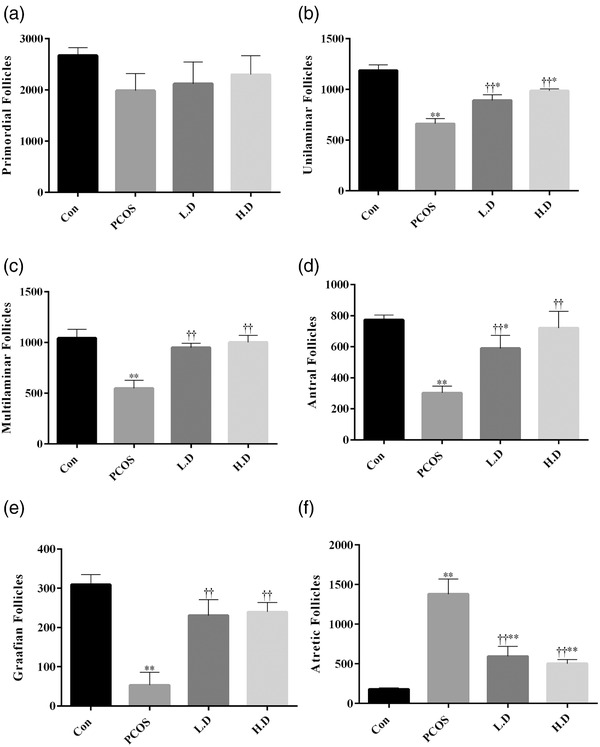
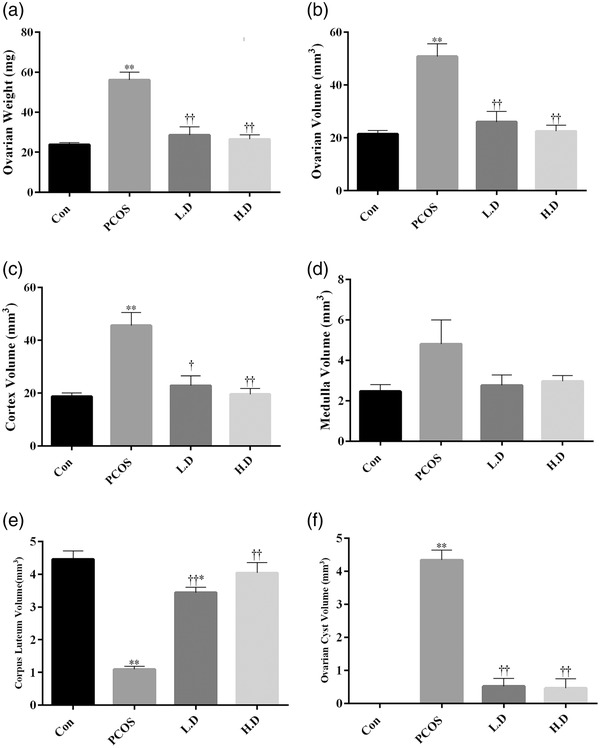
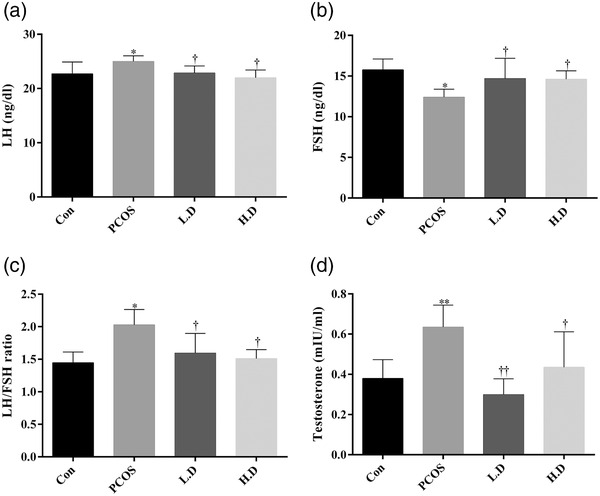
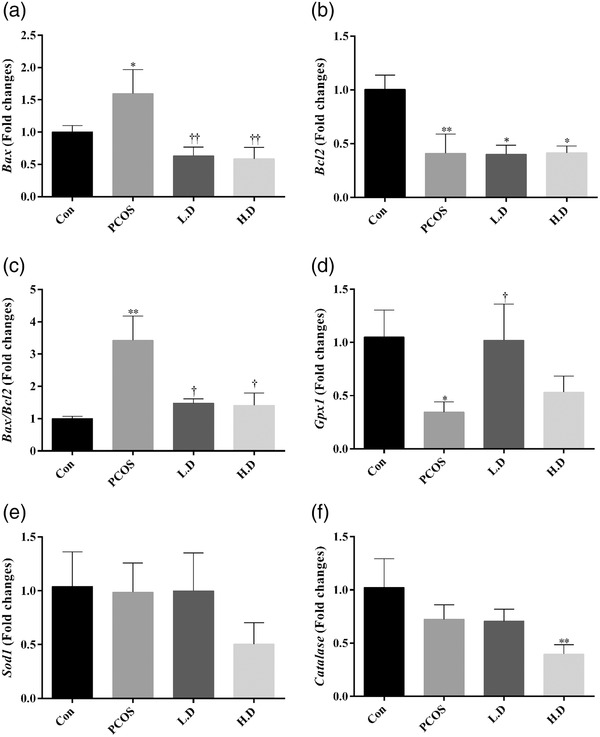
Results: The number of unilaminar, multilaminar, antral, and graffian follicles, volume density of corpus luteum (p < 0.01), and GPx1 gene expression in ovaries and level of FSH in the blood increased in both thymoquinone groups when compared to untreated PCOS (p < 0.05). Ovaries in thymoquinone groups showed a significant reduction in the number of atretic follicles, ovary weight and volume, volume density of cortex and ovarian cysts, Bax gene expression (p < 0.01) and Bax/Bcl2 ratio as well as levels of luteinizing hormone (LH), LH/FSH ratio and testosterone (p < 0.05) in the blood of female rats when compared to PCOS group. Administration of thymoquinone restored the most detrimental effects of PCOS on ovaries (p < 0.01) and sexual hormones (p < 0.05) in rats.
Conclusions: These data suggest that thymoquinone has improved effects on ovarian function in the PCOS rat model. Therefore, thymoquinone might be useful as a protective agent and adjunct treatment in PCOS patients.
Keywords: Bax; Bcl2; FSH; LH; testosterone.
© 2022 The Authors. Veterinary Medicine and Science published by John Wiley & Sons Ltd.
Conflict of interest statement
The authors declare that there are no conflicts of interest.
Figures
References
-
- Adewale, A. O. , Adedeji, S. I. , Olusola, O. O. , Sulaiman, S. O. , & Victoria, I. O. (2021). Ethanolic extract of combined cynodon dactylon and mimosa pudica ameliorated experimentally induced benign prostatic hyperplasia in Wistar rats. Journal of Infertility and Reproductive Biology, 9(1), 22–26.
-
- Agarwal, A. , Gupta, S. , & Sharma, R. (2005). Oxidative stress and its implications in female infertility–A clinician's perspective. Reproductive BioMedicine Online, 11(5), 641–650. - PubMed
-
- Ali, A. , Warsi, M. H. , Ahmad, W. , Amir, M. , Ahmad, N. , & Ali, A. (2020). Thymoquinone: Therapeutic potential and molecular targets, applied pharmaceutical science and microbiology. Apple Academic Press.
-
- Ali, B. , & Blunden, G. (2003). Pharmacological and toxicological properties of Nigella sativa . Phytotherapy Research, 17(4), 299–305. - PubMed
-
- Burits, M. , & Bucar, F. (2000). Antioxidant activity of Nigella sativa essential oil. Phytotherapy Research, 14(5), 323–328. - PubMed
MeSH terms
Substances
Grants and funding
LinkOut - more resources
Full Text Sources
Medical
Research Materials
Miscellaneous
