


Brain-In-Hand technology for adults with acquired brain injury: A convergence of mixed methods findings
- PMID: 36105910
- PMCID: PMC9465594
- DOI: 10.1177/20556683221117759
Brain-In-Hand technology for adults with acquired brain injury: A convergence of mixed methods findings
Abstract
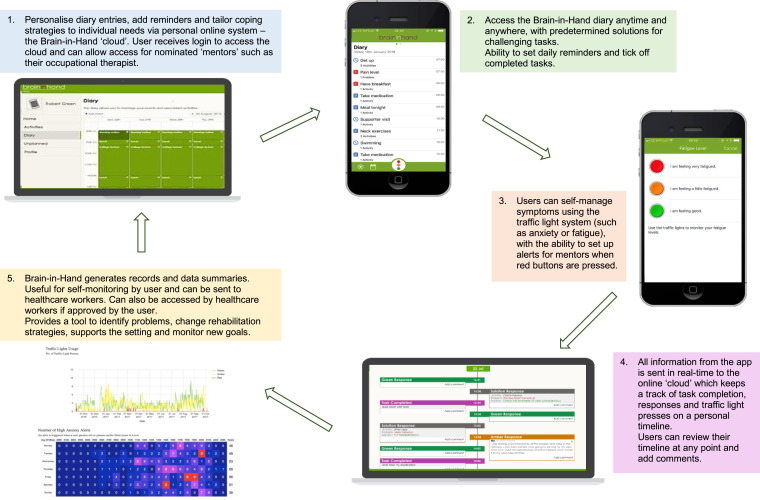
Introduction: Individuals with acquired brain injury may find it difficult to self-manage and live independently. Brain-in-Hand is a smartphone app designed to support psychological problems and encourage behaviour change, comprised of a structured diary, reminders, agreed solutions, and traffic light monitoring system.
Aim: To evaluate the potential use and effectiveness of Brain-in-Hand for self-management in adults with acquired brain injury.
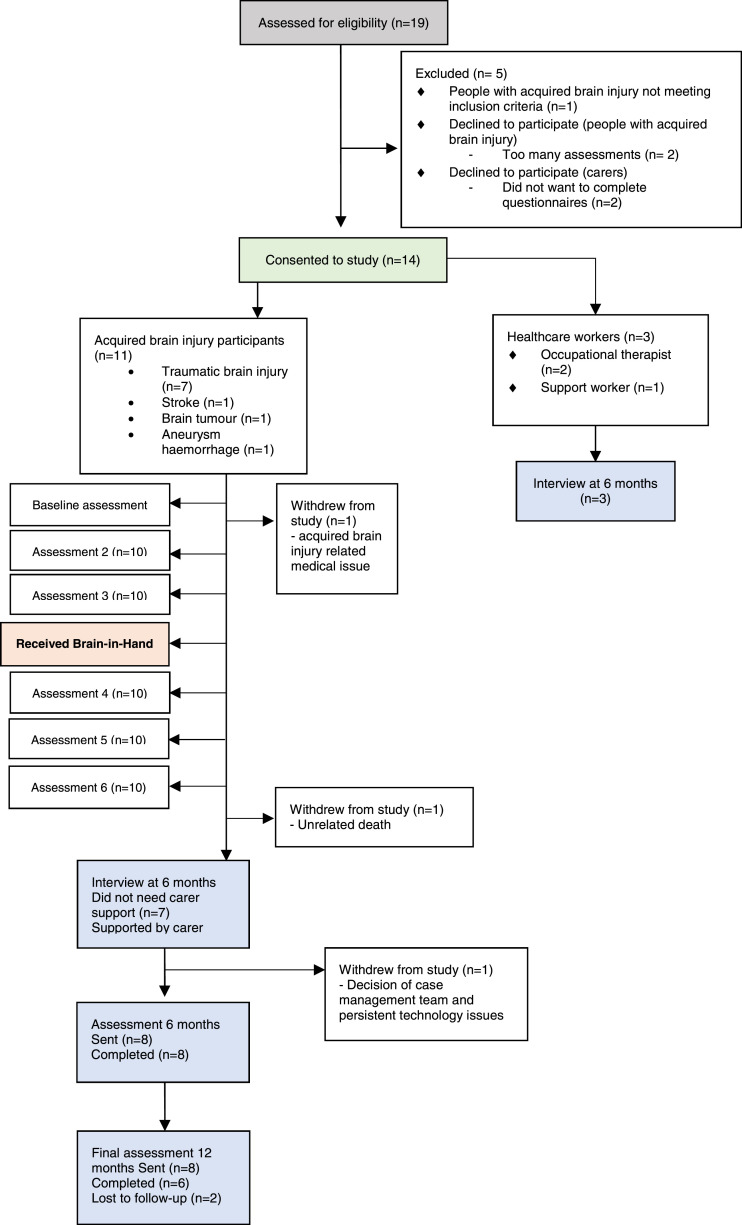
Methods: A-B mixed-methods case-study design. Individuals with acquired brain injury (n = 10) received Brain-in-Hand for up to 12 months. Measures of mood, independence, quality of life, cognition, fatigue, goal attainment, participation administered at baseline, 6 and 12 months. Semi-structured interviews conducted with acquired brain injury participants (n = 9) and healthcare workers (n = 3) at 6 months.
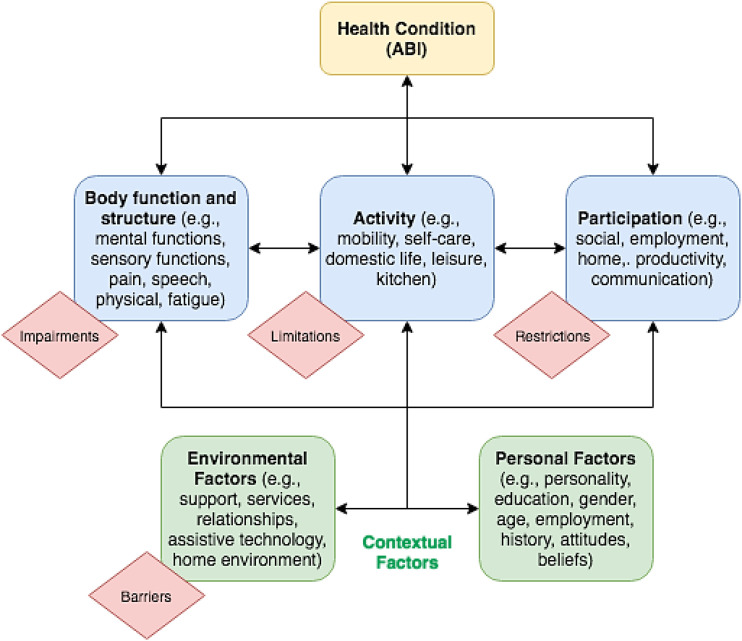
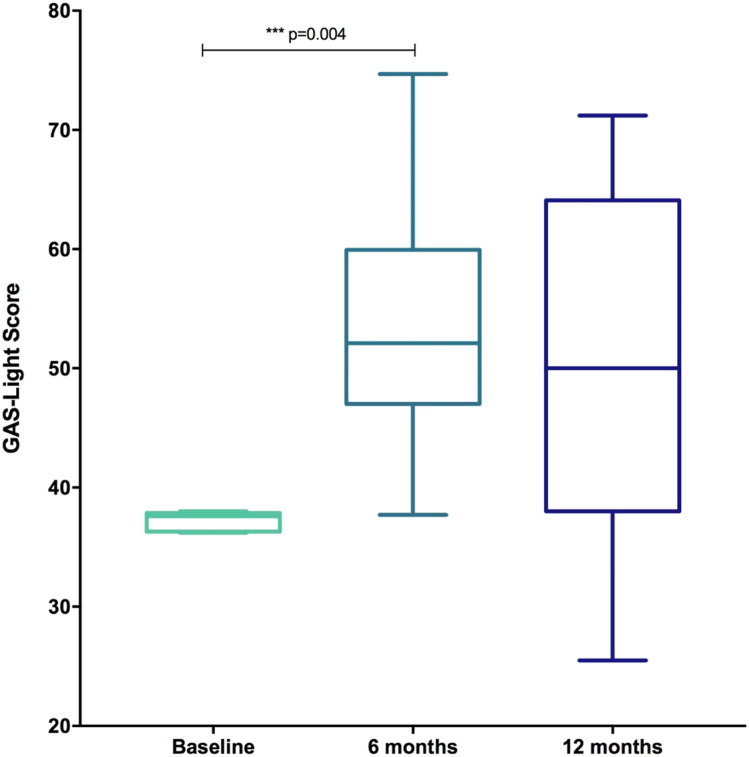
Results: Significant increase in goal attainment after 6 months use (t(7) = 4.20, p = .004). No significant improvement in other outcomes. Qualitative data suggested improvement in anxiety management. Contextual (personal/environmental) factors were key in influencing the use and effectiveness of Brain-in-Hand. Having sufficient insight, appropriate support and motivation facilitated use.
Conclusions: Brain-in-Hand shows potential to support acquired brain injury, but further work is required to determine its effectiveness. Context played a pivotal role in the effectiveness and sustained use of Brain-in-Hand, and needs to be explored to support implementation.
Keywords: assistive technology; brain injury; independent living; rehabilitation; self-management; smart technology; smartphone app.
© The Author(s) 2022.
Conflict of interest statement
Declaration of conflicting interests: The author(s) declared no potential conflicts of interest with respect to the research, authorship, and/or publication of this article.
Figures
Similar articles
-
Informing evaluation of a smartphone application for people with acquired brain injury: a stakeholder engagement study.BMC Med Inform Decis Mak. 2018 May 30;18(1):33. doi: 10.1186/s12911-018-0611-0. BMC Med Inform Decis Mak. 2018. PMID: 29848312 Free PMC article.
-
A systematic review of personal smart technologies used to improve outcomes in adults with acquired brain injuries.Clin Rehabil. 2019 Nov;33(11):1705-1712. doi: 10.1177/0269215519865774. Epub 2019 Jul 29. Clin Rehabil. 2019. PMID: 31353940
-
Implementation of an assistive technology for meal preparation within a supported residence for adults with acquired brain injury: a mixed-methods single case study.Disabil Rehabil Assist Technol. 2023 Nov;18(8):1330-1346. doi: 10.1080/17483107.2021.2005163. Epub 2021 Dec 17. Disabil Rehabil Assist Technol. 2023. PMID: 34918600
-
Peer Support to Enhance Social and Emotional Self-Management Following Acquired Brain Injury Rehabilitation: Design of a Pre-post Study With Process Evaluation.Front Neurol. 2021 Jul 29;12:647773. doi: 10.3389/fneur.2021.647773. eCollection 2021. Front Neurol. 2021. PMID: 34393968 Free PMC article.
-
Psychological interventions to improve self-management of type 1 and type 2 diabetes: a systematic review.Health Technol Assess. 2020 Jun;24(28):1-232. doi: 10.3310/hta24280. Health Technol Assess. 2020. PMID: 32568666 Free PMC article.
References
-
- Milders M, Fuchs S, Crawford JR. Neuropsychological impairments and changes in emotional and social behaviour following severe traumatic brain injury. J Clin Exp Neuropsychol 2003; 25: 157–172. - PubMed
-
- Yeates GN, Gracey F, McGrath JC. A biopsychosocial deconstruction of “personality change” following acquired brain injury. Neuropsychol Rehabil 2008; 18: 566–589. - PubMed
-
- Emilien G, Waltregny A. Traumatic brain injury, cognitive and emotional dysfunction. impact of clinical neuropsychology research. Acta Neurol Belg 1996; 96: 89–101. - PubMed
-
- Headway . Acquired Brain Injury: The Numbers behind the Hidden Disability. Headway UK, 2015, www.headway.co.uk.
LinkOut - more resources
Full Text Sources
