


Hypertriglyceridemia-induced acute pancreatitis in children: A mini-review
- PMID: 36110119
- PMCID: PMC9469503
- DOI: 10.3389/fped.2022.931336
Hypertriglyceridemia-induced acute pancreatitis in children: A mini-review
Abstract
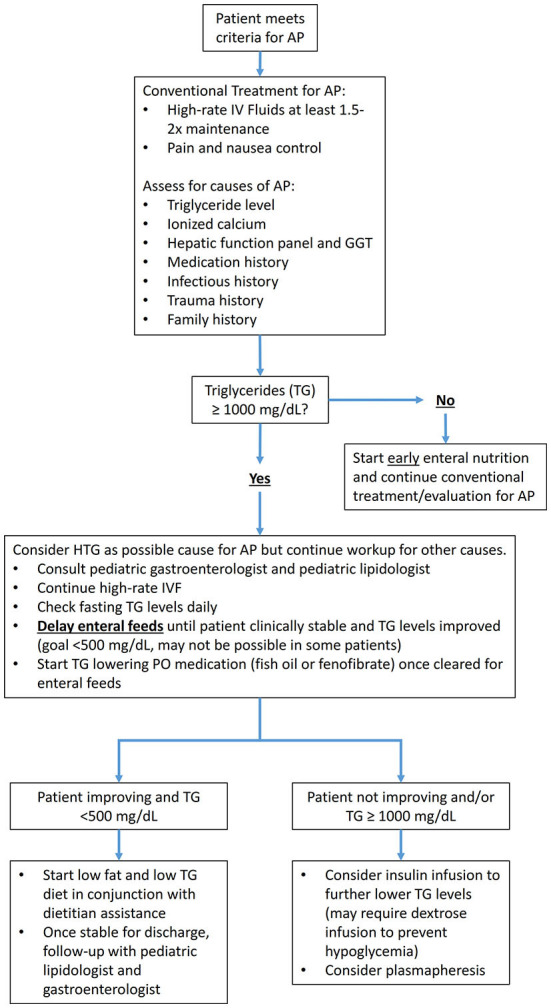
Severe hypertriglyceridemia (HTG) is a known metabolic cause of acute pancreatitis (AP) in pediatric patients. The incidence of hypertriglyceridemia-induced acute pancreatitis (HTG-AP) is less well established in pediatric compared to adult patients. Studies in adults suggest that higher risk of AP occurs when triglyceride levels (TG) are >1,000 mg/dL. Most common etiologies for severe HTG in pediatric patients are either from primary hypertriglyceridemia, underlying genetic disorders of lipid and TG metabolism, or secondary hypertriglyceridemia, separate disease or exposure which affects TG metabolism. Most common theories for the pathophysiology of HTG-AP include hydrolysis of TG by pancreatic lipase to free fatty acids leading to endothelial and acinar cell damage and ischemia, as well as hyperviscosity related to increased chylomicrons. Though there are varying reports of HTG-AP severity compared to other causes of AP, a steadily growing body of evidence suggests that HTG-AP can be associated with more severe course and complications. Therapeutic interventions for HTG-AP typically involve inpatient management with dietary restriction, intravenous fluids, and insulin; select patients may require plasmapheresis. Long term interventions generally include dietary modification, weight management, control of secondary causes, and/or antihyperlipidemic medications. Though some therapeutic approaches and algorithms exist for adult patients, evidence-based management guidelines have not been well established for pediatric patients.
Keywords: children; hypertriglyceridemia; pancreatitis; pediatric; triglyceride.
Copyright © 2022 Grisham, Tran and Ellery.
Conflict of interest statement
The authors declare that the research was conducted in the absence of any commercial or financial relationships that could be construed as a potential conflict of interest.
Figures
References
-
- Speck L. A case of lipidemia. Arch Verin Wiss Heilkd. (1865) 1:232.
-
- Fortson MR, Freedman SN, Webster PD, 3rd. Clinical assessment of hyperlipidemic pancreatitis. Am J Gastroenterol. (1995) 90:2134–9. - PubMed
Publication types
LinkOut - more resources
Full Text Sources
Miscellaneous
