


Hyperhemolytic Crisis Following Transfusion in Sickle Cell Disease With Acute Hepatic Crisis: A Case Report
- PMID: 36110470
- PMCID: PMC9461243
- DOI: 10.7759/cureus.27844
Hyperhemolytic Crisis Following Transfusion in Sickle Cell Disease With Acute Hepatic Crisis: A Case Report
Abstract
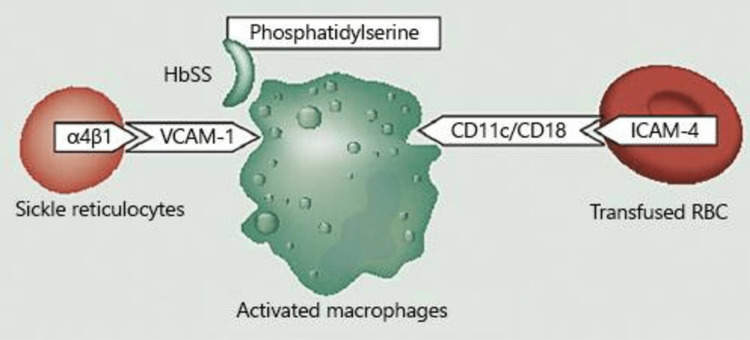
Hyperhemolysis syndrome (HHS) is a catastrophic unpredictable consequence of blood transfusion in sickle cell disease. It leads to further drop in hemoglobin via immune mechanisms complicating a hospital course and prolonging length of stay. Although sickle cell patients receive multiple transfusions throughout their disease course, this condition remains underreported by health care professionals or misinterpreted for other sickle cell crises. We present a similar case highlighting the importance of early recognition of HHS and judicious blood transfusion in sickle cell disease patients to avoid such a complication.
Keywords: alloimmunization; hepatic crisis; hyperhemolytic crisis; sickle cell disease; transfusion related complications.
Copyright © 2022, Trivedi et al.
Conflict of interest statement
The authors have declared that no competing interests exist.
Figures
References
-
- Hyperhemolysis in patients with hemoglobinopathies: a single-center experience and review of the literature. Danaee A, Inusa B, Howard J, Robinson S. Transfus Med Rev. 2015;29:220–230. - PubMed
-
- Hyperhemolysis in sickle cell disease. Aragona E, Kelly MJ. J Pediatr Hematol Oncol. 2014;36:54–56. - PubMed
Publication types
LinkOut - more resources
Full Text Sources