The role of respiratory co-infection with influenza or respiratory syncytial virus in the clinical severity of COVID-19 patients: A systematic review and meta-analysis
- PMID: 36112521
- PMCID: PMC9480863
- DOI: 10.7189/jogh.12.05040
The role of respiratory co-infection with influenza or respiratory syncytial virus in the clinical severity of COVID-19 patients: A systematic review and meta-analysis
Abstract
Background: With the easing of COVID-19 non-pharmaceutical interventions, the resurgence of both influenza and respiratory syncytial virus (RSV) was observed in several countries globally after remaining low in activity for over a year. However, whether co-infection with influenza or RSV influences disease severity in COVID-19 patients has not yet been determined clearly. We aimed to understand the impact of influenza/RSV co-infection on clinical disease severity among COVID-19 patients.
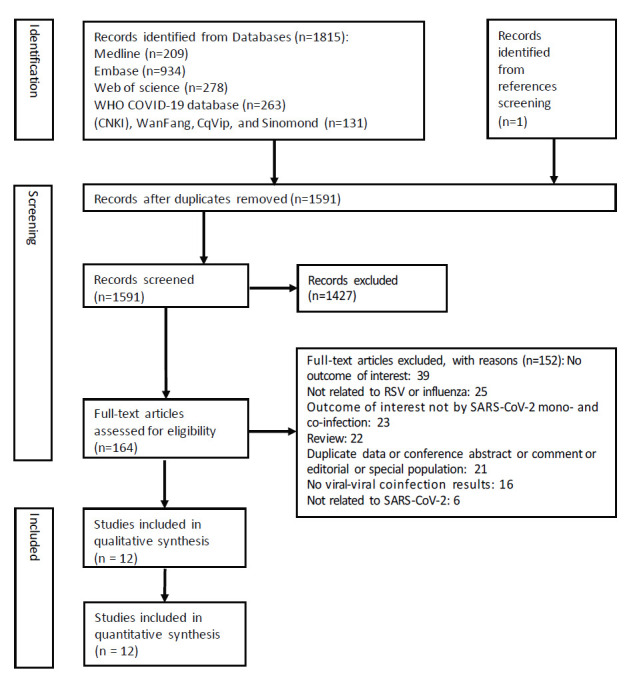
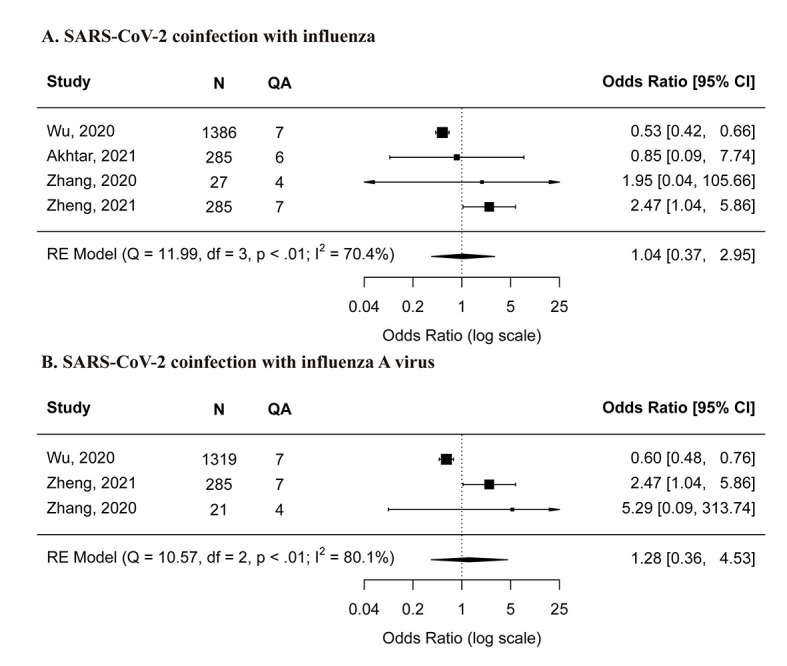
Methods: We conducted a systematic literature review of publications comparing the clinical severity between the co-infection group (ie, influenza/RSV with SARS-CoV-2) and mono-infection group (ie, SARS-CoV-2), using the following four outcomes: need or use of supplemental oxygen, intensive care unit (ICU) admission, mechanical ventilation, and deaths. We summarized the results by clinical outcome and conducted random-effect meta-analyses where applicable.
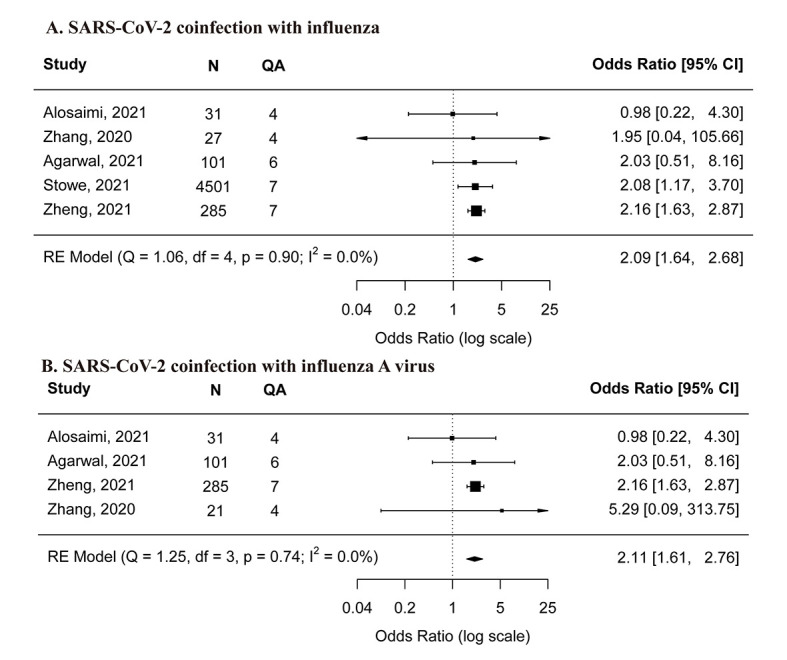
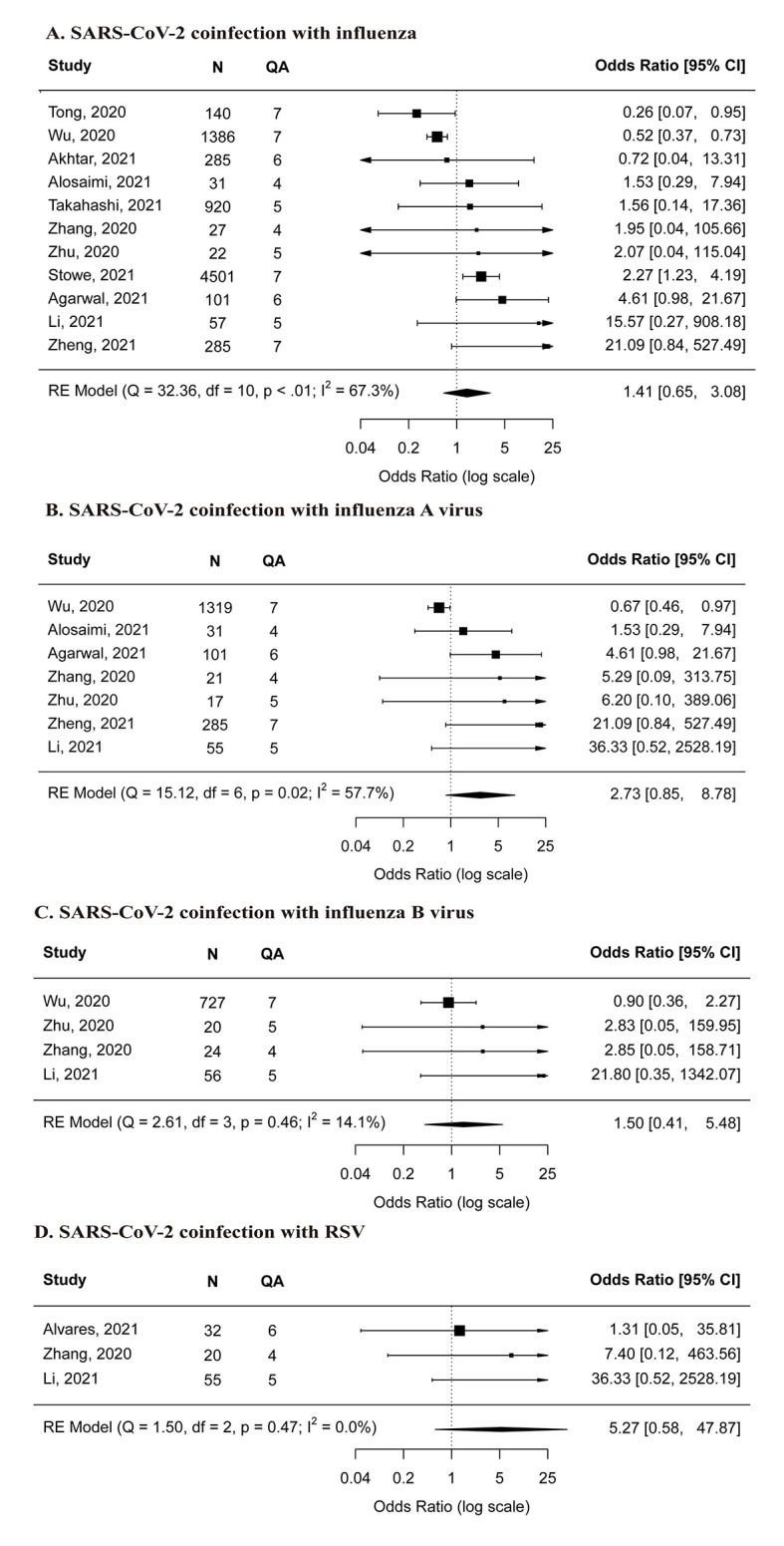
Results: Twelve studies reporting a total of 7862 COVID-19 patients were included in the review. Influenza and SARS-CoV-2 co-infection were found to be associated with a higher risk of ICU admission (five studies, odds ratio (OR) = 2.09, 95% confidence interval (CI) = 1.64-2.68) and mechanical ventilation (five studies, OR = 2.31, 95% CI = 1.10-4.85). No significant association was found between influenza co-infection and need/use of supplemental oxygen or deaths among COVID-19 patients (four studies, OR = 1.04, 95% CI = 0.37-2.95; 11 studies, OR = 1.41, 95% CI = 0.65-3.08, respectively). For RSV co-infection, data were only sufficient to allow for analyses for the outcome of deaths, and no significant association was found between RSV co-infection and deaths among COVID-19 patients (three studies, OR = 5.27, 95% CI = 0.58-47.87).
Conclusions: Existing evidence suggests that co-infection with influenza might be associated with a 2-fold increase in the risk for ICU admission and for mechanical ventilation among COVID-19 patients whereas evidence is limited on the role of RSV co-infection. Co-infection with influenza does not increase the risk of death in COVID-19 patients.
Registration: PROSEPRO CRD42021283045.
Copyright © 2022 by the Journal of Global Health. All rights reserved.
Conflict of interest statement
Disclosure of interest: The authors completed the ICMJE Disclosure of Interest Form (available upon request from the corresponding author) and declare the following activities and relationships: YL reported grants from the World Health Organization and Wellcome Trust, outside the submitted work.
Figures

References
-
- Coronavirus WHO. (COVID-19) Dashboard. Available: https://covid19.who.int. Accessed: 18 March 2022.
-
- Shi T, McAllister DA, O’Brien KL, Simoes EAF, Madhi SA, Gessner BD, et al. Global, regional, and national disease burden estimates of acute lower respiratory infections due to respiratory syncytial virus in young children in 2015: a systematic review and modelling study. Lancet. 2017;390:946-58. 10.1016/S0140-6736(17)30938-8 - DOI - PMC - PubMed
Publication types
MeSH terms
Substances
Grants and funding
LinkOut - more resources
Full Text Sources
Medical
Miscellaneous