


Antibiotic susceptibility among non-clinical Escherichia coli as a marker of antibiotic pressure in Peru (2009-2019): one health approach
- PMID: 36119856
- PMCID: PMC9479018
- DOI: 10.1016/j.heliyon.2022.e10573
Antibiotic susceptibility among non-clinical Escherichia coli as a marker of antibiotic pressure in Peru (2009-2019): one health approach
Abstract
Objective: Antimicrobial resistance is an increasing health problem worldwide with serious implications in global health. The overuse and misuse of antimicrobials has resulted in the spread of antimicrobial-resistant microorganisms in humans, animals and the environment. Surveillance of antimicrobial resistance provides important information contributing to understanding dissemination within these environments. These data are often unavailable in low- and middle-income countries, such as Peru. This review aimed to determine the levels of antimicrobial resistance in non-clinical Escherichia coli beyond the clinical setting in Peru.
Methods: We searched 2009-2019 literature in PUBMED, Google Scholar and local repositories.
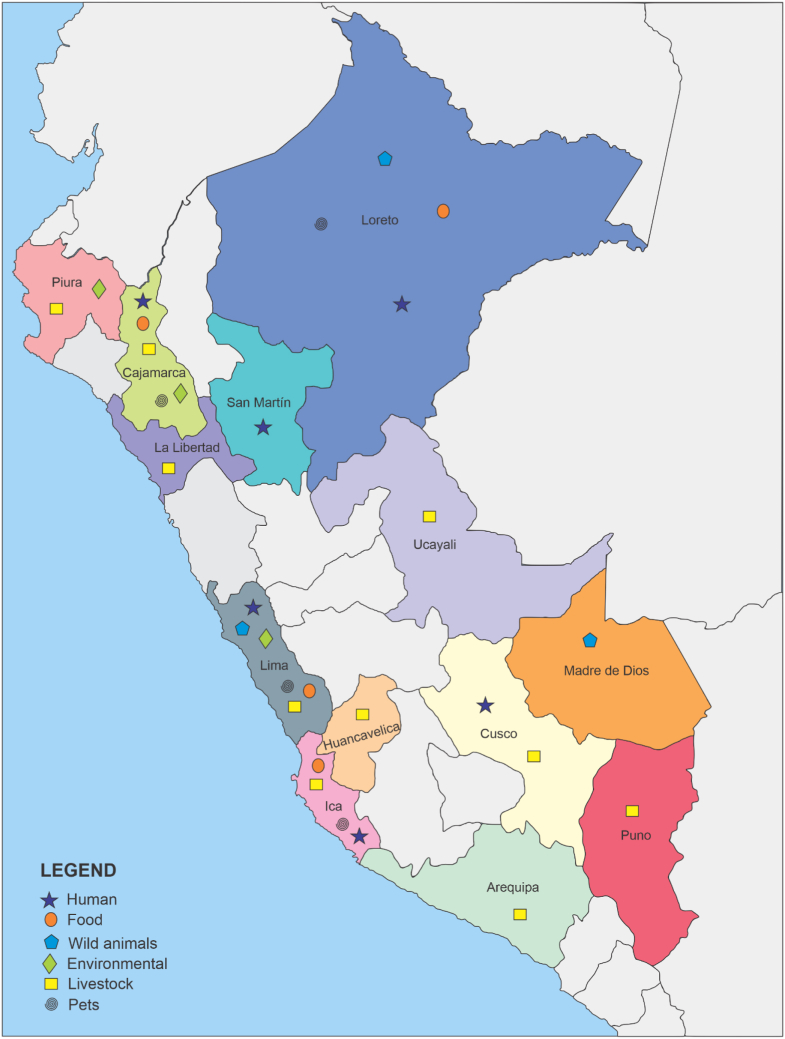
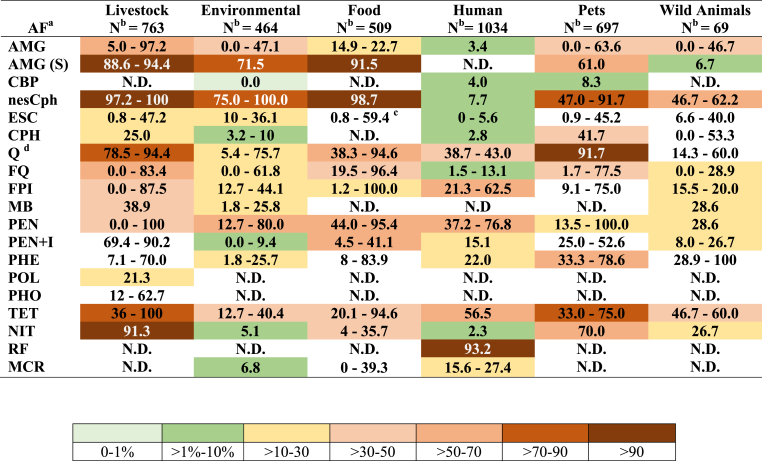
Results: Thirty manuscripts including human, food, environmental, livestock, pets and/or wild animals' samples were found. The analysis showed high resistance levels to a variety of antimicrobial agents, with >90% of resistance for streptomycin and non-extended-spectrum cephalosporin in livestock and food. High levels of rifamycin resistance were also found in non-clinical samples from humans. In pets, resistance levels of 70->90% were detected for quinolones tetracycline and non-extended spectrum cephalosporins. The results suggest higher levels of antimicrobial resistance in captive than in free-ranging wild-animals. Finally, among environmental samples, 50-70% of resistance to non-extended-spectrum cephalosporin and streptomycin was found.
Conclusions: High levels of resistance, especially related to old antibacterial agents, such as streptomycin, 1st and 2nd generation cephalosporins, tetracyclines or first-generation quinolones were detected. Antimicrobial use and control measures are needed with a One Health approach to identify the main drivers of antimicrobial resistance due to interconnected human, animal and environmental habitats.
Keywords: Antimicrobial resistance; Escherichia coli; One health.
© 2022 The Author(s).
Conflict of interest statement
The authors declare no conflict of interest.
Figures
References
-
- Duchesne E. Antagonisme entre les moisissures et le microbes. [PhD Thesis] Faculté de Médecine et de Pharmacie de Lyon; Lyon (France): 1897. Contribution à l’etude de la concurrence vitale chez les microorganismes.
-
- Domagk G. Ein beitrag zur chemotherapie der bakteriellen infektionen. Dtsch. Med. Wochenschr. 1935;61:250–253.
-
- Emmerich R., Löw O. Bakteriolytische enzyme als ursache der erworbenen immunität und die heilung von infectionskrankheiten durch dieselben. Z. Hyg. Infektionskr. 1899;31:1–56.
-
- Fleming A. On the antibacterial action of cultures of a Penicillium, with special reference to their use in the Isolation of B. influenzae. Br. J. Exp. Pathol. 1929;10:226–236.
-
- Tiberio V. Sugli estratti di alcune muffe. An Ig Sper. 1895;5:91–103.
Publication types
LinkOut - more resources
Full Text Sources
