Review
. 2022 Sep 19;10(1):70.
doi: 10.1186/s40364-022-00417-w.

CAR-T cell potency: from structural elements to vector backbone components

Affiliations
Review

CAR-T cell potency: from structural elements to vector backbone components

Marzieh Mazinani et al. Biomark Res. .

Abstract

Chimeric antigen receptor (CAR) T cell therapy, in which a patient's own T lymphocytes are engineered to recognize and kill cancer cells, has achieved remarkable success in some hematological malignancies in preclinical and clinical trials, resulting in six FDA-approved CAR-T products currently available in the market. Once equipped with a CAR construct, T cells act as living drugs and recognize and eliminate the target tumor cells in an MHC-independent manner. In this review, we first described all structural modular of CAR in detail, focusing on more recent findings. We then pointed out behind-the-scene elements contributing to CAR expression and reviewed how CAR expression can be drastically affected by the elements embedded in the viral vector backbone.

Keywords: Cancer immunotherapy; Chimeric antigen receptor; Lentiviral vectors; Nanobody; Signal peptide; Single-chain variable fragment.


Conflict of interest statement

The authors declare that they have no competing interests.

Figures
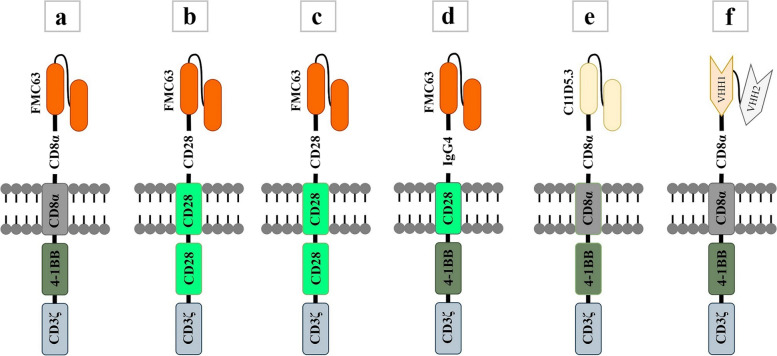
Fig. 1
Fig. 1
A schematic picture of the structural elements of six FDA-approved CAR-T products. Tisagenlecleucel (a), Axicabtagene ciloleucel (b), Brexucabtagene autoleucel (c), Lisocabtagene maraleucel (d), Idecabtagene vicleucel (e), Ciltacabtagene autoleucel (f)
Fig. 2
Fig. 2
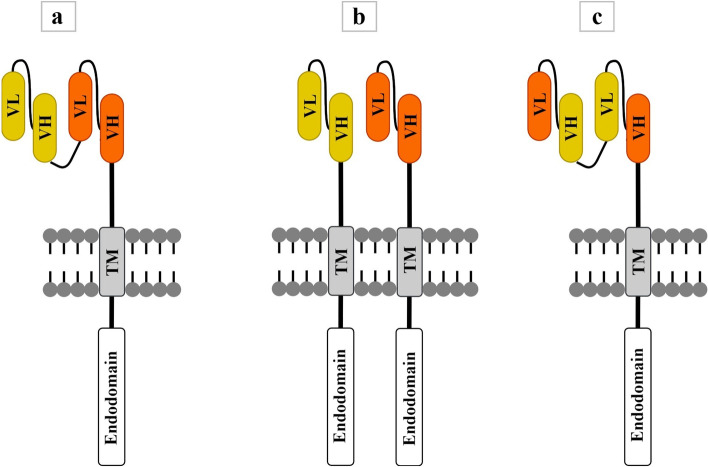
A schematic picture of TanCAR (a), DualCAR (b), and Loop CAR (c). In TanCAR, two different scFvs are connected outside the cell (in series), usually by a glycine-serine linker. TanCAR can be activated when any one of the scFvs binds to a target antigen. Dual CAR-T cells refer to the expression of two CARs in the same T cell, with each CAR having its own signaling function and distinct extracellular antigen recognition domains. Like TanCAR-T cells, loop CAR-T cells consist of two scFvs in a single CAR molecule. In TanCARs, the VL-VH of one scFv is directly linked to the VL-VH of the other scFv, whereas the loop structure is formed with the VL-VH of one scFv separated by the VL-VH of the other scFv
Fig. 3
Fig. 3
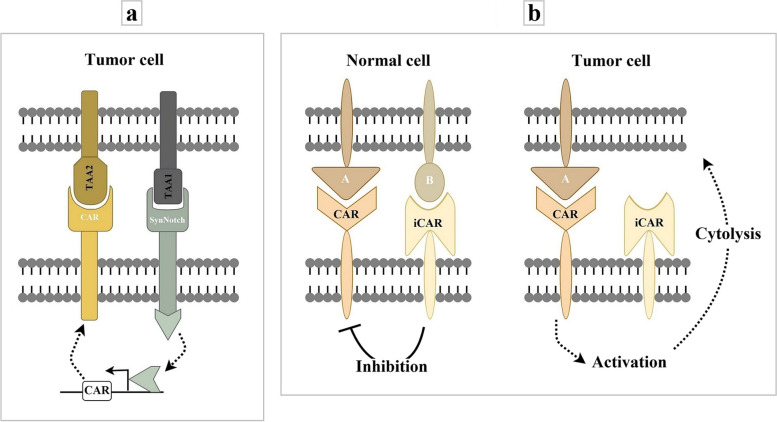
A schematic picture of synNotch-CAR (a) and iCAR (b). SynNotch-CARs require T cells to sense two antigens to activate. SynNotch receptors are engineered to sense a target antigen on the surface of tumor cells and induce the expression of a CAR specific to a second tumor antigen. iCAR-T cells express two CARs on the same T cells, including a typical tumor-antigen-specific CAR and an iCAR. Recognizing a target antigen on the surface of a normal cell by iCAR leads to the inhibition of the second CAR. iCAR, Inhibitory CAR; TAA, Tumor-Associated Antigen; A and B, Target Antigens
Fig. 4
Fig. 4
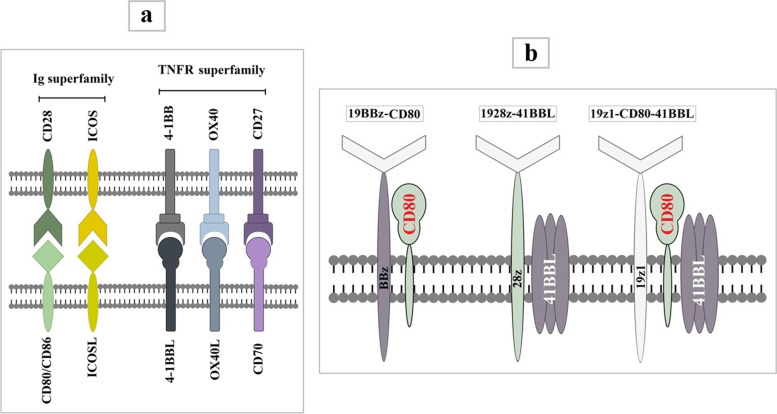
A schematic picture of costimulatory molecules commonly used in CAR construct and their ligands on antigen presenting cells (a), Three CAR configurations (19BBz-CD80, 1928z-41BBL, and 19z1-CD80-41BBL) in Zhao’s study that are coupled with complementary costimulatory ligands (b). The 19BBz-CD80 and 1928z-41BBL are two 2nd-generation CARs coupled with CD80 and 41BBL, respectively. The 19z1-CD80-41BBL is a 1st-generation CAR that combined with both CD80 and 41BBL
Fig. 5
Fig. 5
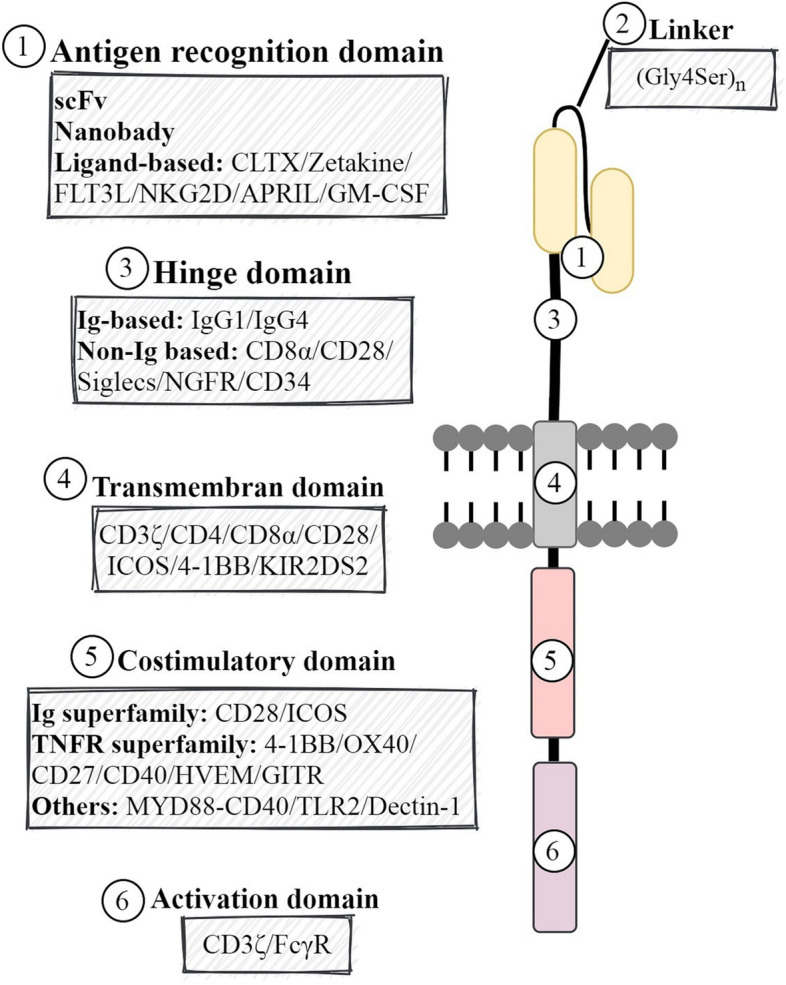
A schematic picture of all structural elements of CAR reviewed here
Fig. 6
Fig. 6
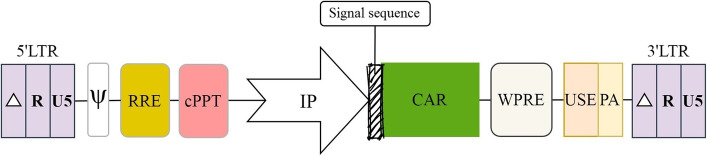
A schematic picture of a SIN LV vector backbone indicating where modular regulatory elements should be placed. LTR: Long Terminal Repeat, RRE: Rev-Response Element, cPPT: Central Polypurine Tract, IP: Internal Promoter, WPRE: Woodchuck Hepatitis Virus (WHV) Posttranscriptional Regulatory Element, USE: Upstream Sequence Element, PA: Polyadenylation Signal
Fig. 7
Fig. 7
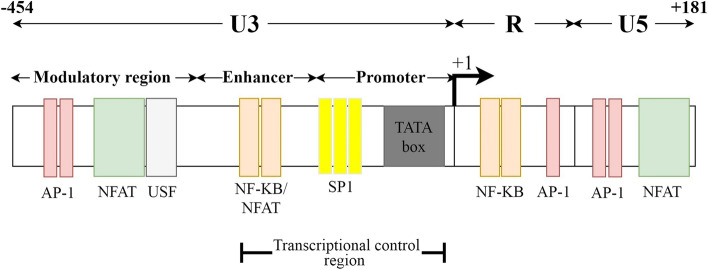
A schematic picture of the LTR and also termination signals present within the U3 region. Studies showed that besides USE, two additional elements in U3, the transcriptional control region and the nuclear factor of activated T cells/upstream stimulatory factor (NFAT/USF) binding region, contribute significantly to lentiviral LTR transcriptional termination

References

    1. US Food & Drug Administration . FDA approves tisagenlecleucel for adults with relapsed or refractory large B cell lymphoma. 2018.
    1. US Food & Drug Administration . FDA approves axicabtagene ciloleucel for large B-cell lymphoma. 2017.
    1. US Food & Drug Administration . FDA approves brexucabtagene autoleucel for relapsed or refractory mantle cell lymphoma. 2020.
    1. US Food & Drug Administration. FDA approves lisocabtagene maraleucel for second-line treatment of large B-cell lymphoma. https://www.fda.gov/drugs/resources-information-approved-drugs/fda-appro.... 2022.
    1. US Food & Drug Administration . FDA approves idecabtagene vicleucel for multiple myeloma. 2021.