


A review on exosomes application in clinical trials: perspective, questions, and challenges
- PMID: 36123730
- PMCID: PMC9483361
- DOI: 10.1186/s12964-022-00959-4
A review on exosomes application in clinical trials: perspective, questions, and challenges
Abstract
Background: Exosomes are progressively known as significant mediators of cell-to-cell communication. They convey active biomolecules to target cells and have vital functions in several physiological and pathological processes, and show substantial promise as novel treatment strategies for diseases.
Methods: In this review study, we studied numerous articles over the past two decades published on application of exosomes in different diseases as well as on perspective and challenges in this field.
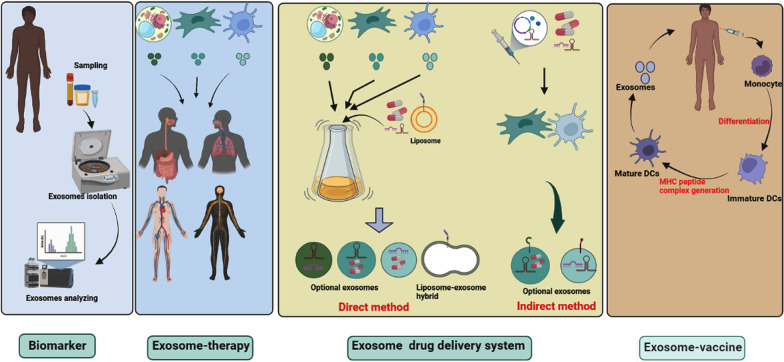
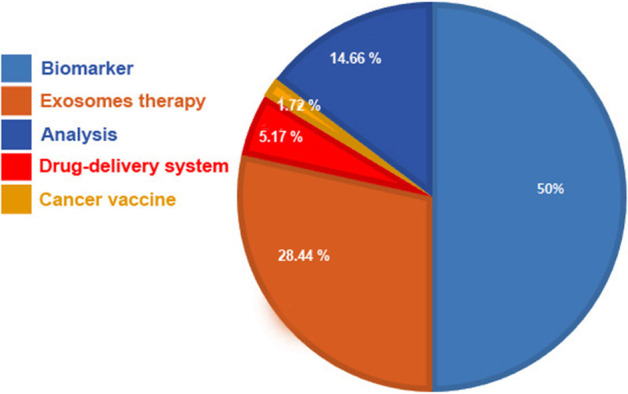
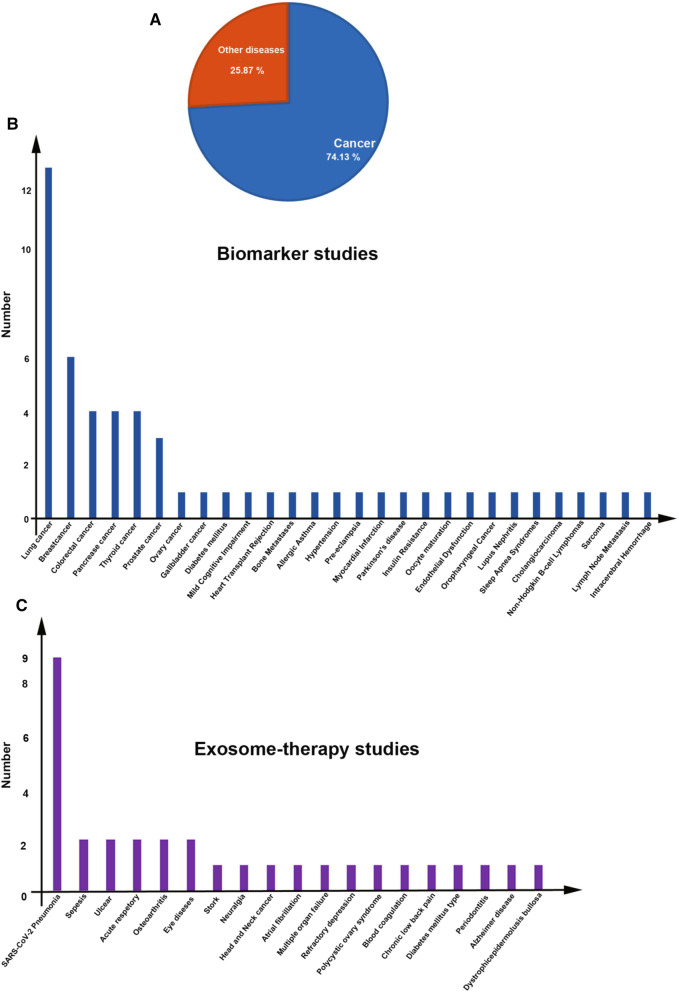
Results: The main clinical application of exosomes are using them as a biomarker, cell-free therapeutic agents, drug delivery carriers, basic analysis for exosome kinetics, and cancer vaccine. Different exosomes from human or plant sources are utilized in various clinical trials. Most researchers used exosomes from the circulatory system for biomarker experiments. Mesenchymal stem cells (MSCs) and dendritic cells (DCs) are two widely held cell sources for exosome use. MSCs-derived exosomes are commonly used for inflammation treatment and drug delivery, while DCs-exosomes are used to induce inflammation response in cancer patients. However, the clinical application of exosomes faces various questions and challenges. In addition, translation of exosome-based clinical trials is required to conform to specific good manufacturing practices (GMP). In this review, we summarize exosomes in the clinical trials according to the type of application and disease. We also address the main questions and challenges regarding exosome kinetics and clinical applications.
Conclusions: Exosomes are promising platforms for treatment of many diseases in clinical trials. This exciting field is developing hastily, understanding of the underlying mechanisms that direct the various observed roles of exosomes remains far from complete and needs further multidisciplinary research in working with these small vesicles. Video Abstract.
Keywords: Clinical trials; Exosome therapy; Exosomes; Extracellular vesicles.
© 2022. The Author(s).
Conflict of interest statement
Not applicable.
Figures
References
-
- Feghhi M, Rezaie J, Akbari A, Jabbari N, Jafari H, Seidi F, Szafert S. Effect of multi-functional polyhydroxylated polyhedral oligomeric silsesquioxane (POSS) nanoparticles on the angiogenesis and exosome biogenesis in human umbilical vein endothelial cells (HUVECs) Mater Des. 2021;197:109227. doi: 10.1016/j.matdes.2020.109227. - DOI
-
- Qin J, Xu Q. Functions and application of exosomes. Acta Pol Pharm. 2014;71:537–543. - PubMed
Publication types
MeSH terms
Substances
LinkOut - more resources
Full Text Sources
Other Literature Sources
Miscellaneous
