Associations between Serum 25-Hydroxyvitamin D Levels and Health-Related Quality-of-Life Measures in Patients with Breast Cancer: A Longitudinal Study
- PMID: 36126952
- PMCID: PMC9729381
- DOI: 10.1158/1055-9965.EPI-22-0343
Associations between Serum 25-Hydroxyvitamin D Levels and Health-Related Quality-of-Life Measures in Patients with Breast Cancer: A Longitudinal Study
Abstract
Background: Recent evidence suggests that vitamin D might lower breast cancer mortality. There is also growing interest in vitamin D's potential association with health-related quality-of-life (HRQoL). Associations between circulating 25-hydroxyvitamin D (25OHD) concentrations and HRQoL were examined prospectively among breast cancer survivors at the time of diagnosis and 1 year later.
Methods: 504 women with incident early-stage breast cancer at Roswell Park Comprehensive Cancer Center were included, and 372 patients provided assessments 1 year later. At each timepoint, participants provided blood samples and completed the SF-36 Health Survey, and surveys on perceived stress, depression, and fatigue. Season-adjusted serum 25OHD concentrations were analyzed in relation to HRQoL measures using multivariable logistic regression models.
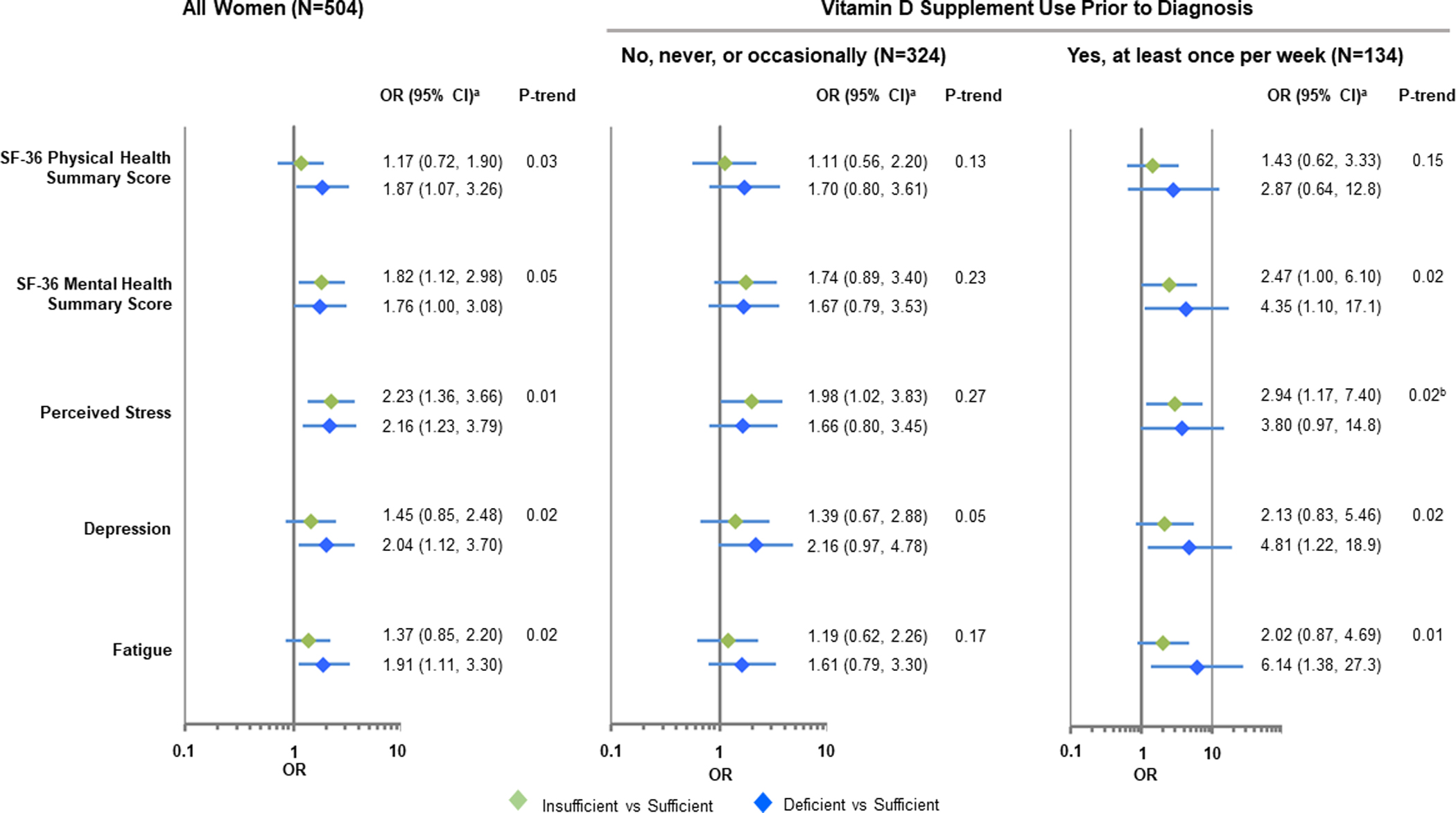
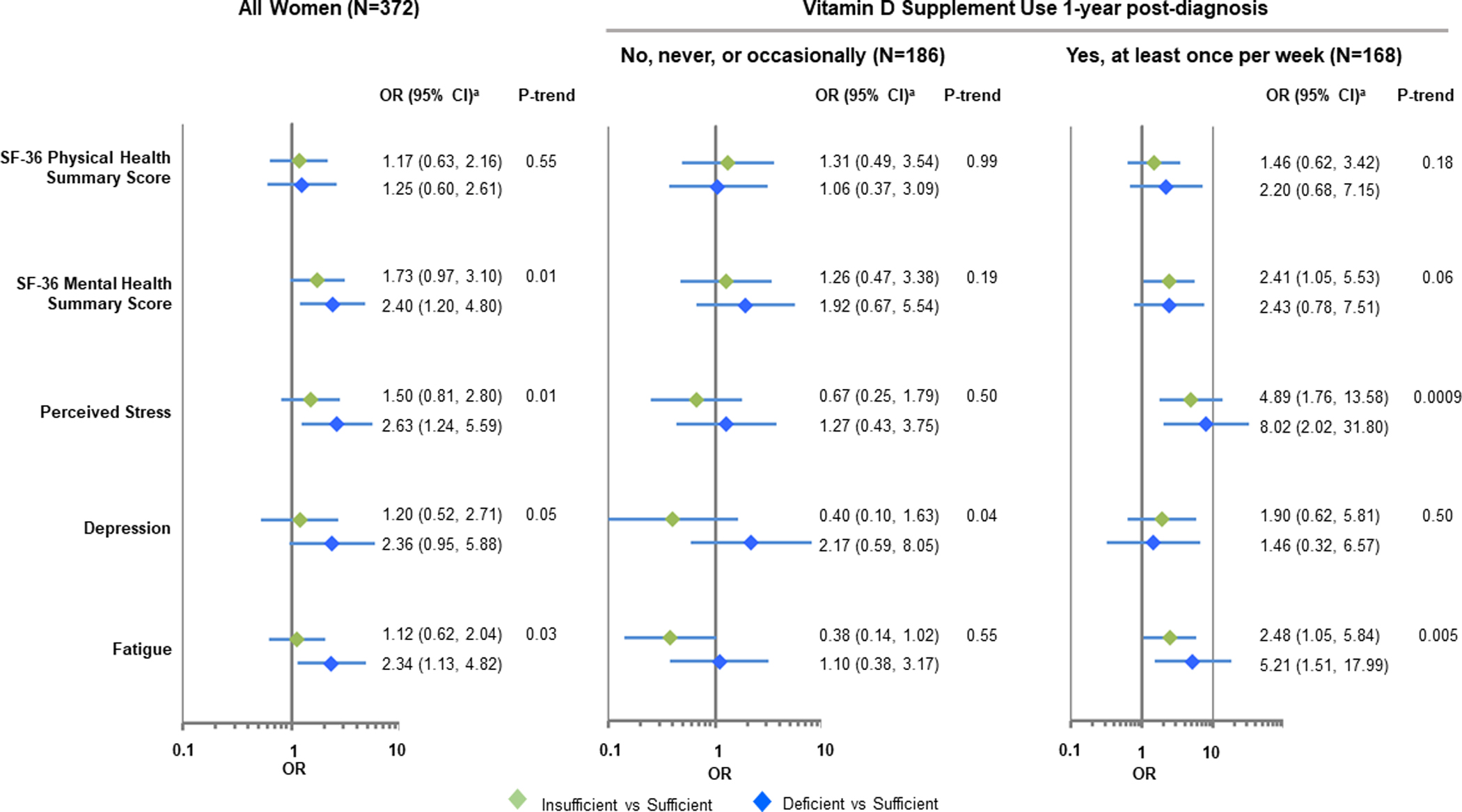
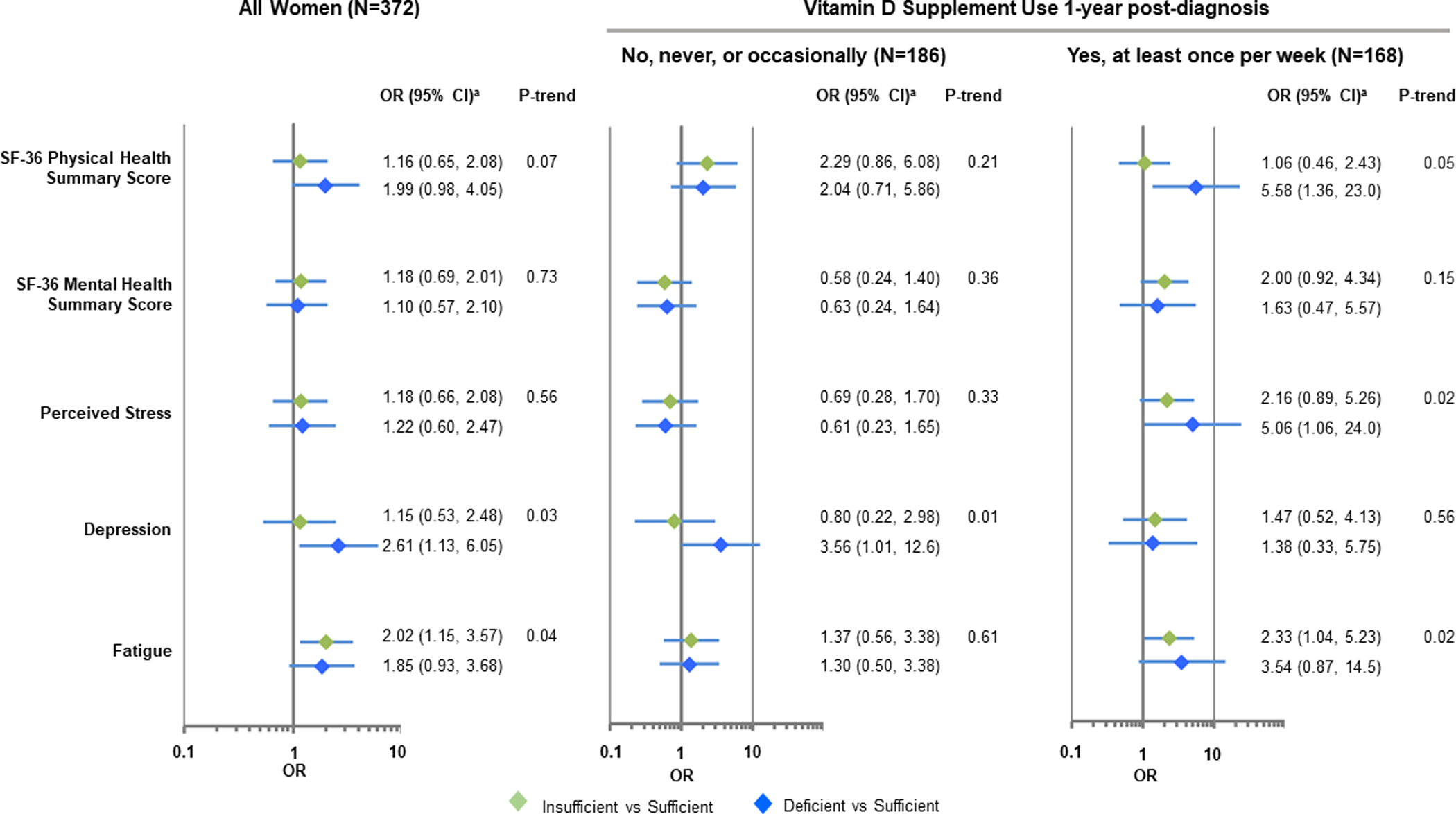
Results: Approximately 32% of participants had deficient vitamin D levels at diagnosis, which decreased to 25% at 1 year. Concurrently, although SF-36 physical health summary scores were lower at 1 year, mental health summary scores improved, and levels of depression and perceived stress were lower. In comparison with women with sufficient 25OHD levels (>30 ng/mL) at diagnosis, those who were deficient (<20 ng/mL) had significantly worse HRQoL at diagnosis and 1 year later. Vitamin D deficiency 1 year post-diagnosis was also associated with worse HRQoL, particularly among breast cancer survivors who took vitamin D supplements.
Conclusions: Breast cancer survivors with vitamin D deficiency were more likely to report lower HRQoL than those with sufficient levels at the time of diagnosis and 1 year post-diagnosis.
Impact: Our results indicate a potential benefit of vitamin D supplementation for improving breast cancer survivorship.
©2022 American Association for Cancer Research.
Conflict of interest statement
The authors declare no potential conflicts of interest.
Figures
References
Publication types
MeSH terms
Substances
Grants and funding
LinkOut - more resources
Full Text Sources
Medical