


Views of general practitioners on end-of-life care learning preferences: a systematic review
- PMID: 36127706
- PMCID: PMC9490975
- DOI: 10.1186/s12904-022-01053-9
Views of general practitioners on end-of-life care learning preferences: a systematic review
Abstract
Background: General practitioners (GPs) play a pivotal role in providing end-of-life care in the community. Although they value end-of-life care, they have apprehensions about providing care in view of the limitations in knowledge and skills in end-of-life care. This review aimed to explore, synthesise, and analyse the views of general practitioners on end-of-life care learning preferences.
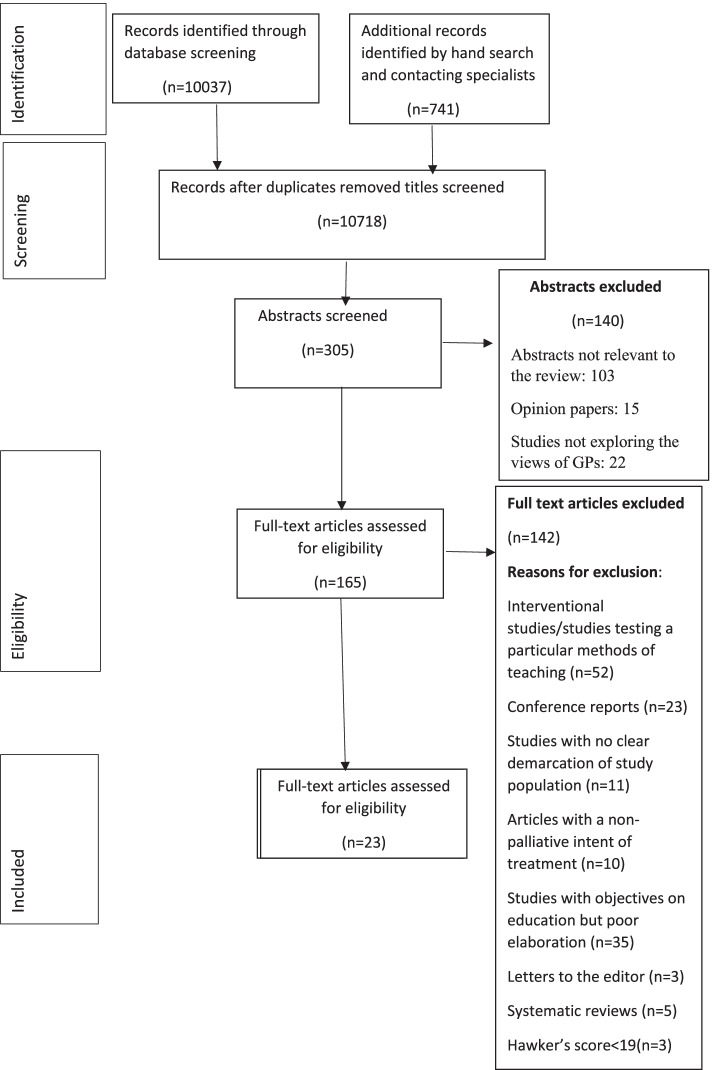
Methods: MEDLINE, CINAHL, PsycINFO, EMBASE, Scopus, Web of Science, and Cochrane were searched for literature on the views of general practitioners on end-of-life care learning preferences from 01/01/1990 to 31/05/2021. Methodological quality was reported.
Results: Of the 10,037 articles identified, 23 were included for the review. Five themes developed from the review. The desire to provide palliative care, as well as self-actualisation needs, relevance to practice, a sense of responsibility, and a therapeutic bond, motivates general practitioners to learn end-of-life care. Some of the learning needs expressed were pain and symptom management, communication skills, and addressing caregiver needs. Experiential learning and pragmatist learning styles were preferred learning styles. They perceived the need for an amicable learning environment in which they could freely express their deficiencies. The review also identified barriers to learning, challenges at personal and professional level, feelings of disempowerment, and conflicts in care.
Conclusion: GPs' preference for learning about end-of-life care was influenced by the value attributed to learning, context and content, as well as preference for learning styles and the availability of resources. Thus, future trainings must be in alignment with the GPs' learning preferences.
Keywords: Continuing medical education; End of life care; General practitioner; Motivation.
© 2022. The Author(s).
Conflict of interest statement
Naveen Salins is an Associate Editor (Palliative care in other conditions) of BMC Palliative Care. Shrikant Atreya and Soumitra Shankar Datta declare no competing interest.
References
Publication types
MeSH terms
LinkOut - more resources
Full Text Sources
