Review
. 2022 Sep 21;29(1):72.
doi: 10.1186/s12929-022-00857-4.

Pathophysiology of reversible cerebral vasoconstriction syndrome

Affiliations
Review

Pathophysiology of reversible cerebral vasoconstriction syndrome

Shih-Pin Chen et al. J Biomed Sci. .

Abstract

Reversible cerebral vasoconstriction syndrome (RCVS) is a complex neurovascular disorder being recognized during the past two decades. It is characterized by multiple abrupt severe headaches and widespread cerebral vasoconstrictions, with potential complications such as ischemic stroke, convexity subarachnoid hemorrhage, intracerebral hemorrhage and posterior reversible encephalopathy syndrome. The clinical features, imaging findings, and dynamic disease course have been delineated. However, the pathophysiology of RCVS remains elusive. Recent studies have had substantial progress in elucidating its pathogenesis. It is now believed that dysfunction of cerebral vascular tone and impairment of blood-brain barrier may play key roles in the pathophysiology of RCVS, which explains some of the clinical and radiological manifestations of RCVS. Some other potentially important elements include genetic predisposition, sympathetic overactivity, endothelial dysfunction, and oxidative stress, although the detailed molecular mechanisms are yet to be identified. In this review, we will summarize what have been revealed in the literature and elaborate how these factors could contribute to the pathophysiology of RCVS.

Keywords: Blood–brain barrier; Neurovascular unit; Reversible cerebral vasoconstriction syndrome; Thunderclap headache.


Conflict of interest statement

The authors have declared no competing interests.

Figures
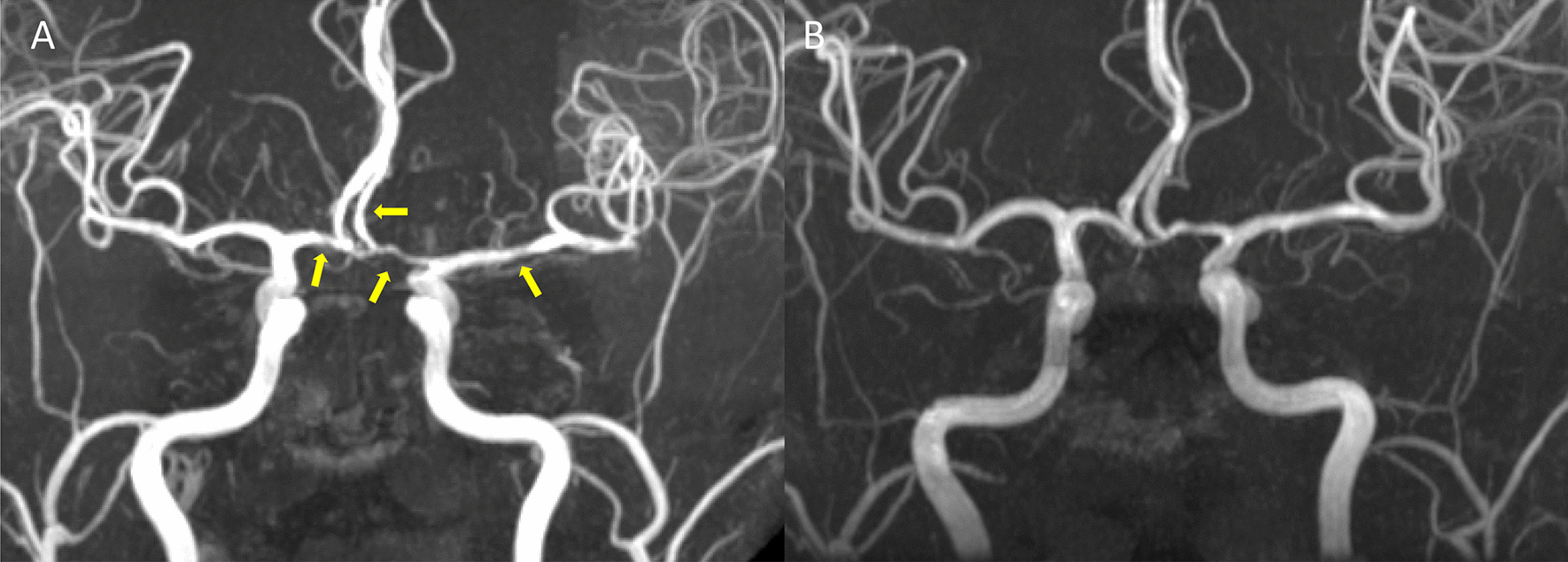
Fig. 1
Fig. 1
Typical presentations of A vasoconstriction and B its reversibility in RCVS. Yellow arrow heads indicate segmental vasoconstrictions of major cerebral arteries
Fig. 2
Fig. 2
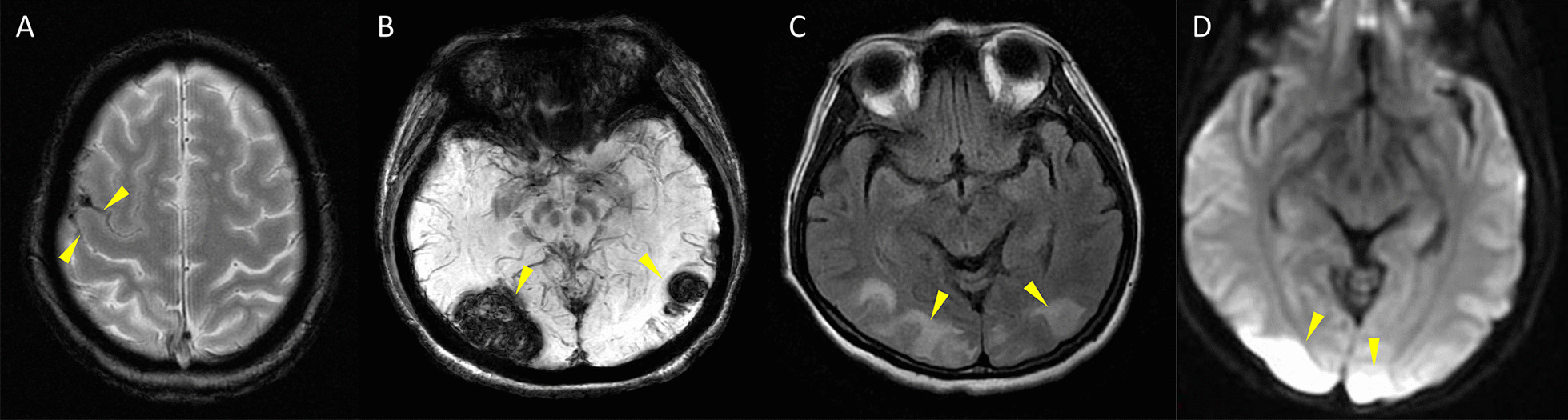
Potential Complications of RCVS. A Convexity subarachnoid hemorrhage. The linear hypointensity demonstrated by gradient echo imaging indicated presence of blood within the cortical sulci. B Intracerebral hemorrhage shown as hypointense lesions on susceptibility weighted imaging. C Posterior reversible encephalopathy syndrome appearing as hyperintense lesions on fluid attenuated inversion recovery imaging. D Ischemic stroke demonstrated by diffusion weighted imaging. All the lesions are indicated by yellow arrow heads. Note that AC are earlier complications that tend to occur within the first 2 weeks of disease while D occurs later at around 2–3 weeks after onset
Fig. 3
Fig. 3
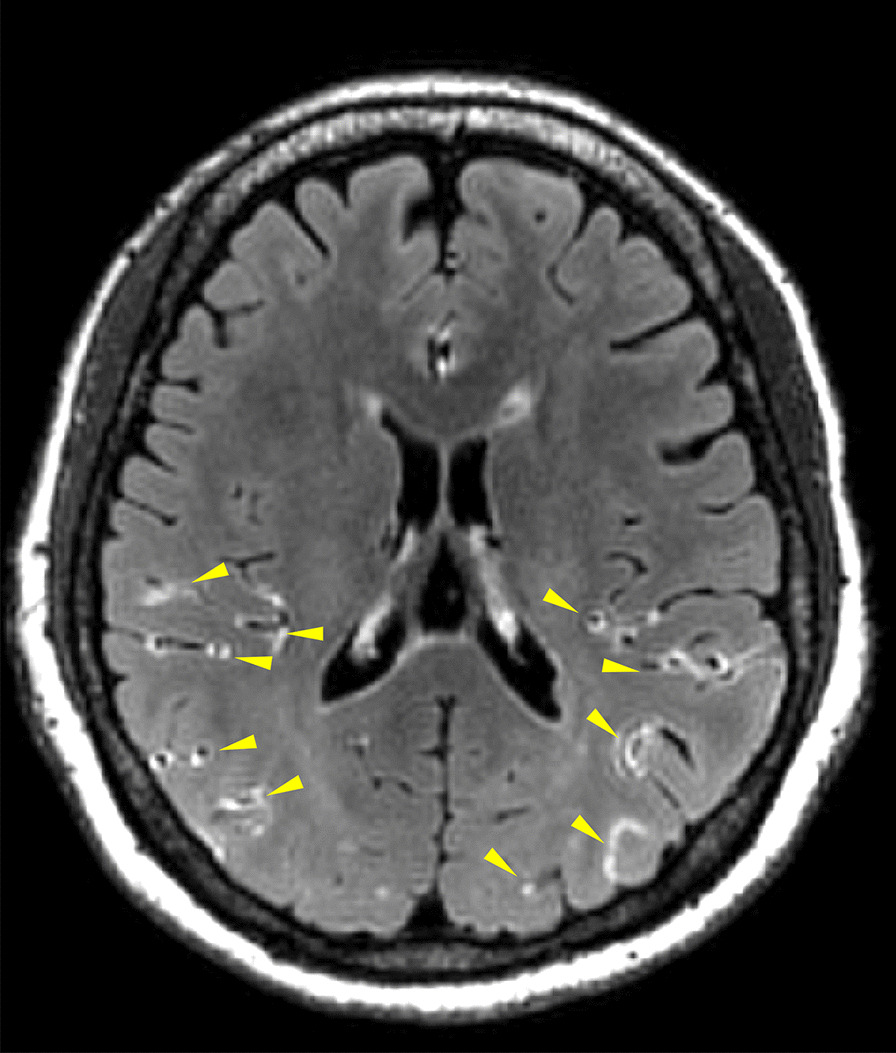
Typical imaging finding of blood–brain barrier breakdown demonstrated by contrast-enhanced FLAIR imaging. The gadolinium-based contrast medium extravasated from the cerebral vessels to the cortical sulci appears hyperintense on FLAIR imaging (yellow arrow heads), providing macroscopic imaging evidence of BBB breakdown
Fig. 4
Fig. 4
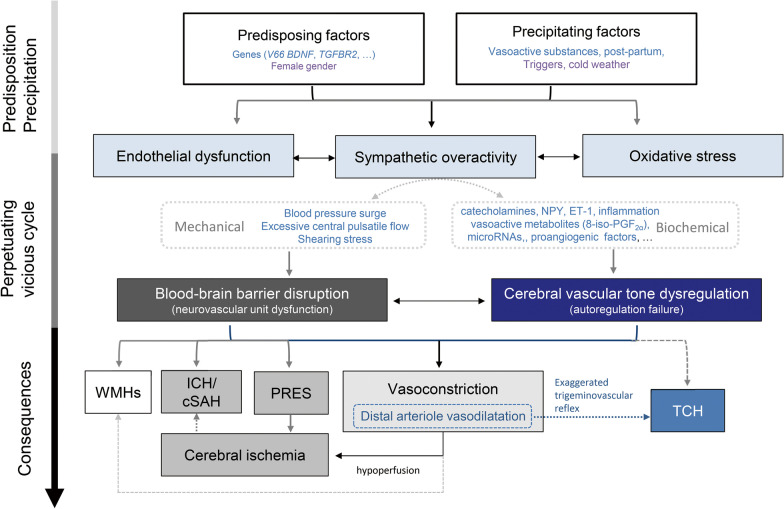
Proposed model of the pathophysiology of RCVS. Development of RCVS is sequential, which may require both predisposition and precipitating factors to initiate and perpetuate a vicious cycle of pathogenic mechanisms that result in the clinical and radiological manifestations (as indicated by the gradient arrow on the left of the figure). Dysregulation of cerebral vascular tone and disruption of blood–brain barrier (BBB) (i.e., dysfunctional neurovascular unit) might play the key roles in the pathophysiology of RCVS, which could be mediated by the mechanical and biochemical consequences of heightened sympathetic drive, endothelial dysfunction and oxidative stress. This could particularly occur in vulnerable subjects with certain predisposition when they encounter secondary causes (e.g., vasoactive substances, post-partum state, etc.), triggers (e.g., exertion, defecation, sexual activity, cough or bathing), or adverse environment (e.g., cold weather). When the dysfunctional autoregulation and BBB disruption exacerbate and the endogenous protective mechanisms fail, headache, vasoconstrictions, and complications may ensue. The thunderclap headache could be attributed either to the dilatation of distal arterioles or meningeal arteries, that activate the trigeminovascular nociceptive fibers. Hemorrhagic complications (cSAH and ICH) or PRES may be attributed to the breakdown of BBB, while the ischemic stroke is related to hypoperfusion caused by vasoconstriction of major cerebral arteries. White matter hyperintensity lesions could be attributed to either increased BBB permeability or partial ischemia due to cerebral hypoperfusion. BDNF brain-derived neurotrophic factor, cSAH convexity subarachnoid hemorrhage, ET-1 endothelin-1, ICH intracerebral hemorrhage, NPY neuropeptide Y, PRES posterior reversible encephalopathy syndrome, TCH thunderclap headache, TGFBR2 transforming growth factor-beta receptor 2, WMH white matter hyperintensity lesion

References

    1. Ducros A. Reversible cerebral vasoconstriction syndrome. Lancet Neurol. 2012;11(10):906–917. doi: 10.1016/S1474-4422(12)70135-7. - DOI - PubMed
    1. Chen SP, Fuh JL, Lirng JF, Chang FC, Wang SJ. Recurrent primary thunderclap headache and benign CNS angiopathy: spectra of the same disorder? Neurology. 2006;67(12):2164–2169. doi: 10.1212/01.wnl.0000249115.63436.6d. - DOI - PubMed
    1. Calabrese LH, Dodick DW, Schwedt TJ, Singhal AB. Narrative review: reversible cerebral vasoconstriction syndromes. Ann Intern Med. 2007;146(1):34–44. doi: 10.7326/0003-4819-146-1-200701020-00007. - DOI - PubMed
    1. Call GK, Fleming MC, Sealfon S, Levine H, Kistler JP, Fisher CM. Reversible cerebral segmental vasoconstriction. Stroke. 1988;19(9):1159–1170. doi: 10.1161/01.STR.19.9.1159. - DOI - PubMed
    1. Dodick DW, Brown RD, Jr, Britton JW, Huston J., 3rd Nonaneurysmal thunderclap headache with diffuse, multifocal, segmental, and reversible vasospasm. Cephalalgia. 1999;19(2):118–23. doi: 10.1046/j.1468-2982.1999.019002118.x. - DOI - PubMed

MeSH terms