Effectiveness of Acupuncture for Anxiety Among Patients With Parkinson Disease: A Randomized Clinical Trial
- PMID: 36129711
- PMCID: PMC9494193
- DOI: 10.1001/jamanetworkopen.2022.32133
Effectiveness of Acupuncture for Anxiety Among Patients With Parkinson Disease: A Randomized Clinical Trial
Abstract
Importance: One of the ordinary manifestations of Parkinson disease (PD) is anxiety, which remains untreated. Anxiety is closely associated with the accelerated progression of PD. Efficacy of acupuncture for anxiety has been reported. However, to date, there are no data on acupuncture's effectiveness on anxiety for patients with PD.
Objective: To investigate the effect of acupuncture vs sham acupuncture for treating anxiety in patients with PD.
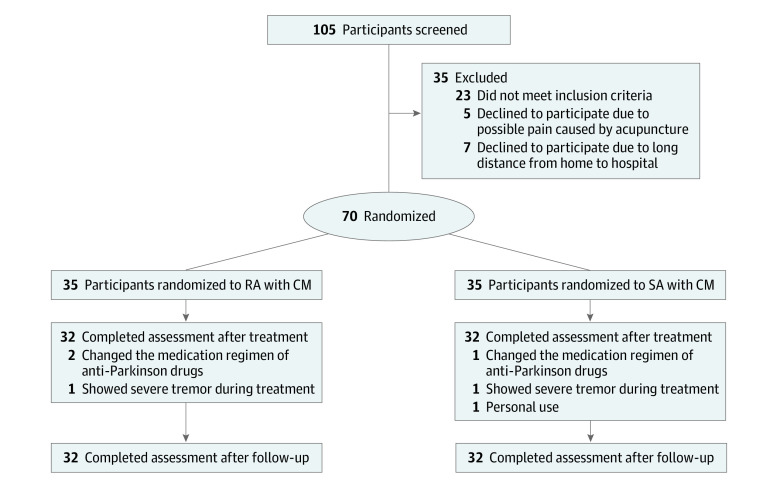
Design, setting, and participants: This is randomized, double-blinded, clinical trial enrolled patients between June 20, 2021, and February 26, 2022. Final follow-up was April 15, 2022. Patients with Parkinson disease and anxiety were allocated randomly (1:1) to receive acupuncture or sham acupuncture for 8 weeks. Acupuncture operators, outcome measures evaluators, and statistical analysts were blinded to the grouping of patients. Patients were blinded to their own grouping during the study. This study took place in the Parkinson clinic of a hospital in China.
Interventions: Real acupuncture or sham acupuncture for 8 weeks.
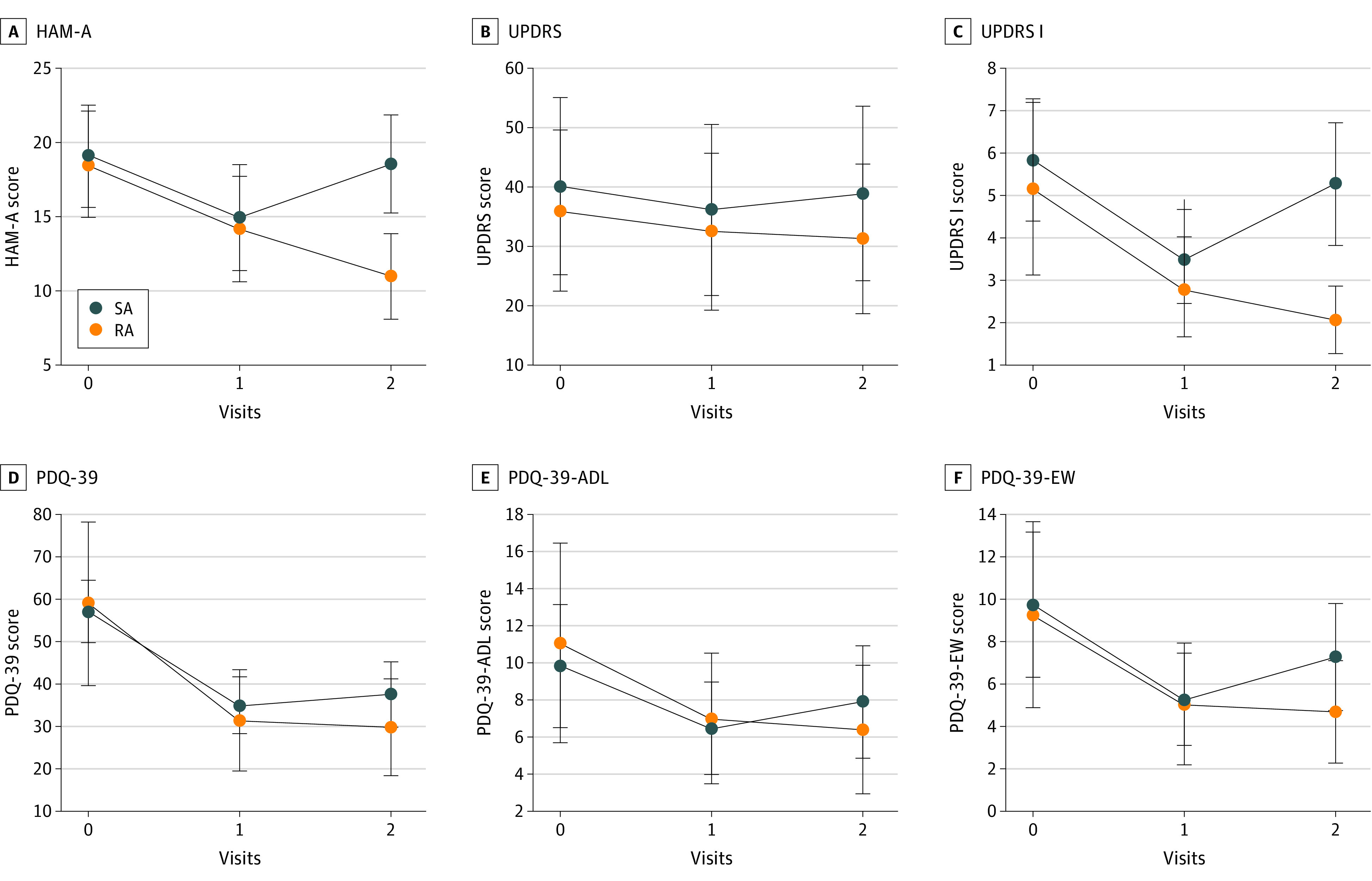
Main outcomes and measures: Primary outcome was Hamilton Anxiety Scale (HAM-A) score. Secondary outcomes were scores on the Unified Parkinson Disease Rating Scale (UPDRS), 39-item Parkinson Disease Questionnaire (PDQ-39), and serum levels of the adrenocorticotropic hormone (ACTH) and cortisol (CORT).
Results: Seventy eligible patients were enrolled, including 34 women (48.5%) and 36 men (51.4%). Sixty-four patients (91%) completed the intervention and the 8-week follow-up, including 30 women (46.9%) and 34 men (53.1%) with a mean (SD) age of 61.84 (8.47) years. At the end of treatment, the variation of HAM-A score was 0.22 (95% CI, -0.63 to 1.07; P = .62) between the real acupuncture and sham acupuncture groups. At the end of follow-up, the real acupuncture group had a significant 7.03-point greater (95% CI, 6.18 to 7.88; P < .001) reduction in HAM-A score compared with the sham acupuncture group. Four mild adverse reactions occurred during the study.
Conclusions and relevance: This study found acupuncture to be an effective treatment for anxiety in patients with PD. These findings suggest that acupuncture may enhance the wellbeing of patients who have Parkinson disease and anxiety.
Trial registration: Chinese Clinical Trial Registry: ChiCTR2100047253.
Conflict of interest statement
Figures
References
Publication types
MeSH terms
Substances
LinkOut - more resources
Full Text Sources
Medical
Miscellaneous