


Colorectal Cancer in Ulcerative Colitis: Mechanisms, Surveillance and Chemoprevention
- PMID: 36135048
- PMCID: PMC9498229
- DOI: 10.3390/curroncol29090479
Colorectal Cancer in Ulcerative Colitis: Mechanisms, Surveillance and Chemoprevention
Abstract
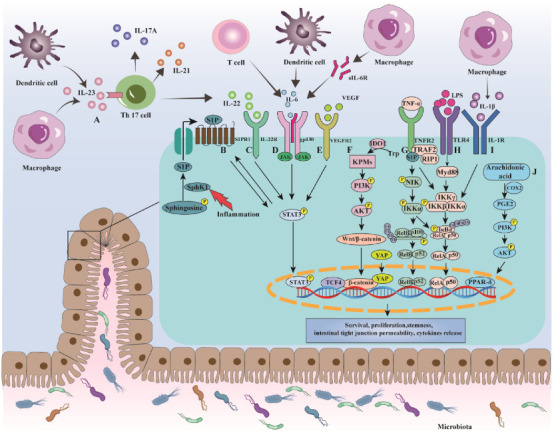
Patients with ulcerative colitis (UC) are at a two- to three-fold increased risk of developing colorectal cancer (CRC) than the general population based on population-based data. UC-CRC has generated a series of clinical problems, which are reflected in its worse prognosis and higher mortality than sporadic CRC. Chronic inflammation is a significant contributor to the development of UC-CRC, so comprehending the relationship between the proinflammatory factors and epithelial cells together with downstream signaling pathways is the core to elucidate the mechanisms involved in developing of CRC. Clinical studies have shown the importance of early prevention, detection and management of CRC in patients with UC, and colonoscopic surveillance at regular intervals with multiple biopsies is considered the most effective way. The use of endoscopy with targeted biopsies of visible lesions has been supported in most populations. In contrast, random biopsies in patients with high-risk characteristics have been suggested during surveillance. Some of the agents used to treat UC are chemopreventive, the effects of which will be examined in cancers in UC in a population-based setting. In this review, we outline the current state of potential risk factors and chemopreventive recommendations in UC-CRC, with a specific focus on the proinflammatory mechanisms in promoting CRC and evidence for personalized surveillance.
Keywords: cell signaling; chromoendoscopy; risk factors; surveillance; ulcerative colitis-associated colorectal cancer.
Conflict of interest statement
The authors declare no conflict of interest. The funders had no role in the design of the study; in the collection, analyses or interpretation of data; in the writing of the manuscript; or in the decision to publish the results.
Figures
References
-
- Magro F., Gionchetti P., Eliakim R., Ardizzone S., Armuzzi A., Barreiro-de Acosta M., Burisch J., Gecse K., Hart A., Hindryckx P., et al. Third European Evidence-based Consensus on Diagnosis and Management of Ulcerative Colitis. Part 1: Definitions, Diagnosis, Extra-intestinal Manifestations, Pregnancy, Cancer Surveillance, Surgery, and Ileo-anal Pouch Disorders. J. Crohn’s Colitis. 2017;11:649–670. doi: 10.1093/ecco-jcc/jjx008. - DOI - PubMed
Publication types
MeSH terms
LinkOut - more resources
Full Text Sources
Medical
