


Awareness and use of genetic testing: An analysis of the Health Information National Trends Survey 2020
- PMID: 36136089
- PMCID: PMC9746668
- DOI: 10.1016/j.gim.2022.08.023
Awareness and use of genetic testing: An analysis of the Health Information National Trends Survey 2020
Abstract
Purpose: Genetic testing is a tool used in a variety of settings for medical and nonhealth related purposes. The goal of this analysis was to better understand the awareness and use of genetic testing in the United States.
Methods: Data from the 2020 Health Information National Trends Survey 5 cycle 4 were used to assess the awareness and use of genetic testing by demographic characteristics, personal cancer history, and family cancer history.
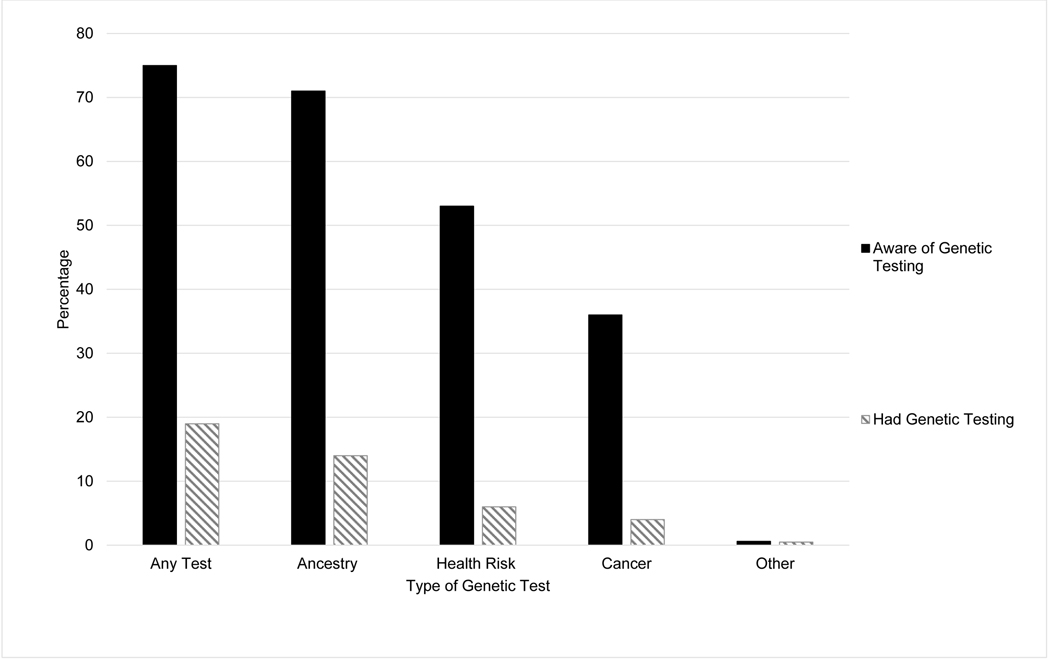
Results: Overall, 75% of participants were aware of genetic testing and 19% of participants had genetic testing. Ancestry testing was the most common type of testing that the participants were aware of and had received. Non-Hispanic Asian, Non-Hispanic Black, and Hispanic respondents and participants with incomes less than $20,000 were less likely to be aware of and have received any type of genetic testing than the Non-Hispanic White participants and participants with higher income, respectively. Participants with a family history of cancer were more likely to be aware of cancer genetic testing than those without, and participants with a personal history of cancer were more likely to have had cancer genetic testing.
Conclusion: It appears awareness of genetic testing is increasing in the United States, and differences in awareness persist by race/ethnicity and income.
Keywords: Ancestry; Awareness; Cancer; Genetic testing.
Published by Elsevier Inc.
Conflict of interest statement
Conflict of Interest All the authors are employed by the National Institutes of Health. The authors declare no conflict of interest.
Figures
References
MeSH terms
Grants and funding
LinkOut - more resources
Full Text Sources
Medical
