


Plant-Based Diets and Cancer Prognosis: a Review of Recent Research
- PMID: 36138327
- PMCID: PMC9750928
- DOI: 10.1007/s13668-022-00440-1
Plant-Based Diets and Cancer Prognosis: a Review of Recent Research
Abstract
Purpose of review: Although plant-based diets are recommended for cancer prevention, their role in cancer survival is still uncertain. The purpose of this systematic review is to summarize the association between postdiagnosis plant-based diets and prognosis in cancer survivors.
Recent findings: There is indication that higher intake of plant-based foods was associated with improved prognosis in cancer survivors. For colorectal cancer survival, a better prognosis was observed for a high intake of whole grains and fibre. For breast cancer survival, a higher intake of fruit, vegetable and fibre and a moderate intake of soy/isoflavone were associated with beneficial outcomes. A higher vegetable fat intake was related to improved prognosis in prostate cancer survivors. Emerging evidence suggests benefits of postdiagnosis plant-based diets on prognosis in cancer survivors. However, given the high heterogeneity between studies, further research in cancer survivors, considering clinical factors (e.g. treatment, stage) and methodological aspects (e.g. timing of dietary assessment), is needed.
Keywords: Cancer prognosis; Cancer survival; Nuts; Plant-based diets; Vegetable; Whole grain.
© 2022. The Author(s).
Conflict of interest statement
The authors declare that they have no conflict of interest.
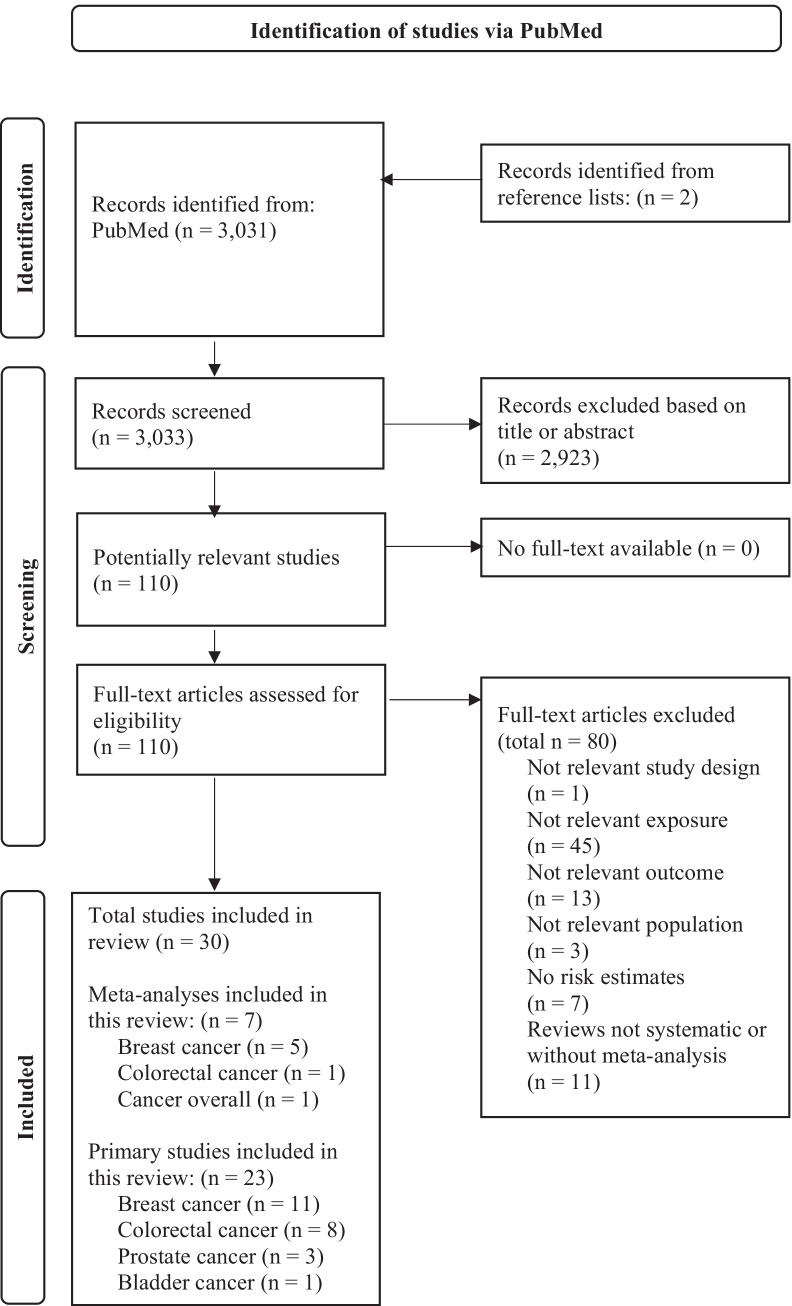
Figures
References
-
- World Health Organization. Cancer. Fact sheet. Reviewed April 2022. https://www.who.int/news-room/fact-sheets/detail/cancer. Accessed 15 Jun 2022
-
- International Agency for Research on Cancer. Cancer Today. Reviewed May 2022. https://gco.iarc.fr/today. Accessed 15 Jun 2022.
-
- Fassier P, Zelek L, Lécuyer L, Bachmann P, Touillaud M, Druesne-Pecollo N, et al. Modifications in dietary and alcohol intakes between before and after cancer diagnosis: results from the prospective population-based NutriNet-Santé cohort. Int J Cancer. 2017;141(3):457–470. doi: 10.1002/ijc.30704. - DOI - PMC - PubMed
Publication types
MeSH terms
Grants and funding
LinkOut - more resources
Full Text Sources
Medical