


Heroin pipe distribution to reduce high-risk drug consumption behaviors among people who use heroin: a pilot quasi-experimental study
- PMID: 36138407
- PMCID: PMC9493152
- DOI: 10.1186/s12954-022-00685-7
Heroin pipe distribution to reduce high-risk drug consumption behaviors among people who use heroin: a pilot quasi-experimental study
Abstract
Background: Heroin pipe distribution may encourage people who use heroin (PWUH) to transition from injecting to smoking heroin, reducing harms associated with injection drug use. A syringe services program (SSP) in Seattle, Washington, led by people who use drugs developed a heroin pipe distribution program.
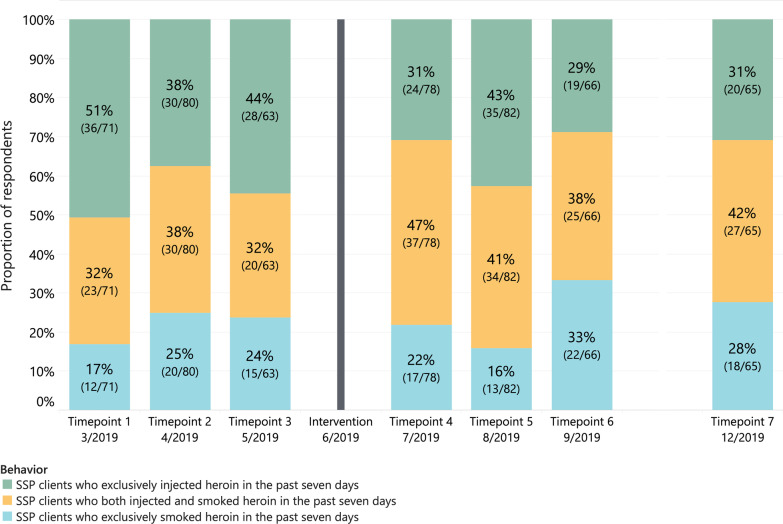
Methods: We conducted a pretest-posttest quasi-experimental study to evaluate the impact of heroin pipe distribution on drug consumption behaviors among PWUH between March and December 2019. SSP clients were surveyed during three weeklong timepoints before and four weeklong timepoints after heroin pipe distribution. Primary outcomes were change in proportion of SSP clients who exclusively injected heroin, exclusively smoked heroin, and both injected and smoked heroin in the past seven days comparing the pre- and post-intervention periods.
Results: Across the seven observation timepoints, 694 unique respondents completed 957 surveys. Multiple responses from a single respondent in a given period were collapsed, resulting in 360 pre-intervention and 430 post-intervention records. Heroin use was reported in over half of pre-intervention (56%, 201/360) and post-intervention records (58%, 251/430). Compared to pre-intervention behaviors, the proportion of respondents who exclusively injected heroin was lower after the start of heroin pipe distribution (32%, 80/251 vs 43%, 86/201, p = 0.02), while the proportion of respondents who both injected and smoked heroin was higher (45%, 113/251 vs 36%, 72/201, p = 0.048). Just under half (44%, 110/251) of respondents who used heroin during the post-intervention period used a heroin pipe obtained from the SSP, of which 34% (37/110) reported heroin pipe distribution had reduced their heroin injection frequency. Self-reported hospitalization for a pulmonary cause was not associated with using a heroin pipe.
Conclusions: The proportion of SSP clients who exclusively injected heroin was lower after implementation of heroin pipe distribution. Randomized studies with longer follow-up are needed to investigate whether heroin pipe distribution reduces heroin injection and improves health outcomes associated with drug use. Limited intervention exposure, loss to follow-up, and pipe availability from other sources pose methodological challenges to evaluations of route transition interventions in community settings. This pilot highlights the potential for organizations led by people who use drugs to develop, implement, and evaluate novel public health programming.
Keywords: Heroin injection; Heroin pipe; Heroin smoking; People who use drugs; Route transition intervention.
© 2022. The Author(s).
Conflict of interest statement
TF serves as a volunteer on the board of directors, and VM and SD were previously employed by The People’s Harm Reduction Alliance during the time period when this study was conducted. The authors declare they have no other competing interests.
Figures
References
-
- Kielland KB, Skaug K, Amundsen EJ, Dalgard O. All-cause and liver-related mortality in hepatitis C infected drug users followed for 33 years: a controlled study. J Hepatol. 2013;58(1):31–37. - PubMed
Publication types
MeSH terms
Substances
Grants and funding
LinkOut - more resources
Full Text Sources
Medical
Miscellaneous
