


Age-Related NAFLD: The Use of Probiotics as a Supportive Therapeutic Intervention
- PMID: 36139402
- PMCID: PMC9497179
- DOI: 10.3390/cells11182827
Age-Related NAFLD: The Use of Probiotics as a Supportive Therapeutic Intervention
Abstract
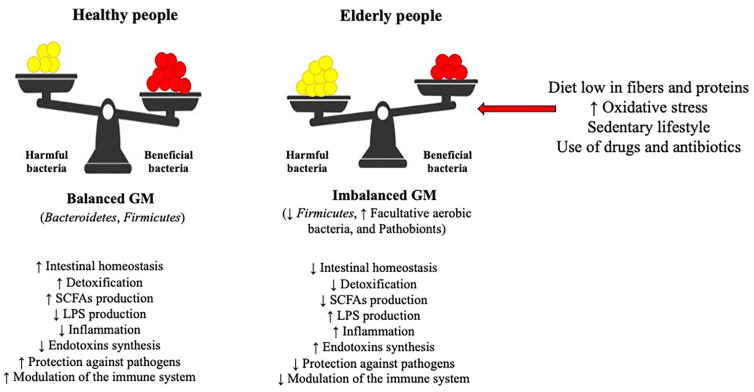
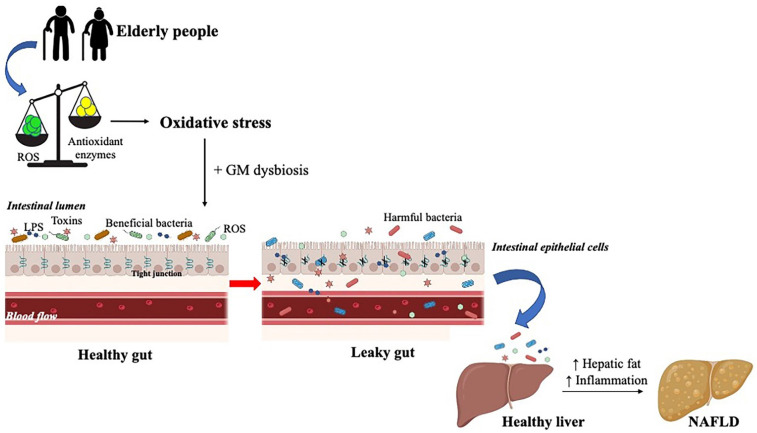
Human aging, a natural process characterized by structural and physiological changes, leads to alterations of homeostatic mechanisms, decline of biological functions, and subsequently, the organism becomes vulnerable to external stress or damage. In fact, the elderly population is prone to develop diseases due to deterioration of physiological and biological systems. With aging, the production of reactive oxygen species (ROS) increases, and this causes lipid, protein, and DNA damage, leading to cellular dysfunction and altered cellular processes. Indeed, oxidative stress plays a key role in the pathogenesis of several chronic disorders, including hepatic diseases, such as non-alcoholic fatty liver disease (NAFLD). NAFLD, the most common liver disorder in the Western world, is characterized by intrahepatic lipid accumulation; is highly prevalent in the aging population; and is closely associated with obesity, insulin resistance, hypertension, and dyslipidemia. Among the risk factors involved in the pathogenesis of NAFLD, the dysbiotic gut microbiota plays an essential role, leading to low-grade chronic inflammation, oxidative stress, and production of various toxic metabolites. The intestinal microbiota is a dynamic ecosystem of microbes involved in the maintenance of physiological homeostasis; the alteration of its composition and function, during aging, is implicated in different liver diseases. Therefore, gut microbiota restoration might be a complementary approach for treating NAFLD. The administration of probiotics, which can relieve oxidative stress and elicit several anti-aging properties, could be a strategy to modify the composition and restore a healthy gut microbiota. Indeed, probiotics could represent a valid supplement to prevent and/or help treating some diseases, such as NAFLD, thus improving the already available pharmacological intervention. Moreover, in aging, intervention of prebiotics and fecal microbiota transplantation, as well as probiotics, will provide novel therapeutic approaches. However, the relevant research is limited, and several scientific research works need to be done in the near future to confirm their efficacy.
Keywords: NAFLD; age-related disease; liver; microbiota; therapeutic strategies.
Conflict of interest statement
The authors declare no conflict of interest.
Figures
References
Publication types
MeSH terms
Substances
LinkOut - more resources
Full Text Sources
Medical
