


Sweet Potato Is Not Simply an Abundant Food Crop: A Comprehensive Review of Its Phytochemical Constituents, Biological Activities, and the Effects of Processing
- PMID: 36139723
- PMCID: PMC9495970
- DOI: 10.3390/antiox11091648
Sweet Potato Is Not Simply an Abundant Food Crop: A Comprehensive Review of Its Phytochemical Constituents, Biological Activities, and the Effects of Processing
Abstract
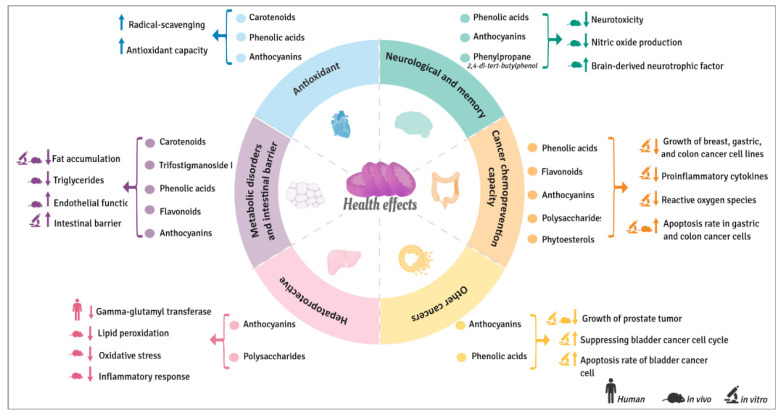
Nowadays, sweet potato (Ipomoea batata L.; Lam.) is considered a very interesting nutritive food because it is rich in complex carbohydrates, but as a tubercle, contains high amounts of health-promoting secondary metabolites. The aim of this review is to summarize the most recently published information on this root vegetable, focusing on its bioactive phytochemical constituents, potential effects on health, and the impact of processing technologies. Sweet potato is considered an excellent source of dietary carotenoids, and polysaccharides, whose health benefits include antioxidant, anti-inflammatory and hepatoprotective activity, cardiovascular protection, anticancer properties and improvement in neurological and memory capacity, metabolic disorders, and intestinal barrier function. Moreover, the purple sweet potato, due to its high anthocyanin content, represents a unique food option for consumers, as well as a potential source of functional ingredients for healthy food products. In this context, the effects of commercial processing and domestic cooking techniques on sweet potato bioactive compounds require further study to understand how to minimize their loss.
Keywords: Ipomoea batata L. roots; bioactive compounds; biological functions; carotenes; cooking; healthy food; polyphenols.
Conflict of interest statement
The authors declare no conflict of interest.
Figures
References
-
- Jung J.-K., Lee S.-U., Kozukue N., Levin C.E., Friedman M. Distribution of Phenolic Compounds and Antioxidative Activities in Parts of Sweet Potato (Ipomoea batata L.) Plants and in Home Processed Roots. J. Food Compos. Anal. 2011;24:29–37. doi: 10.1016/j.jfca.2010.03.025. - DOI
-
- Wang H., Cao G., Prior R.L. Oxygen Radical Absorbing Capacity of Anthocyanins. J. Agric. Food Chem. 1997;45:304–309. doi: 10.1021/jf960421t. - DOI
-
- Parveen A., Choi S., Kang J.-H., Oh S.H., Kim S.Y. Trifostigmanoside I, an Active Compound from Sweet Potato, Restores the Activity of MUC2 and Protects the Tight Junctions through PKCα/β to Maintain Intestinal Barrier Function. Int. J. Mol. Sci. 2020;22:291. doi: 10.3390/ijms22010291. - DOI - PMC - PubMed
Publication types
Grants and funding
LinkOut - more resources
Full Text Sources
