Case Reports
. 2022 Aug 26;11(9):1661.
doi: 10.3390/antiox11091661.

Full Regression of Peyronie's Disease Plaque Following Combined Antioxidant Treatment: A Three-Case Report

Affiliations
Case Reports

Full Regression of Peyronie's Disease Plaque Following Combined Antioxidant Treatment: A Three-Case Report

Gianni Paulis et al. Antioxidants (Basel). .

Abstract

Peyronie's disease (PD) is a fibrotic disorder of the tunica albuginea of the penis. Conservative medical therapy includes oral and/or injective active substances. Until now, only two PD patients who recovered after medical treatment are described in the literature. This article describes three new cases of PD patients who achieved complete resorption of plaque following antioxidant treatment. Case Presentations: Case 1. The patient was a 34-year-old man, a smoker, with lateral-left penile curvature (40 degrees), penile pain, and good penile rigidity. The patient was treated with combined therapy (oral antioxidants + Propolis creme). At follow-up, after about 29 months of treatment, we observed the disappearance of the acquired penile deformity. The ultrasound examination no longer showed any plaque. Case 2. The patient was a 32-year-old man with chronic prostatitis, penile lichen sclerosus, lateral-left penile curvature (10 degrees), a palpable lump, and good penile rigidity. The patient was treated with combined therapy (oral antioxidants + Propolis creme + penile injections of pentoxifylline). After 33 months of treatment, at follow-up, we observed the disappearance of the penile deformity. Ultrasound examinations no longer showed any plaque. Case 3. The patient was a 33-year-old man with penile pain, dorsal penile curvature (30 degrees), and good penile rigidity. The patient was treated with combined therapy (oral antioxidants + Propolis creme + penile injections of pentoxifylline). At follow-up, after 41 months of treatment, the penile pain was no longer present, and the ultrasound study no longer showed any plaque. Conclusions: Although our study presents a limited number of cases, it is a matter of fact that these patients obtained full regression in the affected area. We believe our experience may be very useful for urological clinical practice.

Keywords: Peyronie’s disease; antioxidants; oxidative stress.


Conflict of interest statement

The authors declare no conflict of interest.

Figures
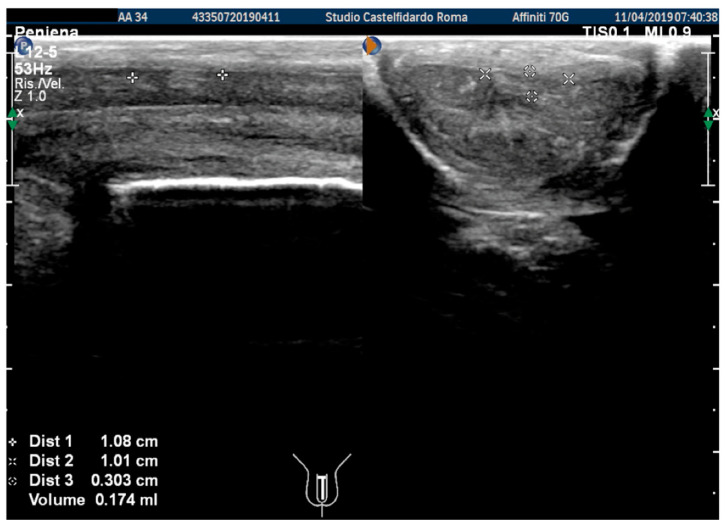
Figure 1
Figure 1
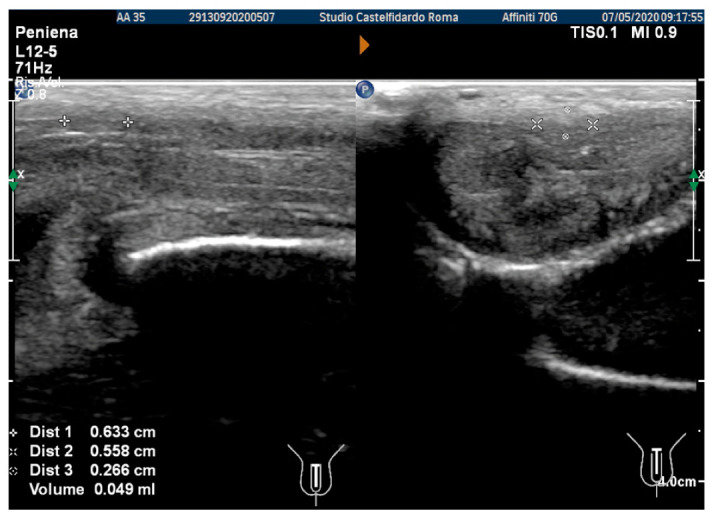
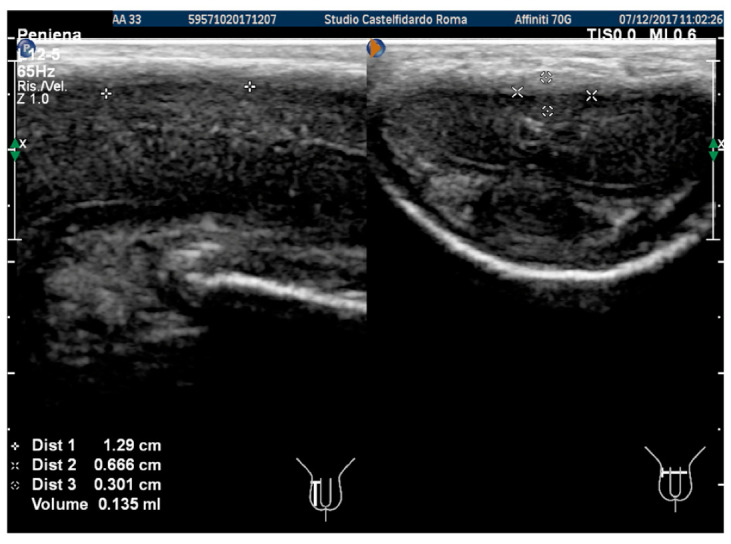
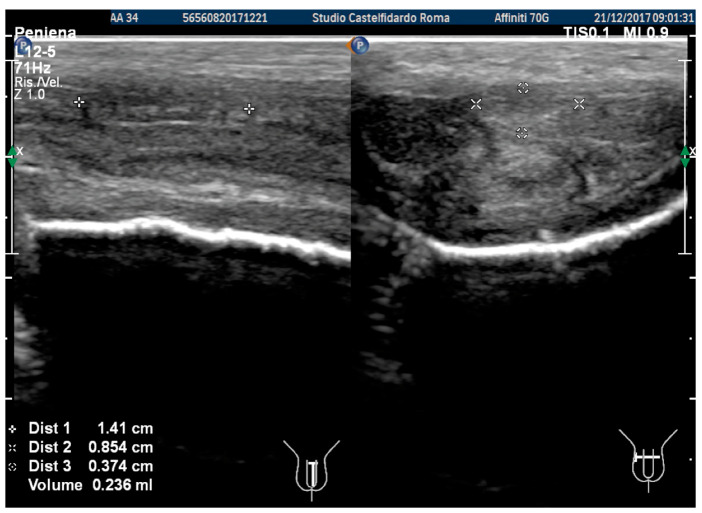
Ultrasonography of the penis before therapy (longitudinal and axial views).
Figure 2
Figure 2
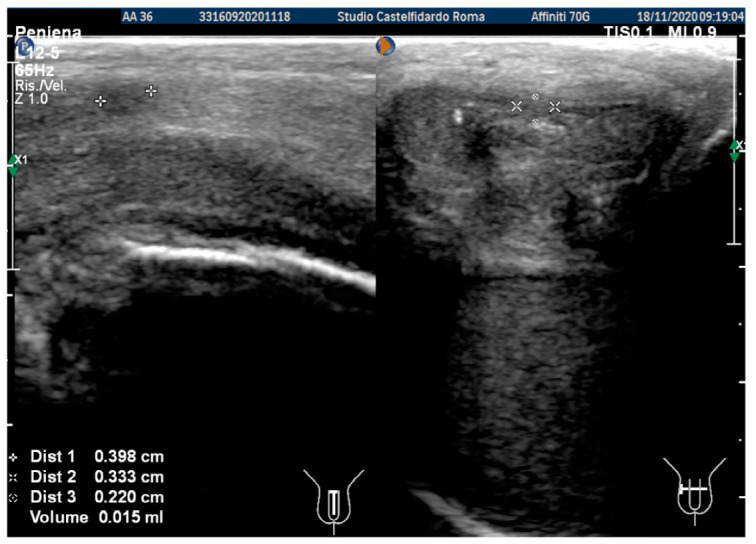
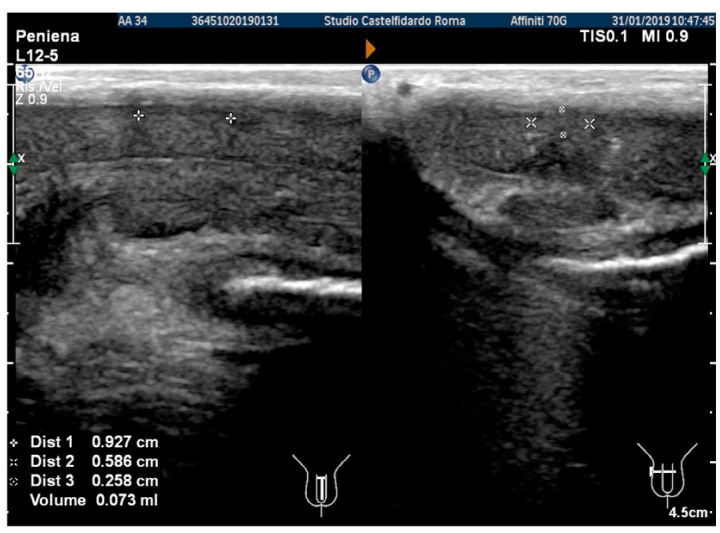
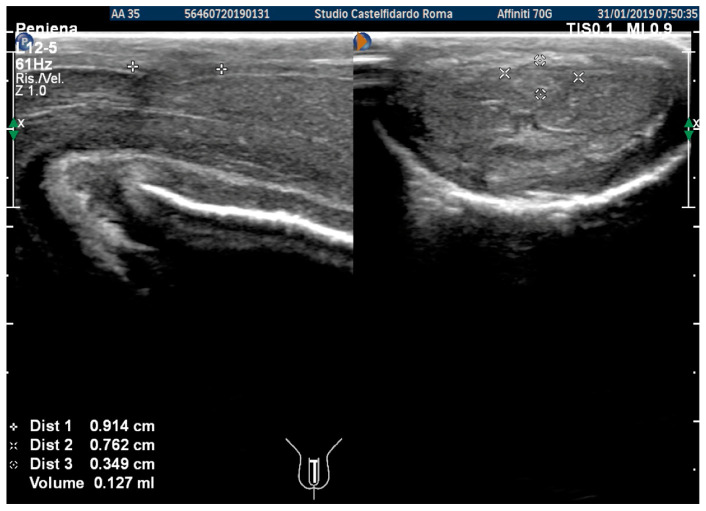
Ultrasonography of the penis after the 1st therapy cycle (longitudinal and axial views).
Figure 3
Figure 3
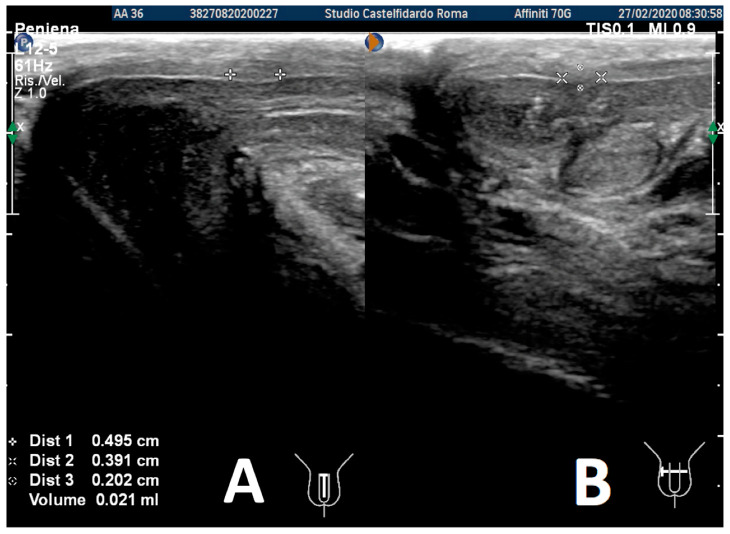
Ultrasonography of the penis after the 2nd therapy cycle (longitudinal and axial views).
Figure 4
Figure 4
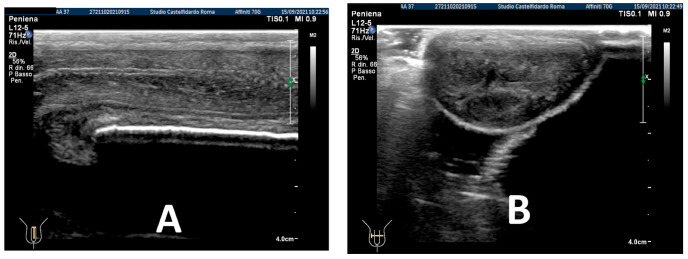
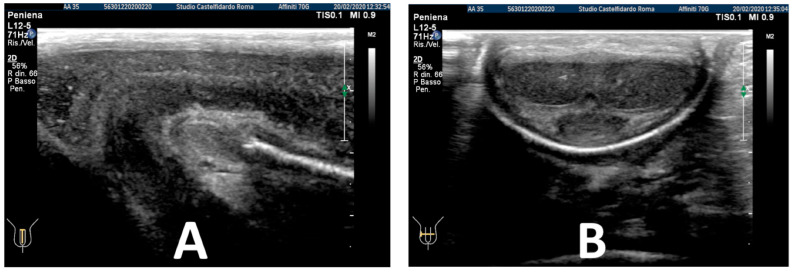
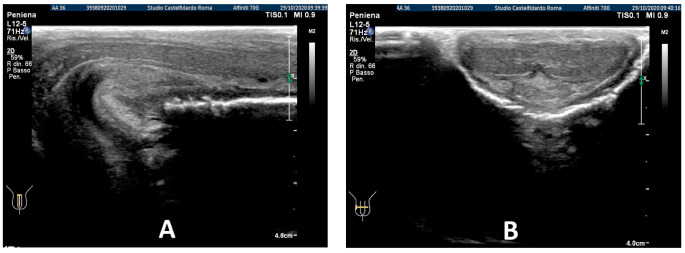
Ultrasonography of the penis after the 3rd therapy cycle. (A) Longitudinal view; (B) axial view.
Figure 5
Figure 5
Ultrasonography of the penis before therapy (longitudinal and axial views).
Figure 6
Figure 6
Ultrasonography of the penis after the 1st therapy cycle (longitudinal and axial views).
Figure 7
Figure 7
Ultrasonography of the penis after the 2nd therapy cycle (longitudinal and axial views).
Figure 8
Figure 8
Ultrasonography of the penis after the 3rd therapy cycle. (A) Longitudinal view; (B) axial view.
Figure 9
Figure 9
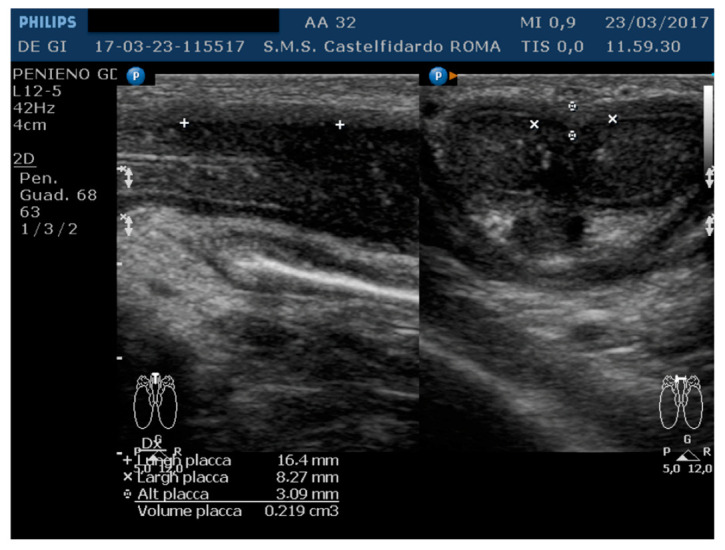
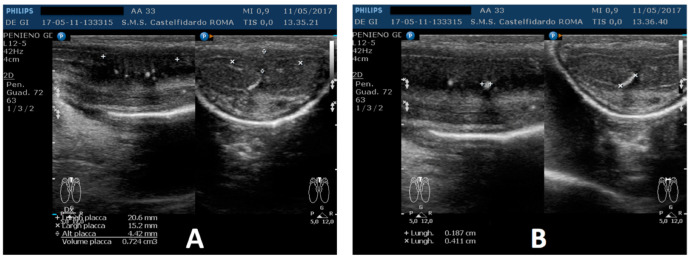
Ultrasonography of the penis before therapy (longitudinal and axial views). (A) Entire plaque; (B) the largest calcification.
Figure 10
Figure 10
Ultrasonography of the penis after the 1st therapy cycle (longitudinal and axial views).
Figure 11
Figure 11
Ultrasonography of the penis after the 2nd therapy cycle (longitudinal and axial views).
Figure 12
Figure 12
Ultrasonography of the penis after the 3rd therapy cycle. (A) Longitudinal view; (B) axial view.
Figure 13
Figure 13
Ultrasonography of the penis after the 3rd therapy cycle. (A) Longitudinal view; (B) axial view.

References

    1. Weidner W., Schroeder-Printzen I., Weiske W.H., Vosshenrich R. Sexual dysfunction in Peyronie’s disease: An analysis of 222 patients without previous local plaque therapy. J. Urol. 1997;157:325–328. doi: 10.1016/S0022-5347(01)65370-9. - DOI - PubMed
    1. Pryor J.P., Ralph D.J. Clinical presentations of Peyronie’s disease. Int. J. Impot. Res. 2002;14:414–417. doi: 10.1038/sj.ijir.3900877. - DOI - PubMed
    1. Nelson C.J., Diblasio C., Kendirci M., Hellstrom W., Guhring P., Mulhall J.P. The chronology of depression and distress in men with Peyronie’s disease. J. Sex. Med. 2008;5:1985–1990. doi: 10.1111/j.1743-6109.2008.00895.x. - DOI - PubMed
    1. Schwarzer U., Sommer F., Klotz T., Braun M., Reifenrath B., Engelmann U. The prevalence of Peyronie’s disease: Results of a large survey. BJU Int. 2001;88:727–730. doi: 10.1046/j.1464-4096.2001.02436.x. - DOI - PubMed
    1. DiBenedetti D.B., Nguyen D., Zografos L., Ziemiecki R., Zhou X. A Population-based study of peyronie’s disease: Prevalence and treatment patterns in the United States. Adv. Urol. 2011;2011:282503. doi: 10.1155/2011/282503. - DOI - PMC - PubMed

Publication types

LinkOut - more resources