


The Related Metabolic Diseases and Treatments of Obesity
- PMID: 36141228
- PMCID: PMC9498506
- DOI: 10.3390/healthcare10091616
The Related Metabolic Diseases and Treatments of Obesity
Abstract
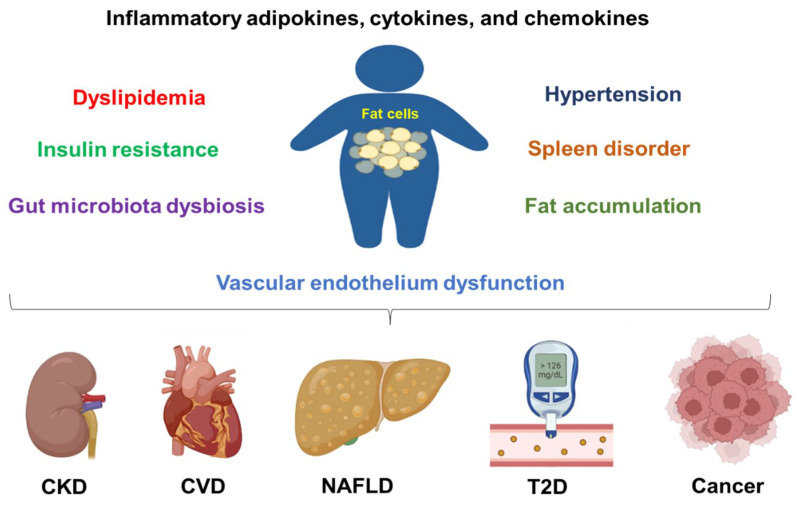
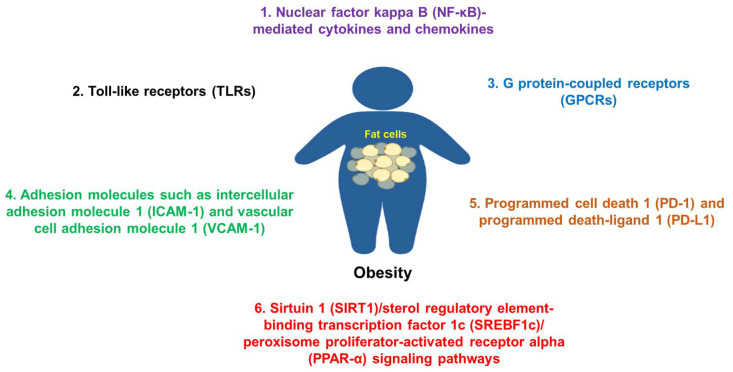
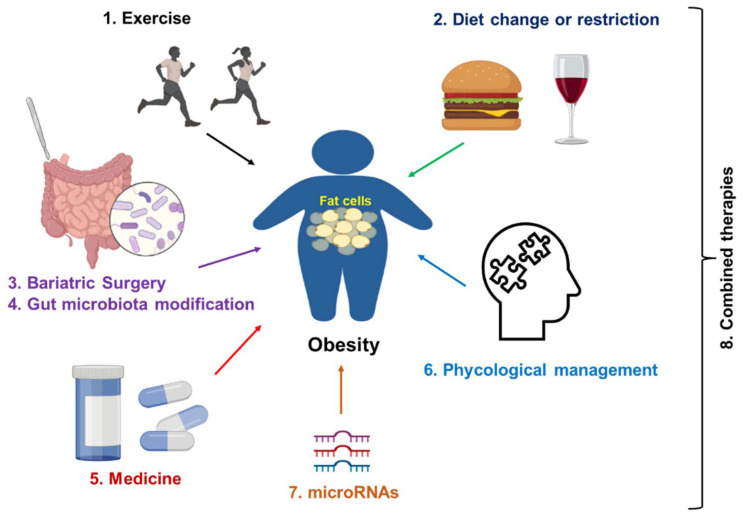
Obesity is a chronic disease characterized by the abnormal or excessive accumulation of body fat, affecting more than 1 billion people worldwide. Obesity is commonly associated with other metabolic disorders, such as type 2 diabetes, non-alcoholic fatty liver disease, cardiovascular diseases, chronic kidney disease, and cancers. Factors such as a sedentary lifestyle, overnutrition, socioeconomic status, and other environmental and genetic conditions can cause obesity. Many molecules and signaling pathways are involved in the pathogenesis of obesity, such as nuclear factor (NF)-κB, Toll-like receptors (TLRs), adhesion molecules, G protein-coupled receptors (GPCRs), programmed cell death 1 (PD-1)/programmed death-ligand 1 (PD-L1), and sirtuin 1 (SIRT1). Commonly used strategies of obesity management and treatment include exercise and dietary change or restriction for the early stage of obesity, bariatric surgery for server obesity, and Food and Drug Administration (FDA)-approved medicines such as semaglutide and liraglutide that can be used as monotherapy or as a synergistic treatment. In addition, psychological management, especially for patients with obesity and distress, is a good option. Gut microbiota plays an important role in obesity and its comorbidities, and gut microbial reprogramming by fecal microbiota transplantation (FMT), probiotics, prebiotics, or synbiotics shows promising potential in obesity and metabolic syndrome. Many clinical trials are ongoing to evaluate the therapeutic effects of different treatments. Currently, prevention and early treatment of obesity are the best options to prevent its progression to many comorbidities.
Keywords: clinical trials; comorbidities; drugs; molecular signaling pathways; obesity; treatment.
Conflict of interest statement
The authors declare that there are no conflict of interest.
Figures

References
-
- World Health Organization World Obesity Day 2022—Accelerating Action to Stop Obesity. 2022. [(accessed on 8 August 2022)]. Available online: https://www.who.int/news/item/04-03-2022-world-obesity-day-2022-accelera....
-
- Martins T., Ferreira T., Nascimento-Gonçalves E., Castro-Ribeiro C., Lemos S., Rosa E., Antunes L.M., Oliveira P.A. Obesity Rodent Models Applied to Research with Food Products and Natural Compounds. Obesities. 2022;2:171–204. doi: 10.3390/obesities2020015. - DOI
Publication types
LinkOut - more resources
Full Text Sources
Other Literature Sources
Research Materials
