


The Influence of Graphene Content on the Antibacterial Properties of Polycaprolactone
- PMID: 36142811
- PMCID: PMC9500631
- DOI: 10.3390/ijms231810899
The Influence of Graphene Content on the Antibacterial Properties of Polycaprolactone
Abstract
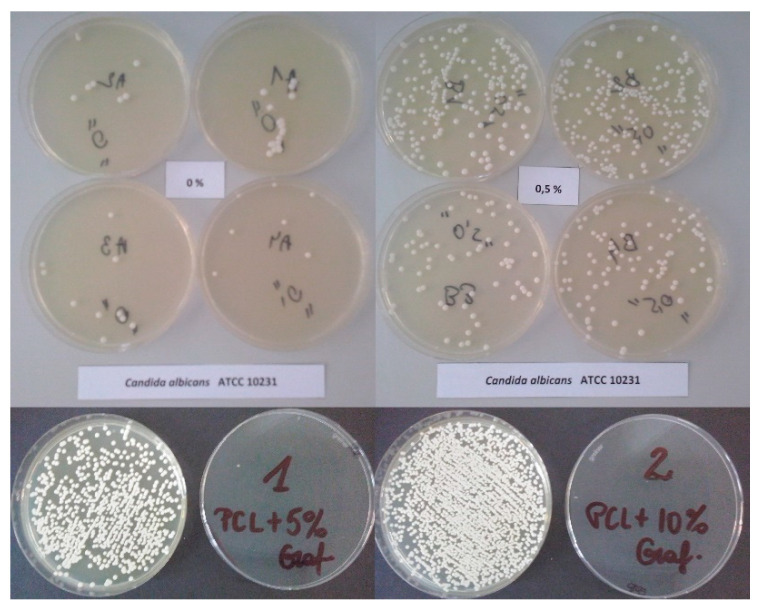
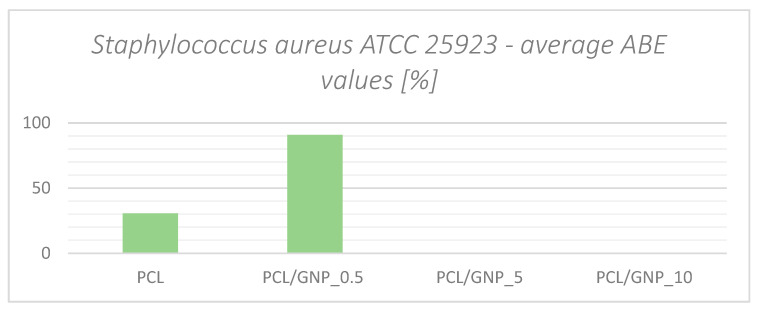
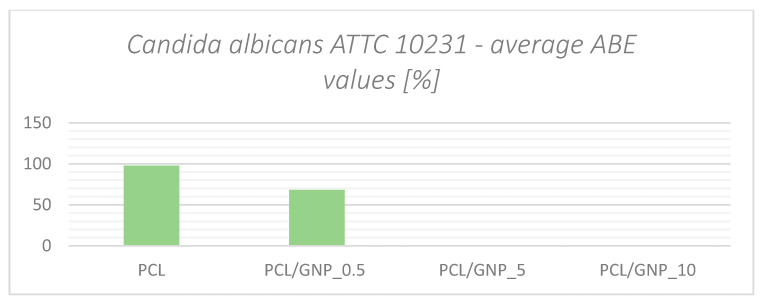
This work contains an analysis of the impact of modifying a bioresorbable polymer-polycaprolactone (PCL)-with various additives on its antibacterial properties. To this end, samples of PCL filament containing various content levels of graphene (GNP), 0.5%, 5%, 10%, were obtained using injection molding. Polymer samples without additives were used for comparison. The next step was to assess the antimicrobial impact of the preparations under study against the following microorganisms: Staphylococcus aureus ATCC 25293, Escherichia coli ATCC 25922, Candida albicans ATCC 10231. Effective bactericidal activity of PCL with small amount of GNP, especially against C. albicans and S. aureus was confirmed. A decrease in this property or even multiplication of microorganisms was observed in direct proportion to the graphene content in the samples.
Keywords: antibacterial; biomaterials; graphene; polycaprolactone.
Conflict of interest statement
The authors declare no conflict of interest.
Figures


References
-
- Yang Y., Yan H., Kang X., Zhibin Z. Advances in Application Research of Polycaprolactone. New Chem. Mater. 2011;39:13–15.
-
- Chen D.R., Bei J.Z., Wang S.G. Polycaprolactone microparticles and their biodegradation. Polym. Degrad. Stabil. 2000;67:455–459. doi: 10.1016/S0141-3910(99)00145-7. - DOI
MeSH terms
Substances
Grants and funding
LinkOut - more resources
Full Text Sources
Molecular Biology Databases
