


First Report of Autochthonous Canine Leishmaniasis in Hong Kong
- PMID: 36144475
- PMCID: PMC9503302
- DOI: 10.3390/microorganisms10091873
First Report of Autochthonous Canine Leishmaniasis in Hong Kong
Abstract
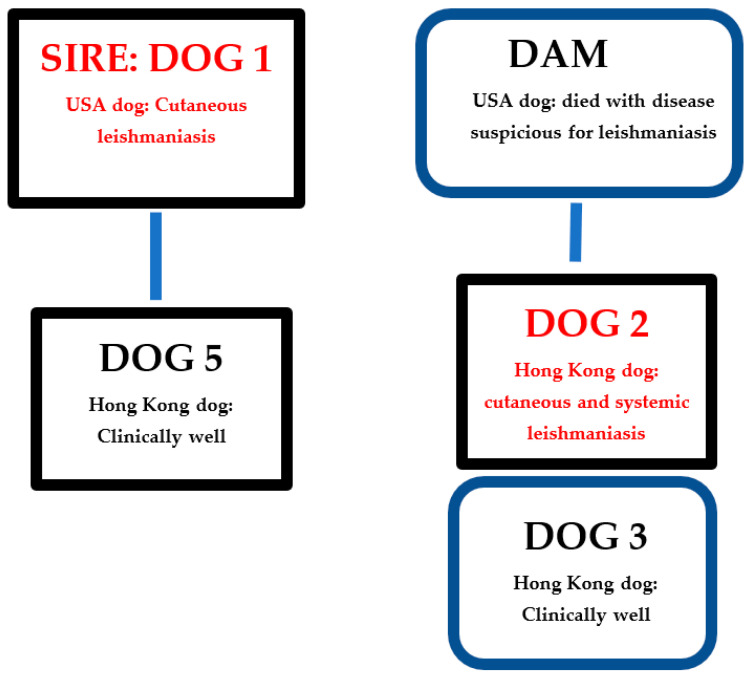
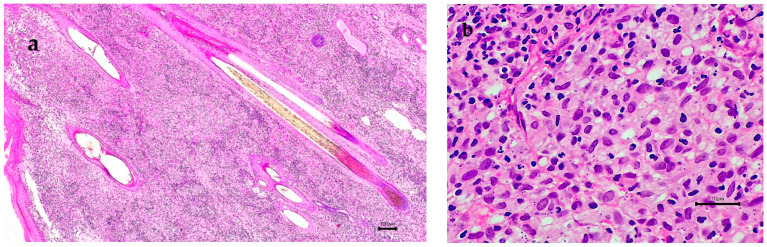
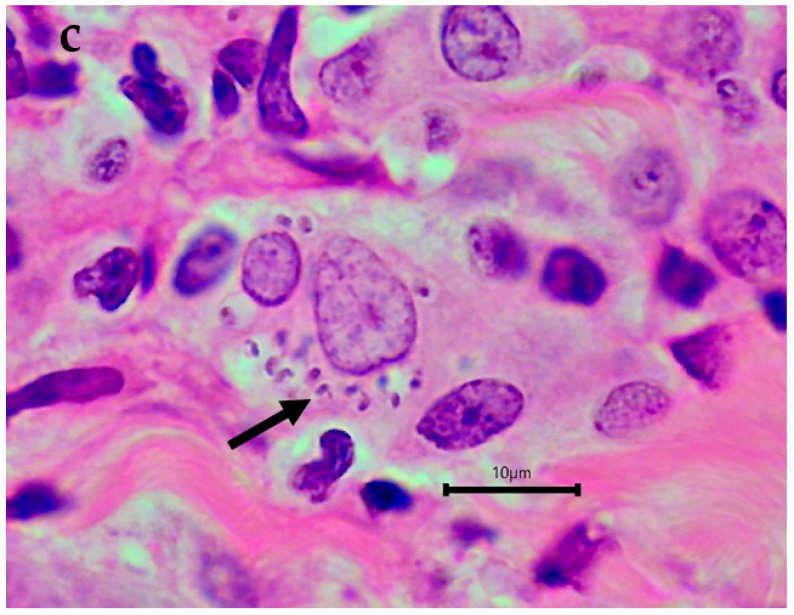
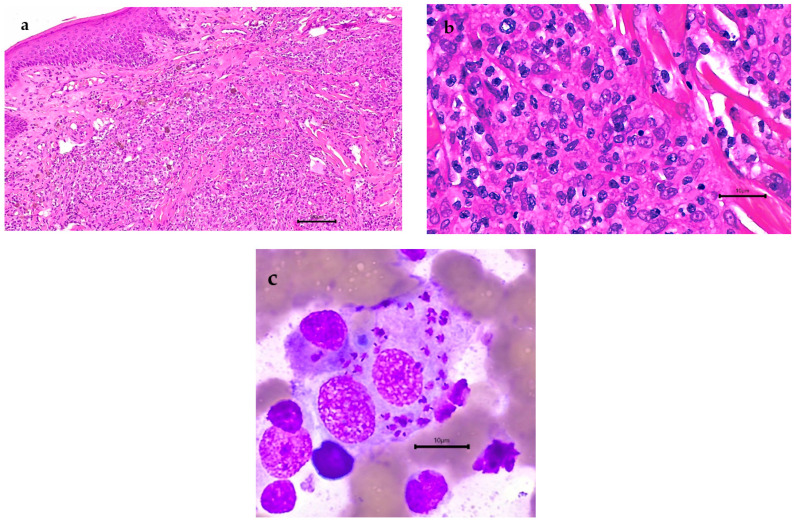
Canine leishmaniasis is a zoonotic disease caused by Leishmania infantum; transmitted by the bite of phlebotomine sand flies. Leishmania infantum amastigotes were identified by cytology from a locally born Hong Kong dog exhibiting nasal, cutaneous, and systemic disease who was part of a kennel of eight dogs. All eight kennel dogs were subsequently tested serologically by enzyme-linked immunosorbent assay (ELISA) and by polymerase chain reaction (PCR) followed by DNA sequencing for L. infantum infection. The local dog was seropositive and blood and splenic tissue were PCR positive for L. infantum whilst the other kennel dogs were negative on serology and PCR. Autochthonous transmission was suspected for the local dog as Hong Kong lacks known vectors of L. infantum. Either vertical transmission from the deceased dam who had previously died with disease suspicious for leishmaniasis or horizontal transmission from a second non-locally born kennel dog who had been diagnosed previously with leishmaniasis was possible. This is the first recorded autochthonous case of canine leishmaniasis in Hong Kong. Leishmaniasis should be considered as a differential for cutaneous or systemic illness in local untraveled dogs in Hong Kong. In addition, as dogs serve as L. infantum reservoirs for human infection attention should be paid to the possibility of leishmaniasis emerging in Hong Kong.
Keywords: Hong Kong; Leishmania infantum; canine; phlebotomine.
Conflict of interest statement
The authors declare no conflict of interest.
Figures
References
-
- José A.R.-P., Saurabh J., Alexei M., Ana N.M.-E., Samantha V., Supriya W., Mona O., Zaw L., Abate B., Aya Y., et al. Global Leishmaniasis Surveillance: 2019–2020, a Baseline for the 2030 Roadmap. [(accessed on 2 September 2022)]. Available online: https://www.who.int/publications/i/item/who-wer9635-401-419.
-
- Baneth G., Nachum-Biala Y., Zuberi A., Zipori-Barki N., Orshan L., Kleinerman G., Shmueli-Goldin A., Bellaiche M., Leszkowicz-Mazuz M., Salant H., et al. Leishmania infection in cats and dogs housed together in an animal shelter reveals a higher parasite load in infected dogs despite a greater seroprevalence among cats. Parasit. Vectors. 2020;13:115. doi: 10.1186/s13071-020-3989-3. - DOI - PMC - PubMed
LinkOut - more resources
Full Text Sources
