


Spectroscopic Analysis of an Antimalarial Drug's (Quinine) Influence on Human Serum Albumin Reduction and Antioxidant Potential
- PMID: 36144764
- PMCID: PMC9505252
- DOI: 10.3390/molecules27186027
Spectroscopic Analysis of an Antimalarial Drug's (Quinine) Influence on Human Serum Albumin Reduction and Antioxidant Potential
Abstract
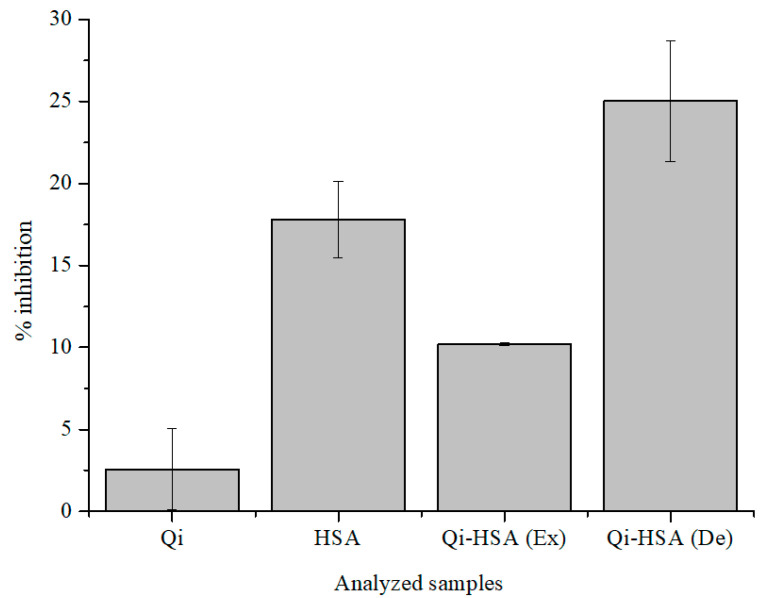
Quinine (Qi) is a well-known drug used in malaria therapy; it is also a potential anti-arrhythmic drug used in the treatment of calf cramps, rheumatoid arthritis, colds, and photodermatitis. Moreover, it is used in the food industry for the production of tonics. This study aimed to analyze the interaction between quinine and a transporting protein-human serum albumin (HSA)-as well as the influence of Qi on both protein reduction and antioxidant potential. It was found that Qi (via spectrofluorometric measurements and circular dichroism spectroscopy) binds to HSA with a low affinity and slightly affects the secondary structure of albumin. As demonstrated by the use of ABTS and FRAP assays, HSA has a higher antioxidant and reduction potential than Qi, while their mutual interaction results in a synergistic effect in antioxidant activity and reduction potential.
Keywords: antioxidant and reduction potential; human serum albumin; quinine; spectroscopy.
Conflict of interest statement
The authors declare no conflict of interest.
Figures
References
-
- Permin H., Norn S., Kruse E., Kruse P.R. On the history of Cinchona bark in the treatment of Malaria. Dan. Medicinhist. Arbog. 2016;44:9–30. - PubMed
MeSH terms
Substances
Grants and funding
LinkOut - more resources
Full Text Sources
Research Materials
Miscellaneous
