. 2022 Sep 17;27(18):6075.
doi: 10.3390/molecules27186075.

Protective Effect of Portulaca oleracea on Streptozotocin-Induced Type I Diabetes-Associated Reproductive System Dysfunction and Inflammation

Affiliations

Protective Effect of Portulaca oleracea on Streptozotocin-Induced Type I Diabetes-Associated Reproductive System Dysfunction and Inflammation

Hassan Rakhshandeh et al. Molecules. .

Erratum in

Abstract

Background: Type-one diabetes (T1D), a chronic autoimmune disease with marked inflammatory responses, is associated with infertility complications and implications. Based on the anti-diabetic, antioxidant, and anti-hyperlipidemic potential of Portulaca oleracea (PO), this study aimed to evaluate the protective effect of this plant extract on streptozotocin-induced type-I-diabetes-associated reproductive system dysfunction and inflammation.

Methods: Male rats were randomly divided into four experimental groups: control, diabetic, and treatment/s (PO extract at 100 or 300 mg/kg/daily). Then food and water consumption, body, testis and epididymis weights, histopathological evaluation, seminiferous tubules diameter, sperm count and motility, glucose levels, sex hormones, and inflammatory and oxidative stress markers were evaluated.

Results: Our results showed that streptozotocin-induced diabetes significantly increased food and water consumption; increased glucose, MDA, TGF-β1, and TNF-α levels; and decreased the seminiferous tubules diameter, sperm count and motility, levels of LH, testosterone, total thiol, VEGF, and SOD activity. Interestingly, PO extract (phytochemically characterized by using liquid chromatography-mass spectrometry to detect bioactive molecules) significantly ameliorated these parameters and histopathological indexes' damage in rats.

Conclusion: Even if more preclinical assessments are needed to better characterize the mechanism/s of action, the results of this study will pave the way for the rational use of PO on diabetic-associated clinical complications and implications.

Keywords: Portulaca oleracea; diabetes mellitus; infertility; inflammation; oxidative stress.


Conflict of interest statement

The authors declare no conflict of interest. This study was conducted, and the subsequent paper was written, in the absence of any commercial or financial relationships that could be construed as a potential conflict of interest.

Figures
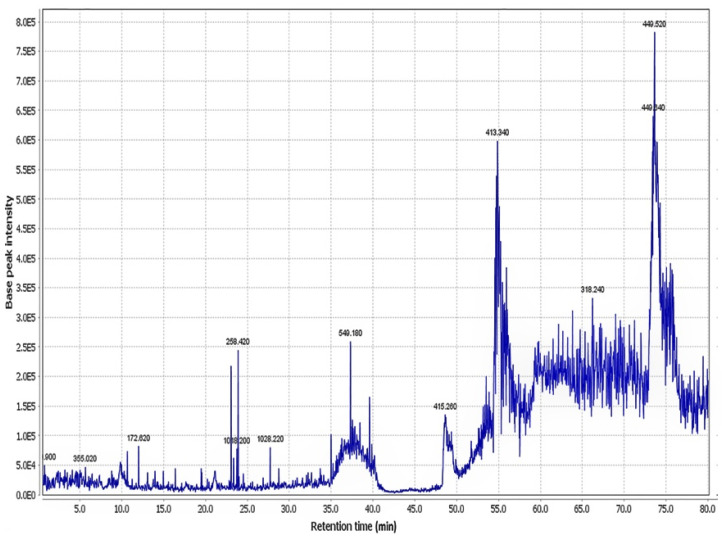
Figure 1
Figure 1
The total ion chromatogram of the aerial part of hydroethanolic extract of Portulaca oleracea. Reprinted from Ref. [12].
Figure 2
Figure 2
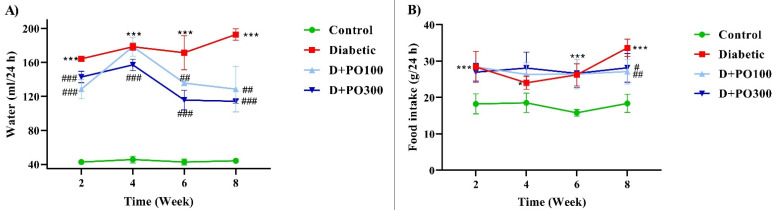
The effects of PO extract on (A) water and (B) food consumption in diabetic rats. The data are presented as mean ± SD. Repeated measures two-way ANOVA test was carried out with the following Tukey–Kramer’s post hoc test; * p < 0.05, *** p < 0.001 vs. control group; # p < 0.05, ## p < 0.01, ### p < 0.001 vs. diabetic group.
Figure 3
Figure 3
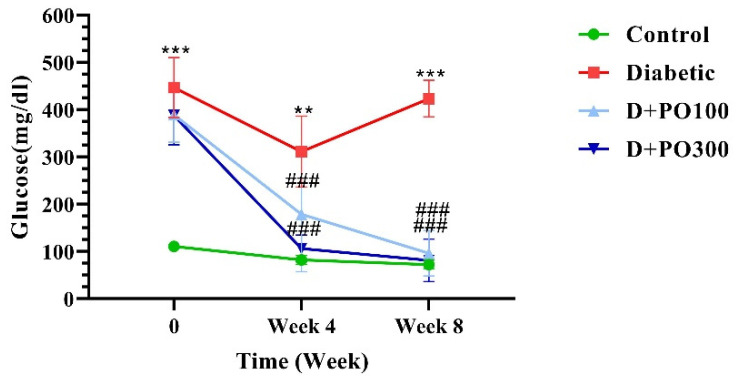
The effects of PO extract on blood glucose levels in diabetic rats. The data are presented as mean ± SD. Repeated measures two-way ANOVA test was carried out with the following Tukey–Kramer’s post hoc test; ** p < 0.01, *** p < 0.001 vs. control group; ### p < 0.001 vs. diabetic group.
Figure 4
Figure 4
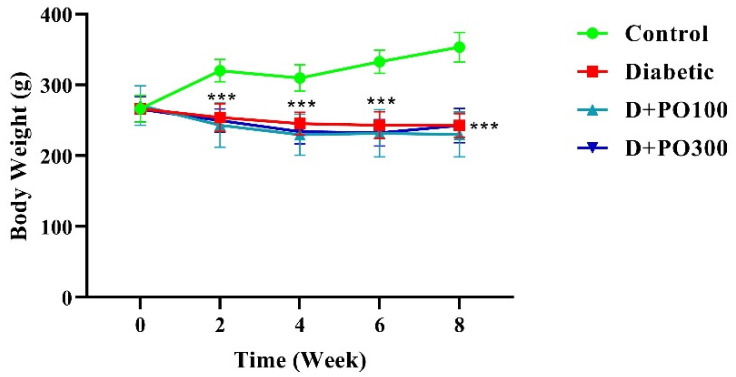
The effects of PO extract on body weight in diabetic rats. The data are presented as mean ± SD. A repeated-measures two-way ANOVA test was carried out with the following Tukey–Kramer’s post hoc test; *** p < 0.001 vs. control group.
Figure 5
Figure 5
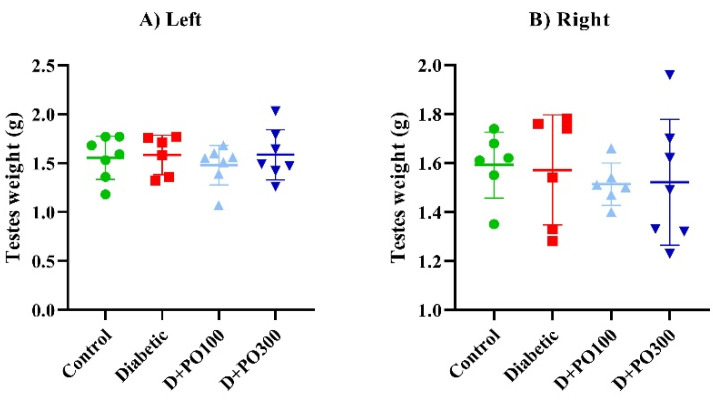
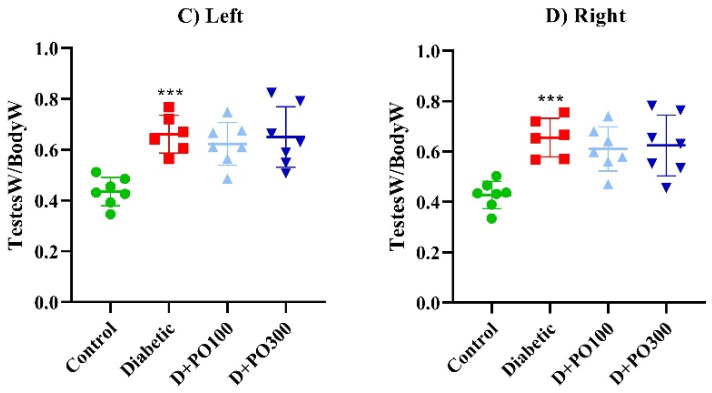
The effects of PO extract on (A) left and (B) right testicular weight and (C) left and (D) right testicular/body weight in diabetic rats. The data are presented as mean ± SD. A one-way ANOVA test was carried out with the following Tukey–Kramer’s post hoc test; *** p < 0.001 vs. control group.
Figure 5
Figure 5
The effects of PO extract on (A) left and (B) right testicular weight and (C) left and (D) right testicular/body weight in diabetic rats. The data are presented as mean ± SD. A one-way ANOVA test was carried out with the following Tukey–Kramer’s post hoc test; *** p < 0.001 vs. control group.
Figure 6
Figure 6
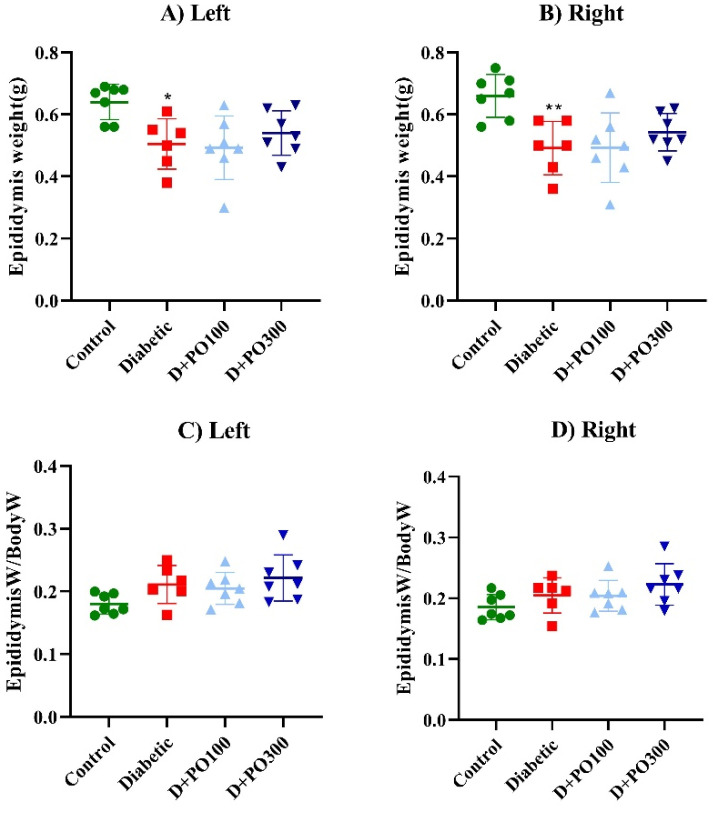
The effects of PO extract on (A) left and (B) right epididymis weight and (C) left and (D) right epididymis/body weight in diabetic rats. The data are presented as mean ± SD. A one-way ANOVA test was carried out with the following Tukey–Kramer’s post hoc test; * p < 0.05, ** p < 0.01 vs. control group.
Figure 7
Figure 7
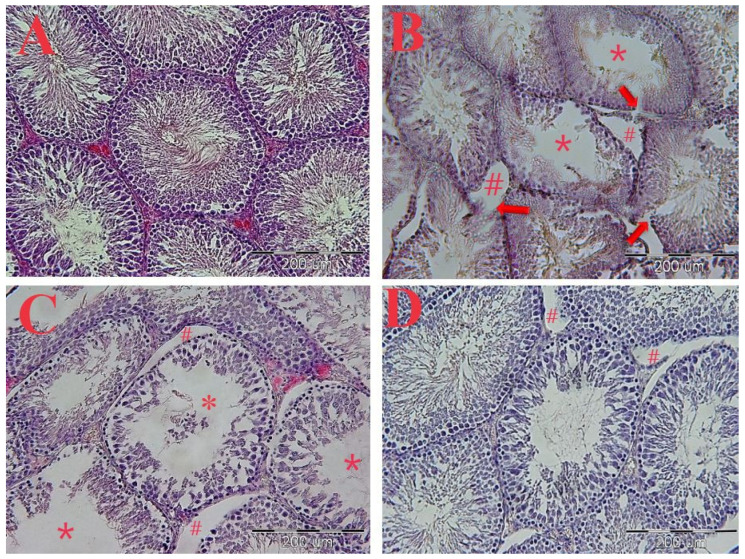
The effects of PO extract on the H&E staining of the transverse section of testicular tissue. (A) Control, (B) diabetic, (C) PO extract (100 mg/kg), and (D) PO extract (300 mg/kg). Microscopic view with magnification (20×) of the cross-section of testicular tissue. (A) Sham group: spermatogenic tubes with normal structural and cellular order. (B) Control group: geometric deformation of tubules, disintegration and rupture of the epithelium of spermatogenic tubules (arrows), reduction of spermatozoid population (*), increase in the distance between tubules, and atrophy and destruction of interstitial cells (Leydig) (#). (C) Treatment group with a dose of 100 mg/kg: The decrease in the density of spermatogenic cells is obvious, and there is a decrease in the number of sperm cells (*) and an increase in the distance between tubules (#). (D) treatment group with a dose of 300 mg/kg: a slight increase in the distance between tubules.
Figure 8
Figure 8
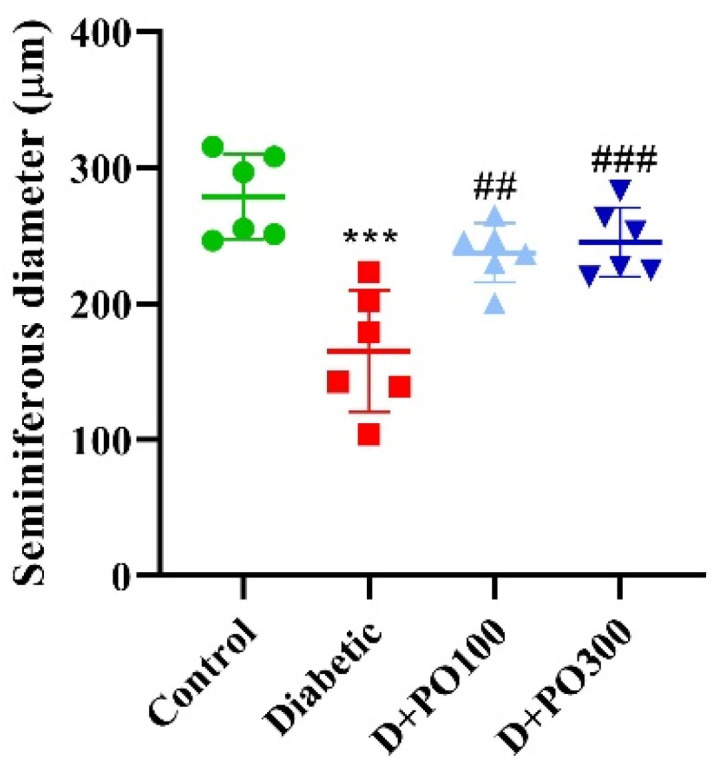
The effects of PO extract on seminiferous diameter in diabetic rats. The data are presented as mean ± SD. A one-way ANOVA test was carried out with the following Tukey–Kramer’s post hoc test; *** p < 0.001 vs. control group; ## p < 0.01, ### p < 0.001 vs. diabetic group.
Figure 9
Figure 9
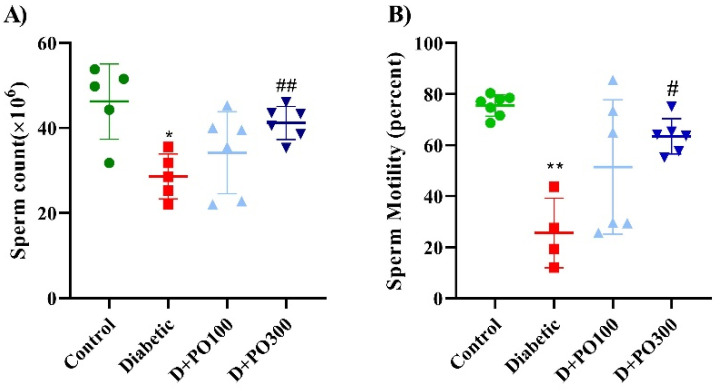
The effects of PO extract on (A) numbers and (B) motility of sperm in diabetic rats. The data are presented as mean ± SD. A one-way ANOVA test was carried out with the following Tukey–Kramer’s post hoc test; * p < 0.05, ** p < 0.01 vs. control group; # p < 0.05, ## p < 0.01 vs. diabetic group.
Figure 10
Figure 10
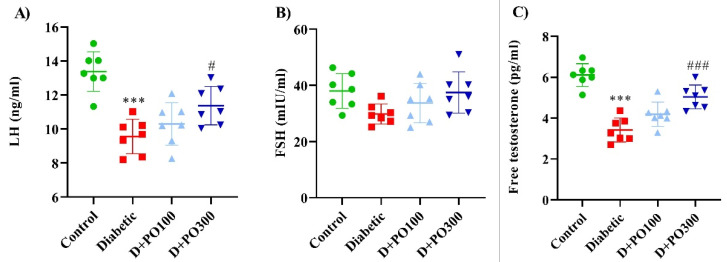
The effects of PO extract on (A) LH, (B) FSH, and (C) testosterone levels in diabetic rats. The data are presented as mean ± SD. A one-way ANOVA test was carried out with the following Tukey–Kramer’s post hoc test; *** p < 0.001 vs. control group; # p < 0.05, ### p < 0.001 vs. diabetic group.
Figure 11
Figure 11
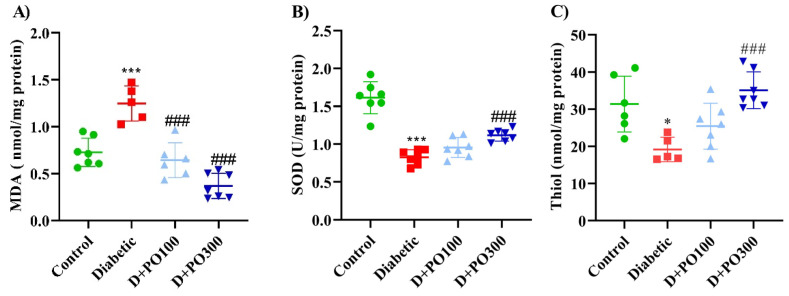
The effects of PO extract on (A) MDA, (B) SOD, and (C) thiol levels in diabetic rats. The data are presented as mean ± SD. A one-way ANOVA test was carried out with the following Tukey–Kramer’s post hoc test; * p < 0.05, *** p < 0.001 vs. control group; ### p < 0.001 vs. diabetic group.
Figure 12
Figure 12
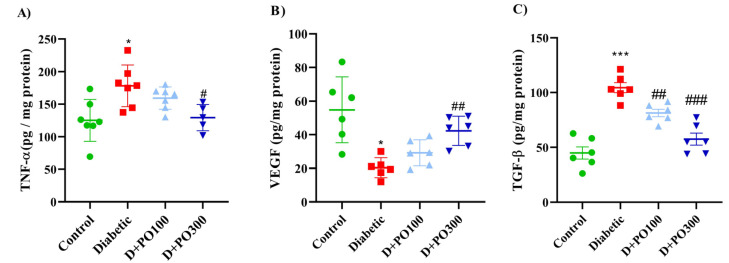
The effects of PO extract on the levels of (A) TNF-α, (B) VEGF, and (C) TGF-ꞵ levels in diabetic rats. The data are presented as mean ± SD. A one-way ANOVA test was carried out with the following Tukey–Kramer’s post hoc test; * p < 0.05, *** p < 0.001 vs. control group; # p < 0.05, ## p < 0.01, ### p < 0.001 vs. diabetic group.

References

    1. Kaul K., Tarr J.M., Ahmad S.I., Kohner E.M., Chibber R. Introduction to diabetes mellitus. Adv. Exp. Med. Biol. 2012;771:1–11. doi: 10.1007/978-1-4614-5441-0_1. - DOI - PubMed
    1. Saeedi P., Petersohn I., Salpea P., Malanda B., Karuranga S., Unwin N., Colagiuri S., Guariguata L., Motala A.A., Ogurtsova K., et al. Global and regional diabetes prevalence estimates for 2019 and projections for 2030 and 2045: Results from the International Diabetes Federation Diabetes Atlas, 9th edition. Diabetes Res. Clin. Pract. 2019;157:107843. doi: 10.1016/j.diabres.2019.107843. - DOI - PubMed
    1. Eizirik D.L., Colli M.L., Ortis F. The role of inflammation in insulitis and beta-cell loss in type 1 diabetes. Nat. Rev. Endocrinol. 2009;5:219–226. doi: 10.1038/nrendo.2009.21. - DOI - PubMed
    1. Zheng Y., Ley S.H., Hu F.B. Global aetiology and epidemiology of type 2 diabetes mellitus and its complications. Nat. Rev. Endocrinol. 2018;14:88–98. doi: 10.1038/nrendo.2017.151. - DOI - PubMed
    1. Ding G.L., Liu Y., Liu M.E., Pan J.X., Guo M.X., Sheng J.Z., Huang H.F. The effects of diabetes on male fertility and epigenetic regulation during spermatogenesis. Asian J. Androl. 2015;17:948–953. doi: 10.4103/1008-682x.150844. - DOI - PMC - PubMed

MeSH terms