


Vitamin D3 Supplementation in Overweight/Obese Pregnant Women: No Effects on the Maternal or Fetal Lipid Profile and Body Fat Distribution-A Secondary Analysis of the Multicentric, Randomized, Controlled Vitamin D and Lifestyle for Gestational Diabetes Prevention Trial (DALI)
- PMID: 36145157
- PMCID: PMC9503968
- DOI: 10.3390/nu14183781
Vitamin D3 Supplementation in Overweight/Obese Pregnant Women: No Effects on the Maternal or Fetal Lipid Profile and Body Fat Distribution-A Secondary Analysis of the Multicentric, Randomized, Controlled Vitamin D and Lifestyle for Gestational Diabetes Prevention Trial (DALI)
Abstract
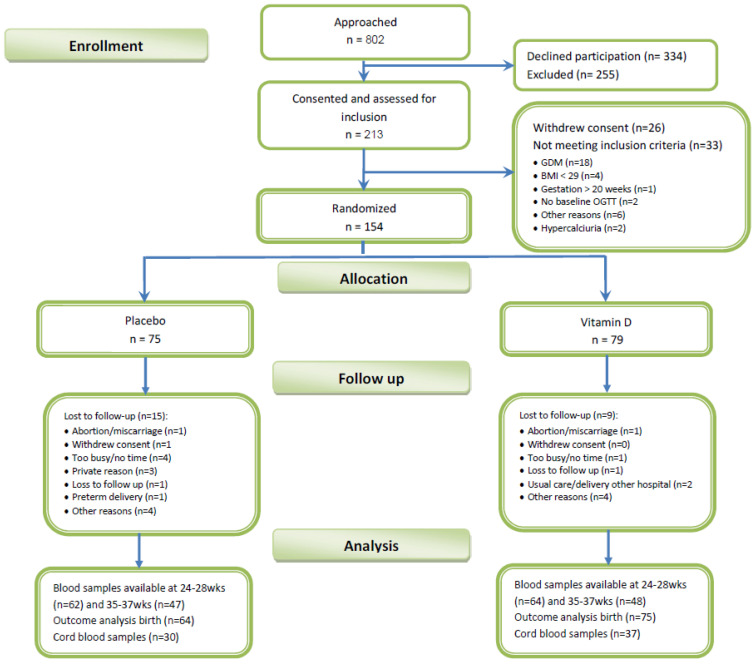
Vitamin D deficiency is a common finding in overweight/obese pregnant women and is associated with increased risk for adverse pregnancy outcome. Both maternal vitamin D deficiency and maternal obesity contribute to metabolic derangements in pregnancy. We aimed to assess the effects of vitamin D3 supplementation in pregnancy versus placebo on maternal and fetal lipids. Main inclusion criteria were: women <20 weeks’ gestation, BMI ≥ 29 kg/m2. Eligible women (n = 154) were randomized to receive vitamin D3 (1600 IU/day) or placebo. Assessments were performed <20, 24−28 and 35−37 weeks and at birth. Linear regression models were used to assess effects of vitamin D on maternal and cord blood lipids. In the vitamin D group significantly higher total 25-OHD and 25-OHD3 levels were found in maternal and cord blood compared with placebo. Adjusted regression models did not reveal any differences in triglycerides, LDL-C, HDL-C, free fatty acids, ketone bodies or leptin between groups. Neonatal sum of skinfolds was comparable between the two groups, but correlated positively with cord blood 25-OH-D3 (r = 0.34, p = 0.012). Vitamin D supplementation in pregnancy increases maternal and cord blood vitamin D significantly resulting in high rates of vitamin D sufficiency. Maternal and cord blood lipid parameters were unaffected by Vitamin D3 supplementation.
Keywords: birth outcomes; body fat distribution; cholesterol; cord blood; free fatty acids; lipids; obesity pregnancy; overweight; pregnancy outcomes; skinfolds; triglycerides; vitamin D.
Conflict of interest statement
The authors declare no conflict of interest. The funders had no role in the design of the study; in the collection, analyses, or interpretation of data; in the writing of the manuscript; or in the decision to publish the results.
References
Publication types
MeSH terms
Substances
Grants and funding
LinkOut - more resources
Full Text Sources
Medical
