


Overview on the Infections Related to Rare Candida Species
- PMID: 36145394
- PMCID: PMC9505029
- DOI: 10.3390/pathogens11090963
Overview on the Infections Related to Rare Candida Species
Abstract
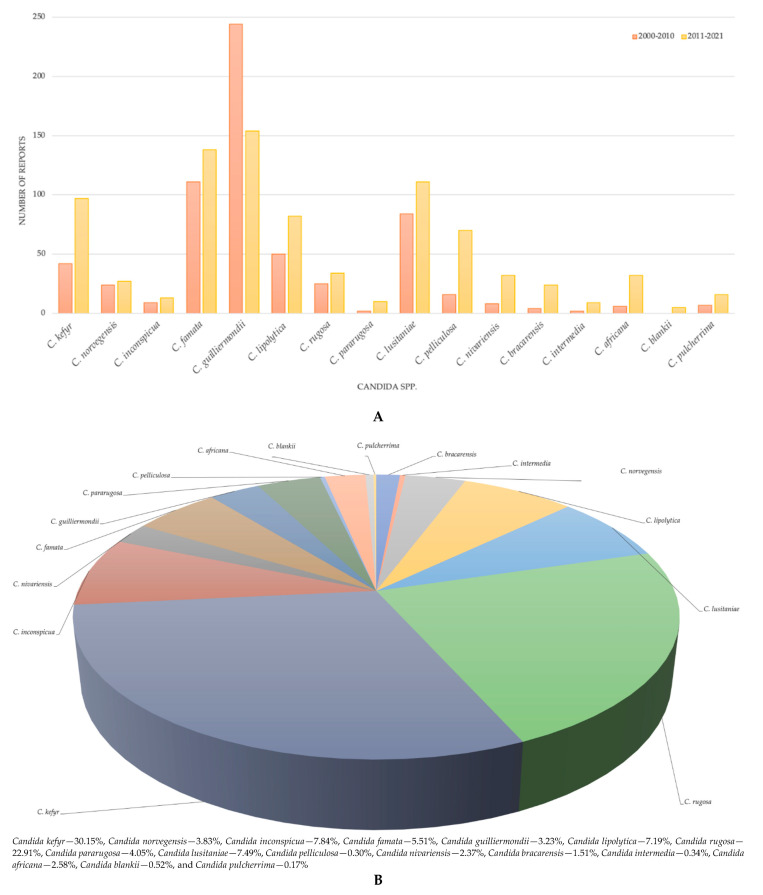
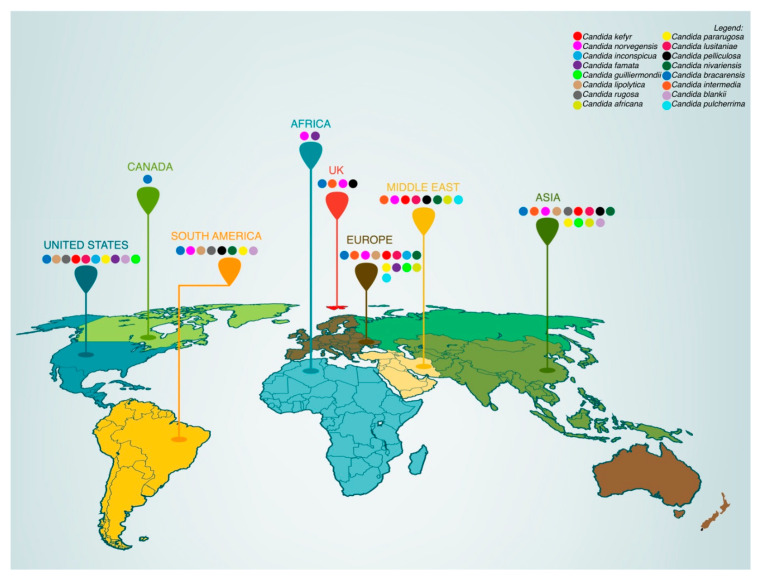
Atypical Candida spp. infections are rising, mostly due to the increasing numbers of immunocompromised patients. The most common Candida spp. is still Candida albicans; however, in the last decades, there has been an increase in non-Candida albicans Candida species infections (e.g., Candida glabrata, Candida parapsilosis, and Candida tropicalis). Furthermore, in the last 10 years, the reports on uncommon yeasts, such as Candida lusitaniae, Candida intermedia, or Candida norvegensis, have also worryingly increased. This review summarizes the information, mostly related to the last decade, regarding the infections, diagnosis, treatment, and resistance of these uncommon Candida species. In general, there has been an increase in the number of articles associated with the incidence of these species. Additionally, in several cases, there was a suggestive antifungal resistance, particularly with azoles, which is troublesome for therapeutic success.
Keywords: Candida africana; Candida blankii; Candida bracarensis; Candida famata; Candida guilliermondii; Candida kefyr; Candida lipolytica; Candida lusitaniae; Candida nivariensis; Candida pulcherrima; Candida rugosa.
Conflict of interest statement
The authors declare no conflict of interest.
Figures
References
-
- Gharehbolagh S.A., Fallah B., Izadi A., Ardestani Z.S., Malekifar P., Borman A.M., Mahmoudi S. Distribution, antifungal susceptibility pattern and intra-Candida albicans species complex prevalence of Candida africana: A systematic review and meta-analysis. PLoS ONE. 2020;15:e0237046. doi: 10.1371/journal.pone.0237046. - DOI - PMC - PubMed
Publication types
Grants and funding
LinkOut - more resources
Full Text Sources
Miscellaneous
