


Occurrence of Healthcare-Associated Infections (HAIs) by Escherichia coli and Klebsiella spp. Producing Extended-Spectrum β-lactamases (ESBL) and/or Carbapenemases in Portuguese Long-Term Care Facilities
- PMID: 36145451
- PMCID: PMC9504074
- DOI: 10.3390/pathogens11091019
Occurrence of Healthcare-Associated Infections (HAIs) by Escherichia coli and Klebsiella spp. Producing Extended-Spectrum β-lactamases (ESBL) and/or Carbapenemases in Portuguese Long-Term Care Facilities
Abstract
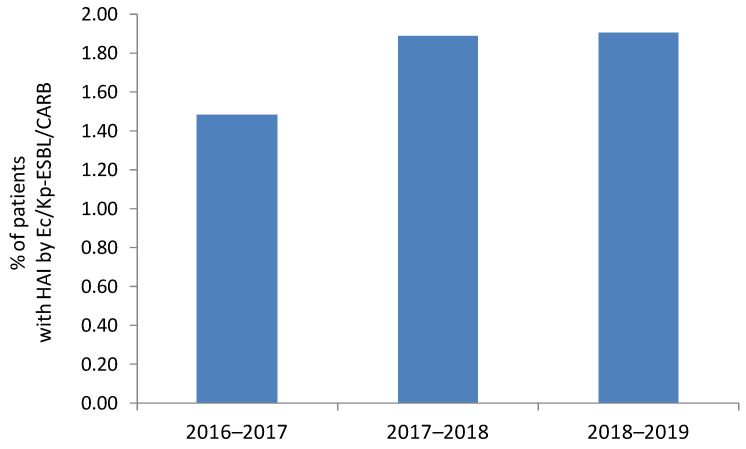
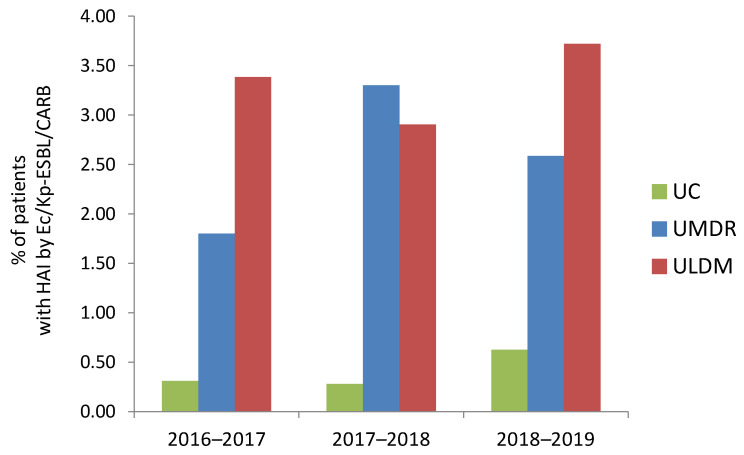
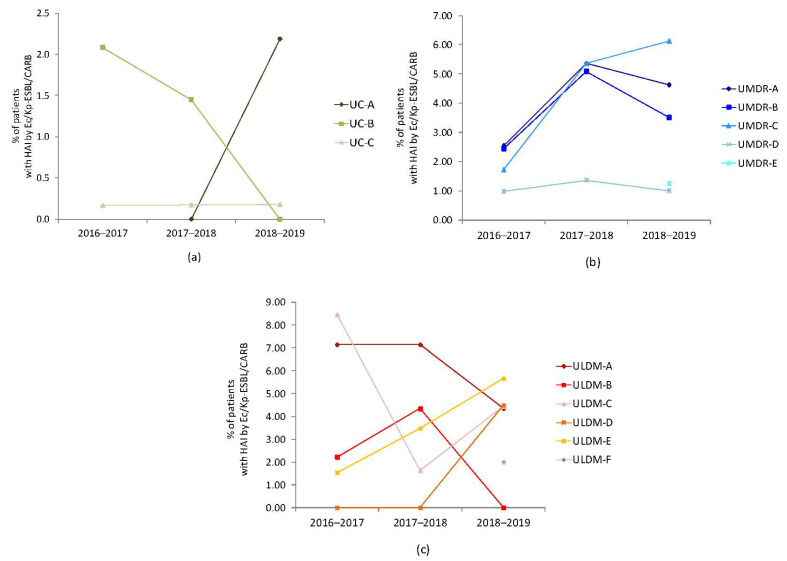
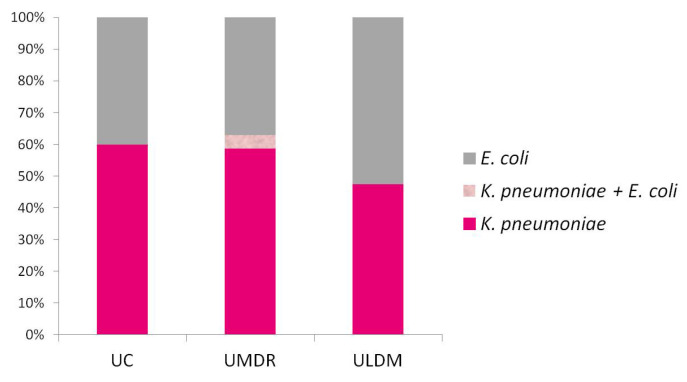
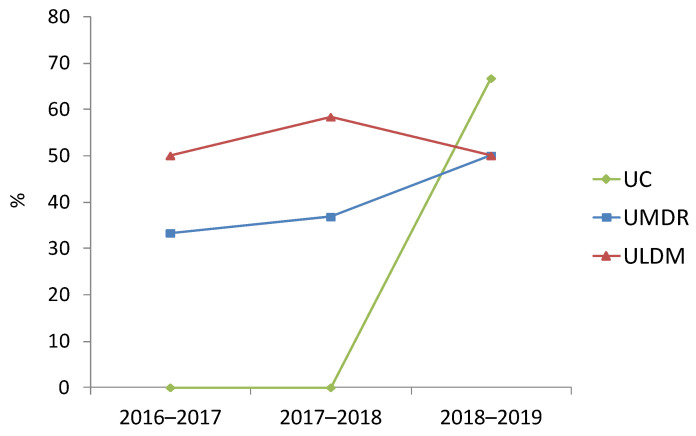
Extended-spectrum-β-lactamase (ESBL)- and carbapenemase-producing bacteria are widespread in hospitals, but the extent of this problem in long-term care facilities (LTCFs) is poorly understood. We aimed to elucidate, in the Portuguese regional clinical context, the relevance of LTCFs as a reservoir of Escherichia coli and Klebsiella spp. producing ESBL- and/or carbapenemases (Ec/Kp-ESBL/CARB). Fourteen LTCFs from Portugal, corresponding to units of convalescence (UC/n = 3), medium-term internment and rehabilitation (UMDR/ n = 5), or long-term internment and maintenance (ULDM/n = 6), were analyzed (2016-2019). All patients with Ec/Kp-ESBL/CARB infections acquired during LTCF stay were included, and detailed information was collected. Prevalence of patients with healthcare-associated infections (HAIs) by Ec/Kp-ESBL/CARB did not vary significantly over time (1.48% in 2016-2017, 1.89% in 2017-2018, and 1.90% in 2018-2019), but a statistically significant association with the LTCF typology (ULDM, UMDR) was observed. HAIs were caused by K. pneumoniae (n = 51/54.3%), E. coli (n = 41/43.6%), or both (n = 2/2.1%), producing ESBL (96%) or carbapenemases (4%). Prior colonization (n = 14/16%) corresponded to seven Kp-CARB and seven Ec/Kp-ESBL. The worrying prevalence of patients acquiring HAIs by Ec/Kp-ESBL/CARB, associated with the estimated rates of those already colonized at admission, highlights a relevant role for LTCFs as a reservoir of Ec/Kp-ESBL/CARB. Epidemiological surveillance should be extended to the national level, and colonization screening at LTCF admission implemented systematically.
Keywords: Enterobacterales; colonization; epidemiological surveillance; extended-spectrum β-lactam antibiotics; resistance.
Conflict of interest statement
The authors declare no conflict of interest.
Figures
References
-
- World Health Organization (WHO) Global Antimicrobial Resistance and Use Surveillance System (GLASS) Report 2021. World Health Organization; Geneva, Switzerland: 2021. [(accessed on 12 June 2022)]. Available online: https://www.who.int/publications/i/item/9789240027336.
-
- World Health Organization (WHO) Regional Office for Europe/European Centre for Disease Prevention and Control (ECDC) Antimicrobial Resistance Surveillance in Europe 2022—2020 Data. WHO Regional Office for Europe; Copenhagen, Denmark: 2022. [(accessed on 12 June 2022)]. Available online: https://www.ecdc.europa.eu/sites/default/files/documents/ECDC-WHO-AMR-re....
LinkOut - more resources
Full Text Sources
Miscellaneous
