


Xylazine-Induced Skin Ulcers in a Person Who Injects Drugs in Philadelphia, Pennsylvania, USA
- PMID: 36148197
- PMCID: PMC9482722
- DOI: 10.7759/cureus.28160
Xylazine-Induced Skin Ulcers in a Person Who Injects Drugs in Philadelphia, Pennsylvania, USA
Abstract
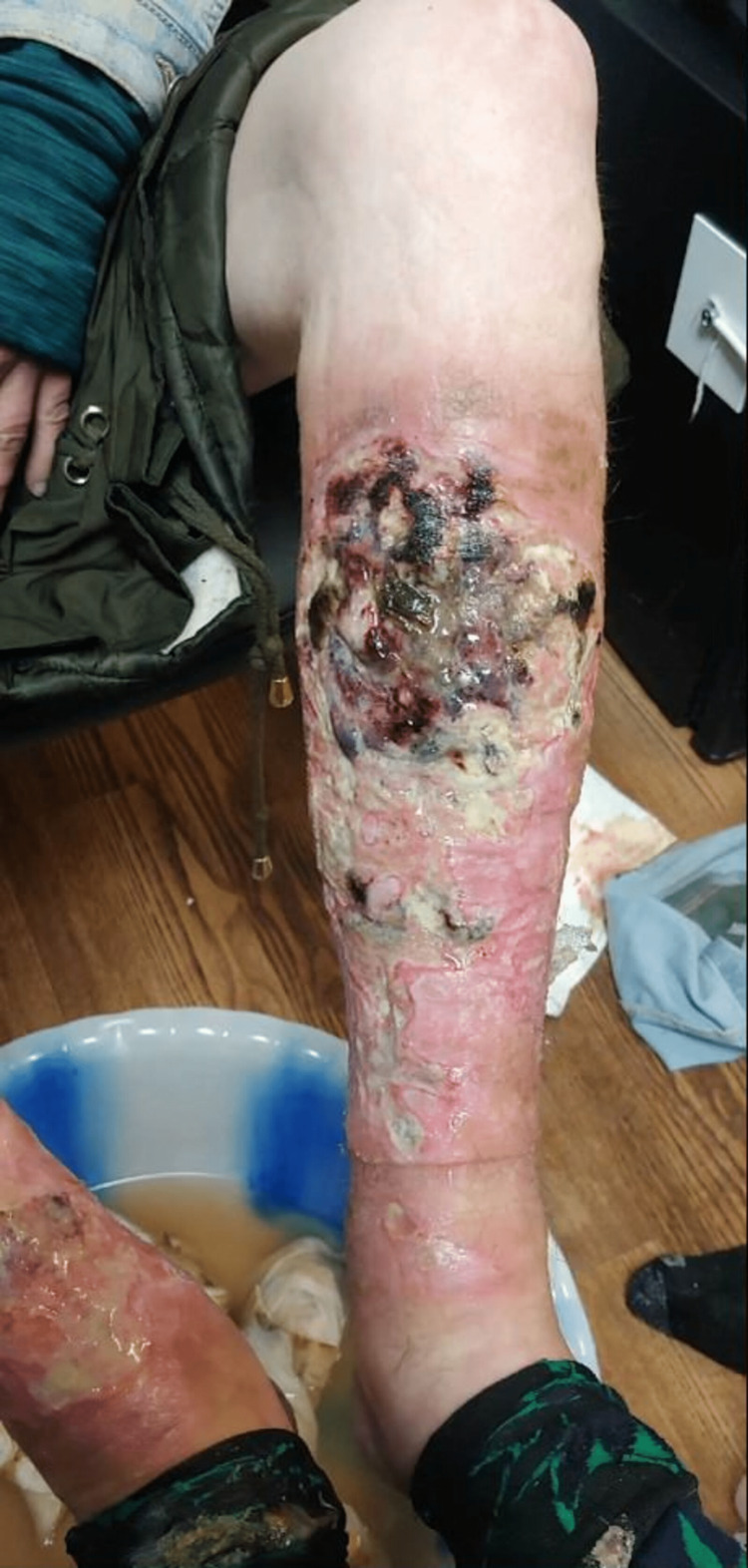
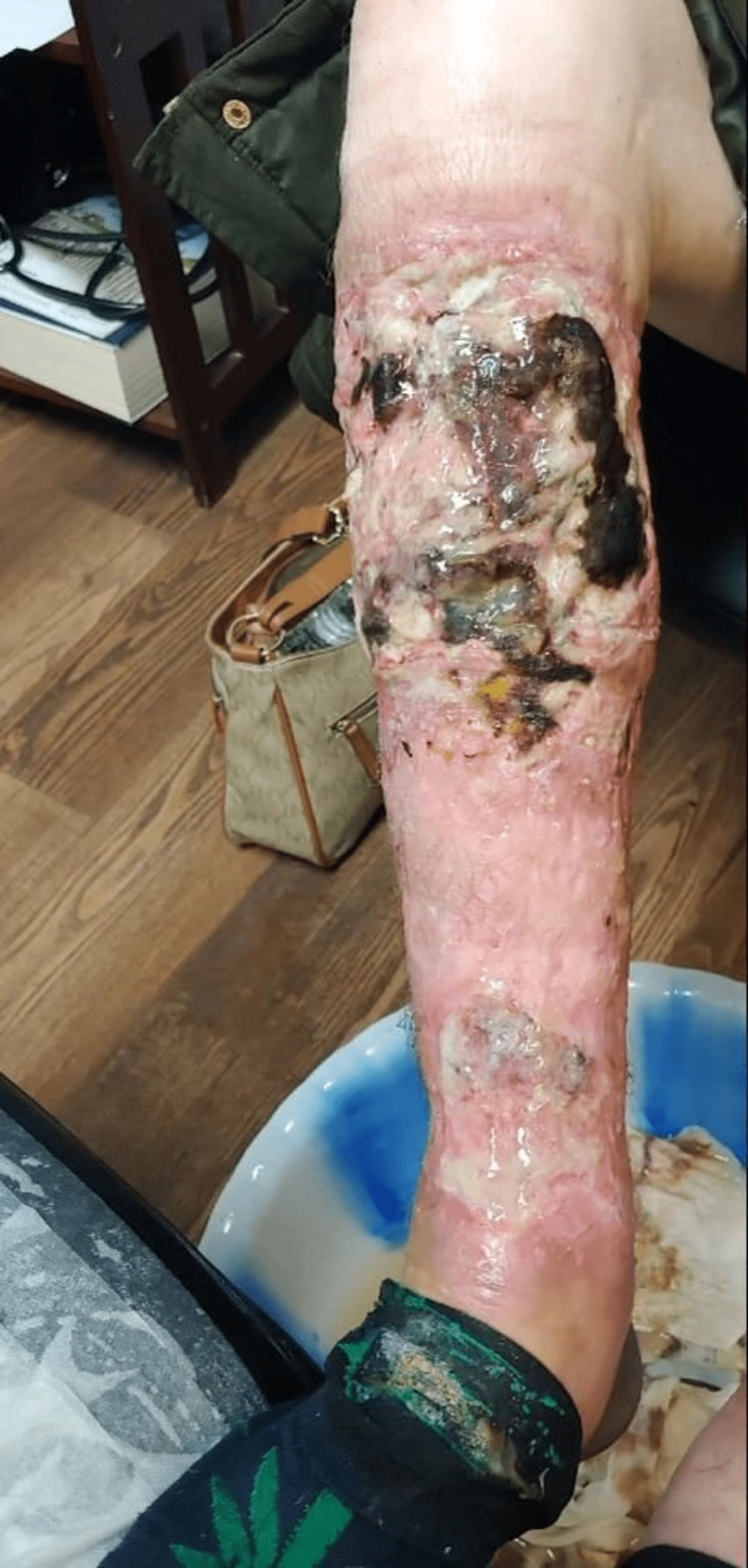
Xylazine, an alpha-2 adrenergic receptor agonist typically used as a sedative and analgesic in veterinary medicine, is being illicitly supplied to persons who inject drugs (PWID), especially in Puerto Rico and Philadelphia, Pennsylvania in the USA. There is a high prevalence (up to 78%) of xylazine in fentanyl in these areas and also a steep increase in fatalities from its overdose. In this case report, we discuss a case of xylazine-induced skin ulcers in a PWID in the city of Philadelphia. The patient is a 37-year-old female who was injecting about eight to ten "bags" of "dope" (fentanyl, which is typically mixed with xylazine in Philadelphia) every day. She typically injected into her veins on the hands and sometimes into the legs. She presented with ulcers on her lower extremities extending from the knees to ankles, associated with copious purulent drainage and a foul smell. There was extensive necrosis of the subcutaneous tissues, abscesses, and tibial osteomyelitis. This led to multiple hospitalizations with bacteremia from Strep pyogenes, methicillin-resistant Staphylococcus aureus, methicillin-sensitive S. aureus, Enterococcus faecalis, Escherichia coli, and Proteus requiring intravenous antibiotics. She required debridement of the wounds and topical care to treat them. In the areas with a high prevalence of the use of xylazine mixed with fentanyl or heroin, abscesses, and painful skin ulcers are very often reported. The mechanism is thought to be due to its direct vasoconstricting effect on local blood vessels and the resultant decreased skin perfusion. Prolonged use can lead to decreased perfusion and impaired wound healing, leading to higher chances of infection of these ulcers. In addition to the topical effect of vasoconstriction, xylazine also leads to hypotension, bradycardia, and respiratory depression. A skin ulcer in a PWID, similar to the ones reported in our case, should raise clinical suspicion for the presence of xylazine in opiates and other substances.
Keywords: chronic ulcer; drug addiction; drug withdrawal; foot ulcer; herione withdrawal; intravenous drug user; opiate use; opioid withdrawal; substance use disorder (sud); xyalazine.
Copyright © 2022, Malayala et al.
Conflict of interest statement
The authors have declared that no competing interests exist.
Figures
References
-
- Xylazine, a veterinary tranquilizer, detected in 42 accidental fentanyl intoxication deaths. Nunez J, DeJoseph ME, Gill JR. Am J Forensic Med Pathol. 2021;42:9–11. - PubMed
-
- Increasing presence of xylazine in heroin and/or fentanyl deaths, Philadelphia, Pennsylvania, 2010-2019. Johnson J, Pizzicato L, Johnson C, Viner K. Inj Prev. 2021;27:395–398. - PubMed
-
- The emerging of xylazine as a new drug of abuse and its health consequences among drug users in Puerto Rico. Reyes JC, Negrón JL, Colón HM, Padilla AM, Millán MY, Matos TD, Robles RR. https://doi.org/10.1007/s11524-011-9662-6. J Urban Health. 2012;89:519–526. - PMC - PubMed
-
- Xylazine intoxication in humans and its importance as an emerging adulterant in abused drugs: A comprehensive review of the literature. Ruiz-Colón K, Chavez-Arias C, Díaz-Alcalá JE, Martínez MA. Forensic Sci Int. 2014;240:1–8. - PubMed
Publication types
LinkOut - more resources
Full Text Sources