


Do thrifty genes exist? Revisiting uricase
- PMID: 36150210
- PMCID: PMC9512363
- DOI: 10.1002/oby.23540
Do thrifty genes exist? Revisiting uricase
Abstract
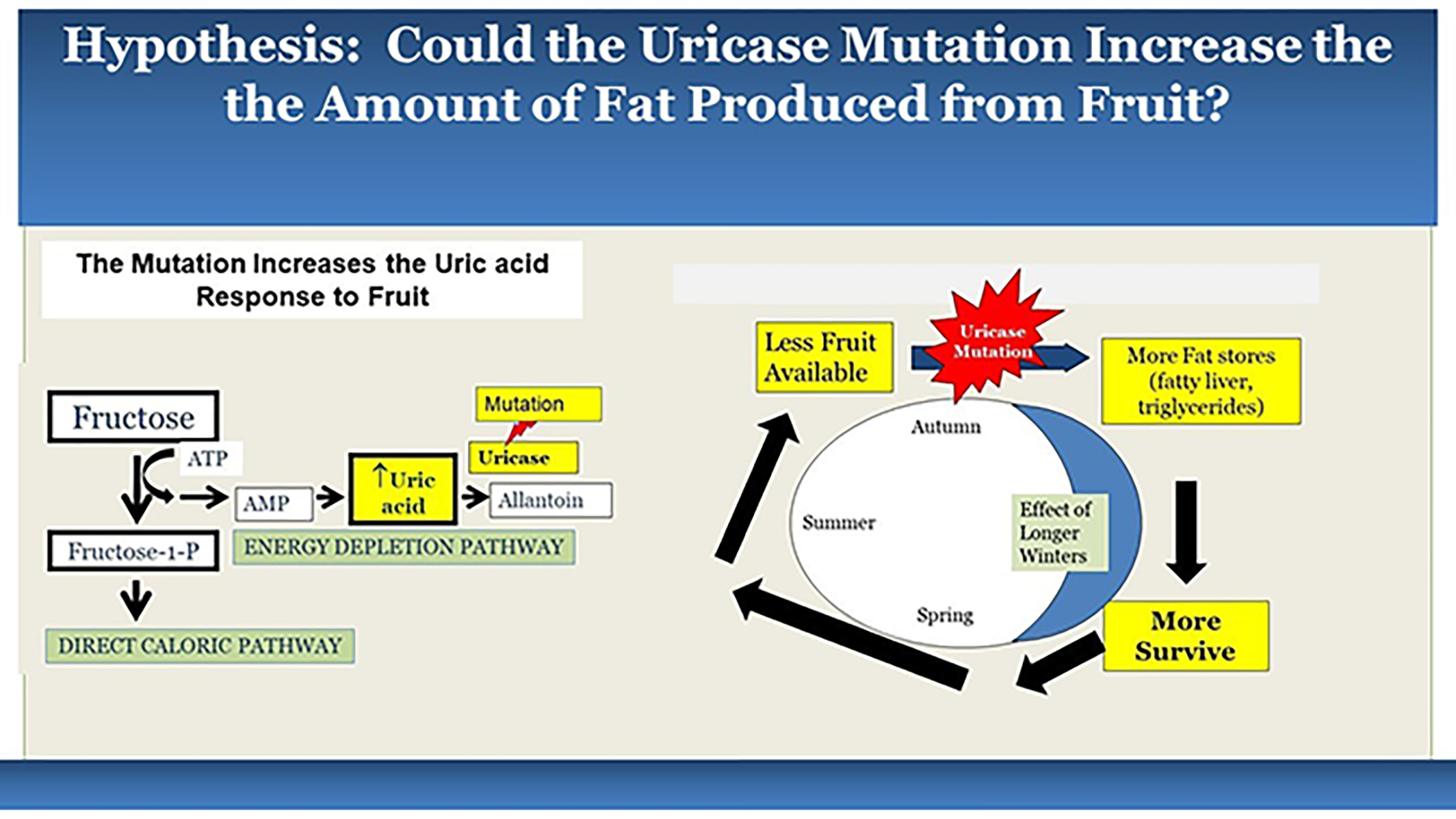
Sixty years ago, the geneticist James Neel proposed that the epidemics of obesity and diabetes today may have evolutionary roots. Specifically, he suggested that our ancestors may have accumulated mutations during periods of famine that provided a survival advantage at that time. However, the presence of this "thrifty genotype" in today's world, where food is plentiful, would predispose us to obesity and diabetes. The "thrifty gene" hypothesis, attractive to some, has been challenged over the years. The authors have previously postulated that the loss of the uricase gene, resulting in a rise in serum and intracellular uric acid levels, satisfies the criteria of a thrifty genotype mutation. This paper reviews and brings up-to-date the evidence supporting the hypothesis and discusses the current arguments that challenge this hypothesis. Although further studies are needed to test the hypothesis, the evidence supporting a loss of uricase as a thrifty gene is substantial and supports a role for evolutionary biology in the pathogenesis of the current obesity and diabetes epidemics.
© 2022 The Obesity Society.
Conflict of interest statement
Figures

References
-
- Speakman JR. The evolution of body fatness: trading off disease and predation risk. J Exp Biol 2018;221. - PubMed
-
- Johnson RJ, Andrews P. Fructose, Uricase, and the Back-to-Africa Hypothesis. Evol Anthropol 2010;19 250–257.
-
- Johnson RJ, Titte S, Cade JR, Rideout BA, Oliver WJ. Uric acid, evolution and primitive cultures. Semin Nephrol 2005;25: 3–8. - PubMed
Publication types
MeSH terms
Substances
Grants and funding
LinkOut - more resources
Full Text Sources
