. 2022 Dec;48(12):1793-1795.
doi: 10.1007/s00134-022-06893-w. Epub 2022 Sep 23.

Awake prone positioning

Affiliations

Awake prone positioning

Bairbre A McNicholas et al. Intensive Care Med. 2022 Dec.
No abstract available


Conflict of interest statement

BM reports consultancies with Teleflex. SE reports grants, consultancies, travel support and non-financial support from Fisher & Paykel Healthcare and Aerogen. JL reports consultancies with Baxter and GlaxoSmithKline.

Figures
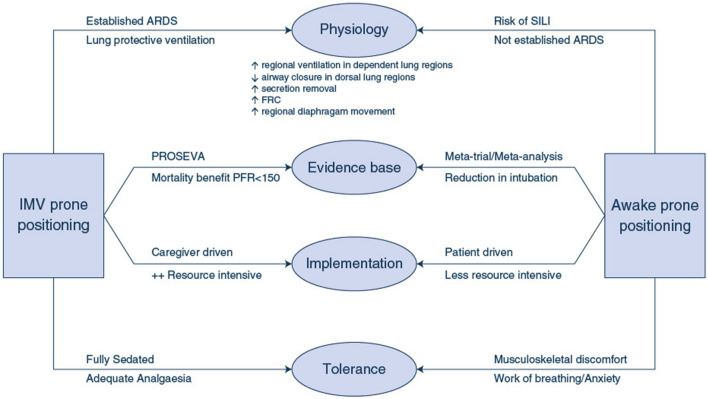
Fig. 1
Fig. 1
Similarities and differences between Prone positioning invasively mechanically ventilated patient and patients undergoing awake prone positioning

References

    1. Guerin C, et al. Prone positioning in severe acute respiratory distress syndrome. N Engl J Med. 2013;368(23):2159–2168. doi: 10.1056/NEJMoa1214103. - DOI - PubMed
    1. Scaravilli V, et al. Prone positioning improves oxygenation in spontaneously breathing nonintubated patients with hypoxemic acute respiratory failure: a retrospective study. J Crit Care. 2015;30(6):1390–1394. doi: 10.1016/j.jcrc.2015.07.008. - DOI - PubMed
    1. Stilma W, et al. Awake proning as an adjunctive therapy for refractory hypoxemia in non-intubated patients with COVID-19 acute respiratory failure: guidance from an international group of healthcare workers. Am J Trop Med Hyg. 2021;104(5):1676–1686. doi: 10.4269/ajtmh.20-1445. - DOI - PMC - PubMed
    1. Gattinoni L, Caironi P. Prone positioning: beyond physiology. Anesthesiology. 2010;113(6):1262–1264. doi: 10.1097/ALN.0b013e3181fcd97e. - DOI - PubMed
    1. Yoshida T, et al. Prone position reduces spontaneous inspiratory effort in patients with acute respiratory distress syndrome: a bicenter study. Am J Respir Crit Care Med. 2021;203(11):1437–1440. doi: 10.1164/rccm.202012-4509LE. - DOI - PubMed
