


A global overview of healthcare workers' turnover intention amid COVID-19 pandemic: a systematic review with future directions
- PMID: 36153534
- PMCID: PMC9509627
- DOI: 10.1186/s12960-022-00764-7
A global overview of healthcare workers' turnover intention amid COVID-19 pandemic: a systematic review with future directions
Abstract
Background: Globally, the health workforce has long suffered from labour shortages. This has been exacerbated by the workload increase caused by the COVID-19 pandemic. Major collapses in healthcare systems across the world during the peak of the pandemic led to calls for strategies to alleviate the increasing job attrition problem within the healthcare sector. This turnover may worsen given the overwhelming pressures experienced by the health workforce during the pandemic, and proactive measures should be taken to retain healthcare workers. This review aims to examine the factors affecting turnover intention among healthcare workers during the COVID-19 pandemic.
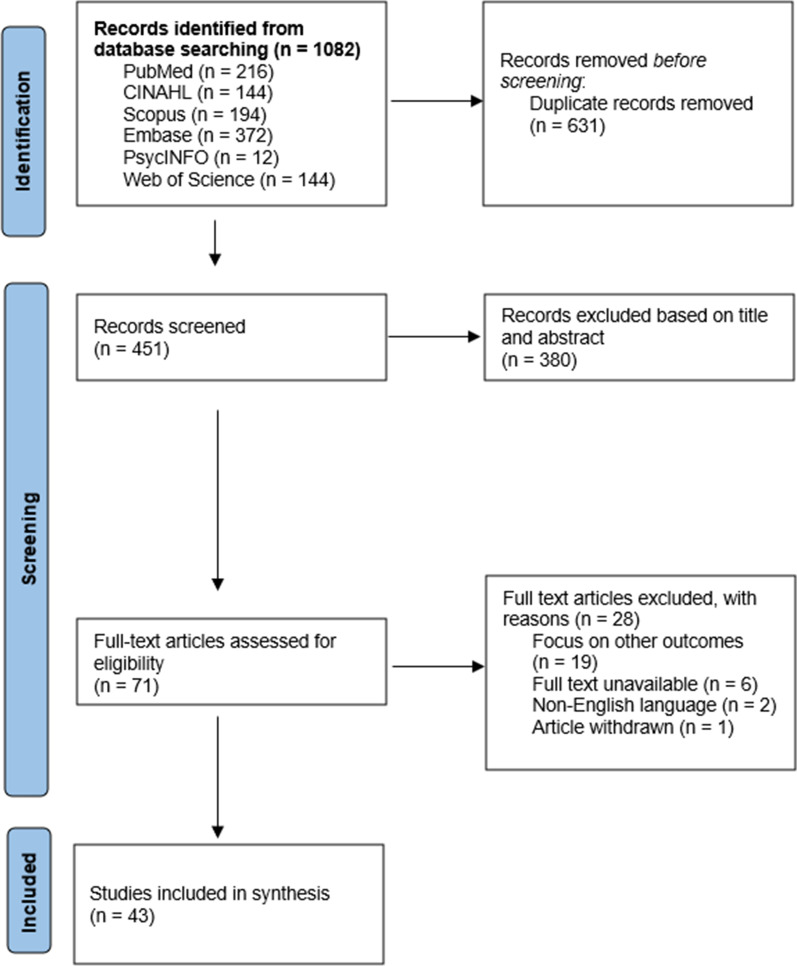
Methods: A mixed studies systematic review was conducted. The PubMed, Embase, Scopus, CINAHL, Web of Science and PsycINFO databases were searched from January 2020 to March 2022. The Joanna Briggs Institute's Critical Appraisal Tools and the Mixed Methods Appraisal Tool version 2018 were applied by two independent researchers to critically appraise the methodological quality. Findings were synthesised using a convergent integrated approach and categorised thematically.
Results: Forty-three studies, including 39 quantitative, two qualitative and two mixed methods studies were included in this review. Eighteen were conducted in the Middle East, ten in the Americas, nine in the Asia-Pacific region and six in Europe. Nurses (n = 35) were included in the majority of the studies, while physicians (n = 13), allied health workers (n = 11) and healthcare administrative or management staff (n = 7) were included in a smaller proportion. Five themes emerged from the data synthesis: (1) fear of COVID-19 exposure, (2) psychological responses to stress, (3) socio-demographic characteristics, (4) adverse working conditions, and (5) organisational support.
Conclusions: A wide range of factors influence healthcare workers' turnover intention in times of pandemic. Future research should be more focused on specific factors, such as working conditions or burnout, and specific vulnerable groups, including migrant healthcare workers and healthcare profession minorities, to aid policymakers in adopting strategies to support and incentivise them to retain them in their healthcare jobs.
Keywords: COVID-19 pandemic; Healthcare workers; Turnover intention.
© 2022. The Author(s).
Conflict of interest statement
The authors declare that they have no competing interests.
References
-
- World Health Organization. WHO COVID-19 dashboard. 2022. https://covid19.who.int/.
-
- Bureau of Labor Statistics. The Employment Situation—October 2020. 2020 [cited 2022 Mar 3]. https://www.dol.gov/newsroom/economicdata/empsit_11062020.pdf.
Publication types
MeSH terms
LinkOut - more resources
Full Text Sources
Medical
